Are you trying to choose between a 50 MHz and a 100 MHz oscilloscope but feel stuck? Picking the right oscilloscope is crucial for accurate measurements and smooth projects.
You might wonder how much difference the bandwidth really makes or which one suits your needs best. This article will clear up the confusion and help you make a confident choice. By the end, you’ll understand exactly what each oscilloscope offers and how it can impact your work.
Keep reading—your next project depends on it!
Credit: www.batronix.com
Key Features Of 50 Mhz Oscilloscopes
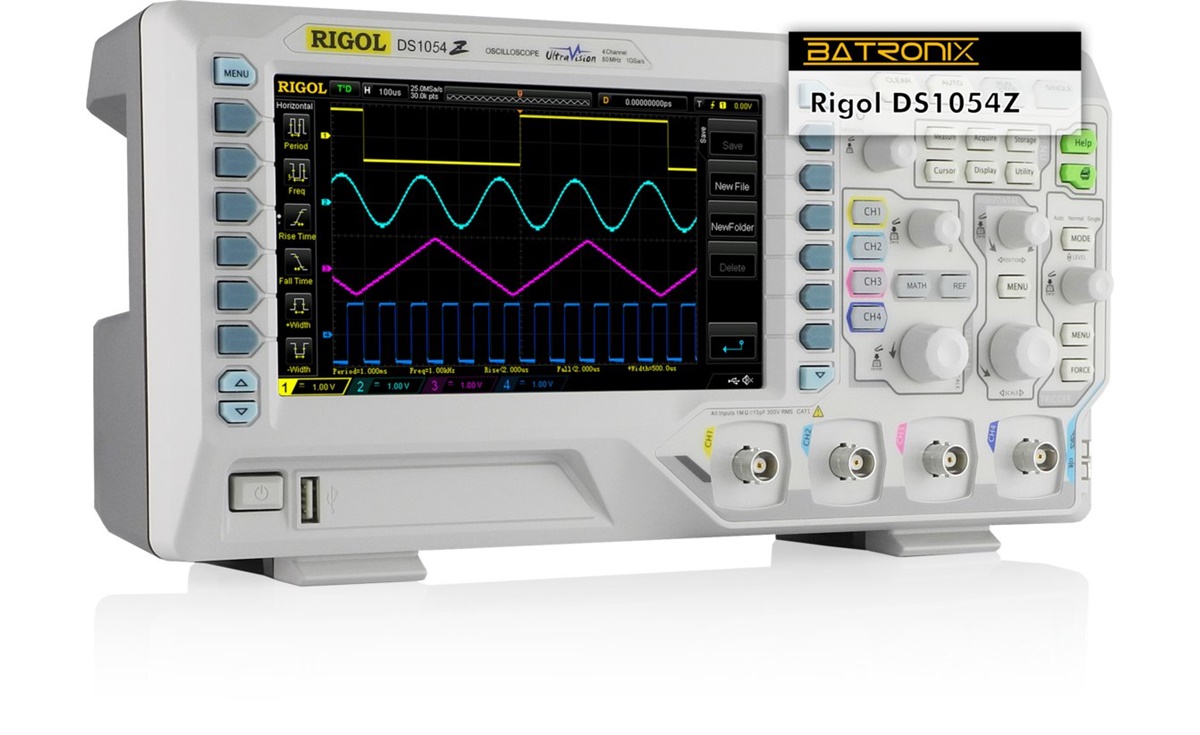
50 MHz oscilloscopes are popular tools for many electronics tasks. They offer a balance of features and affordability. Understanding their key features helps in choosing the right tool for specific needs. These scopes work well for basic and moderate signal analysis. Below are the main features that define 50 MHz oscilloscopes.
Bandwidth And Signal Capture
Bandwidth is the highest frequency the oscilloscope can measure accurately. A 50 MHz bandwidth means it can capture signals up to 50 million cycles per second. This bandwidth suits most low to mid-frequency signals. It helps detect signal details without distortion or loss. Ideal for audio signals, simple digital circuits, and some RF signals.
Sample Rate And Resolution
Sample rate shows how fast the oscilloscope collects data points. A typical 50 MHz scope has a sample rate of around 500 MS/s (mega samples per second). This rate captures enough points for smooth waveforms. Resolution defines how clear the signal appears on the screen. Most 50 MHz oscilloscopes offer 8-bit resolution, balancing clarity and speed.
Common Applications
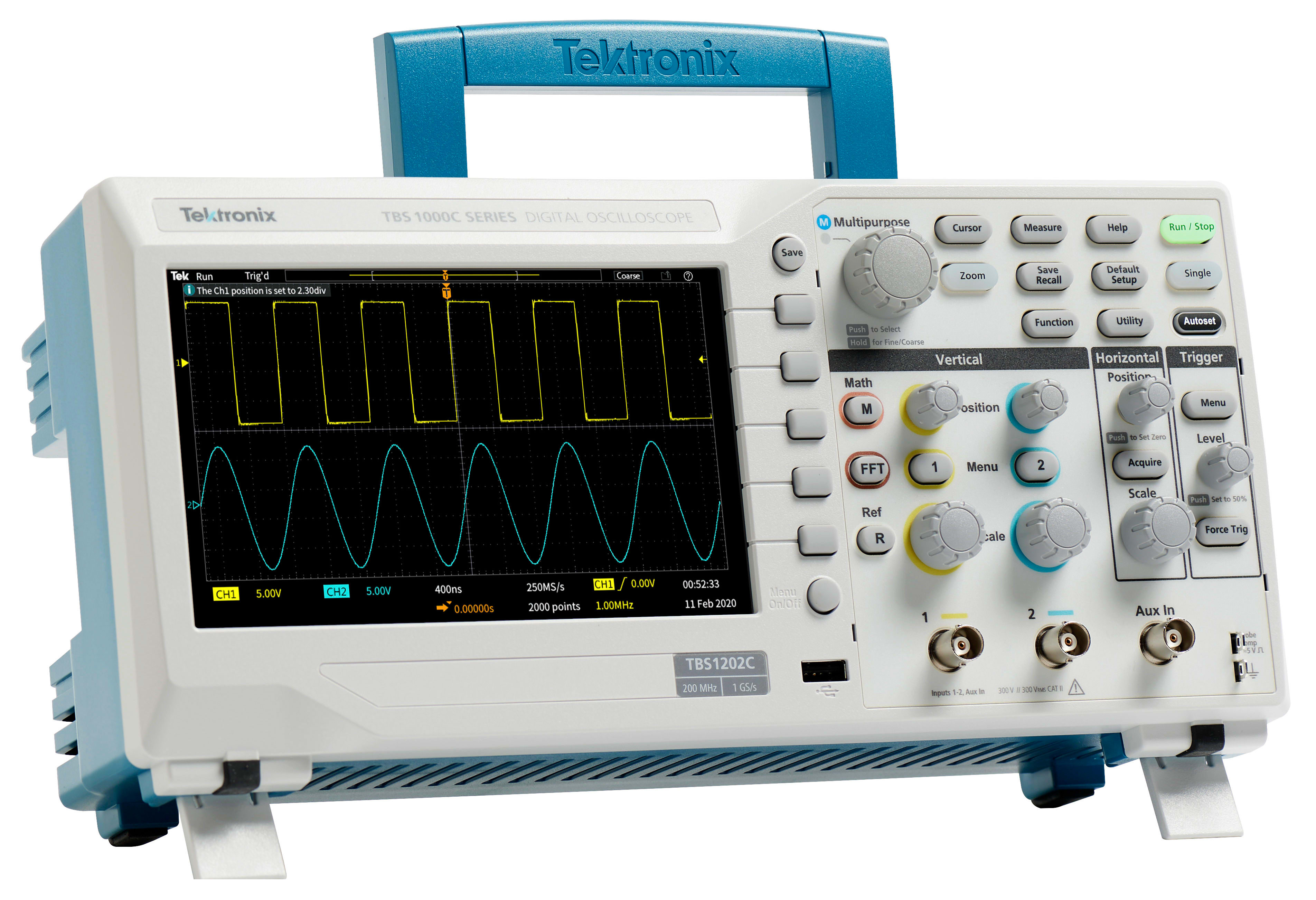
50 MHz oscilloscopes fit many common uses. Hobbyists use them for basic circuit testing and repairs. They work well in education for teaching electronics and signal analysis. Technicians use them for troubleshooting audio equipment and microcontroller projects. These scopes handle pulse, square, and sine waveforms easily.
Credit: www.tequipment.net
Key Features Of 100 Mhz Oscilloscopes
100 MHz oscilloscopes offer key features that suit many electronics projects. They provide better performance than 50 MHz models. These features allow users to see more detail in electronic signals. Understanding these benefits helps in choosing the right tool for your needs.
Enhanced Bandwidth Benefits
100 MHz oscilloscopes have a wider bandwidth than 50 MHz. This means they can measure higher frequency signals accurately. They show more details in fast-changing waveforms. This helps in testing modern circuits with high-speed components. A wider bandwidth reduces signal distortion and loss.
Improved Sample Rate And Accuracy
These oscilloscopes sample signals faster than lower bandwidth models. A higher sample rate captures more points in a waveform. This improves the accuracy of the displayed signal. Users can trust the data for detailed analysis. Better accuracy helps in detecting small signal changes.
Typical Use Cases
100 MHz oscilloscopes work well for audio and radio frequency projects. They suit automotive and industrial electronics testing. Engineers use them for debugging digital and analog circuits. They also help in education and research labs. These scopes handle most hobby and professional tasks.
Performance Comparison
Choosing between a 50 MHz and 100 MHz oscilloscope depends largely on their performance. Understanding how each device handles signals and measurements helps in making the right choice. This section compares their performance across key areas.
Signal Fidelity And Clarity
A 100 MHz oscilloscope captures signals with higher fidelity. It shows clearer waveforms and reduces distortion. The 50 MHz scope may miss some details in fast-changing signals. This affects the accuracy of what you see on the screen. For simple signals, 50 MHz can be enough. For detailed analysis, 100 MHz offers better clarity.
Measurement Precision
Higher bandwidth scopes provide more precise measurements. The 100 MHz model measures signal timing and voltage more accurately. It detects small variations better than the 50 MHz scope. This precision is important in complex circuits and fast signals. The 50 MHz scope works well for basic tests but lacks fine measurement detail.
Response To High-frequency Signals
The 100 MHz oscilloscope responds faster to high-frequency signals. It captures quick pulses and rapid changes without losing data. The 50 MHz scope struggles with signals near its bandwidth limit. This can cause signal distortion or missing parts. For testing RF or high-speed digital circuits, 100 MHz is more reliable.
Cost And Value Analysis
Choosing between a 50 MHz and 100 MHz oscilloscope often depends on cost and value. Understanding the price difference and how it affects your budget helps you make a smart choice. Both models serve different needs and budgets.
Evaluating long-term investment and budget suitability ensures you get the best value. Spend wisely according to your project requirements.
Price Differences
A 50 MHz oscilloscope usually costs less than a 100 MHz model. The price gap can be significant, sometimes hundreds of dollars. Lower bandwidth means simpler technology and reduced manufacturing costs. This makes 50 MHz scopes ideal for basic tasks or learning.
100 MHz oscilloscopes come with advanced features and higher precision. These qualities increase the price but improve performance for complex signals.
Long-term Investment
Buying a 100 MHz oscilloscope can be a better investment for future needs. It handles a wider range of signals and projects. This reduces the need to upgrade soon. A 50 MHz scope may suit short-term or simple work, but might limit growth.
Consider how your projects may evolve. A higher bandwidth scope offers more flexibility over time.
Suitability For Different Budgets
For tight budgets, a 50 MHz oscilloscope provides essential features at a low cost. It works well for students, hobbyists, and simple electronics testing. Those with larger budgets can afford 100 MHz scopes to access better detail and faster response.
Match your choice to your financial limits and technical needs. This balance ensures you get the best value from your oscilloscope purchase.
Choosing The Right Oscilloscope
Choosing the right oscilloscope is important for accurate measurements. It depends on what you need for your projects and how you plan to use the device. Both 50 MHz and 100 MHz oscilloscopes have strengths. Understanding your needs will help you pick the best option.
Project Requirements
Consider the signals you want to measure. A 50 MHz oscilloscope suits low-frequency signals well. It works fine for basic electronics and simple circuits. A 100 MHz model handles faster signals. Choose higher bandwidth if you test digital or radio frequency circuits. Check the sample rate and memory depth too. These affect how detailed your readings will be.
Future-proofing Needs
Think about future projects. Buying a 100 MHz oscilloscope can save money later. It covers more types of signals and complex tasks. If you expect to work with faster technology, invest in higher bandwidth. A 50 MHz scope may limit your growth. Plan ahead to avoid replacing your tool soon.
Portability And User Interface
Size and ease of use matter. Smaller oscilloscopes are easier to carry. Some models have simple controls and clear screens. Choose one that fits your workspace and skill level. A user-friendly interface reduces errors and speeds up work. Balance portability with features you need.

Credit: www.ebay.com
Frequently Asked Questions
What Is The Main Difference Between 50 Mhz And 100 Mhz Oscilloscopes?
The main difference is bandwidth. A 50 MHz oscilloscope handles signals up to 50 MHz, while a 100 MHz model supports signals up to 100 MHz. Higher bandwidth means better ability to capture fast signal details and higher frequency waveforms accurately.
Which Oscilloscope Bandwidth Is Better For Beginners?
A 50 MHz oscilloscope is usually better for beginners. It is affordable and sufficient for basic electronics and low-frequency signals. Beginners can learn fundamental measurements without needing the higher bandwidth of a 100 MHz oscilloscope.
Can A 100 Mhz Oscilloscope Measure Signals Below 50 Mhz?
Yes, a 100 MHz oscilloscope can measure signals below 50 MHz effectively. Higher bandwidth scopes can handle all lower frequencies with better accuracy and detail, making them versatile for various applications.
Is 100 Mhz Bandwidth Necessary For All Electronic Testing?
No, 100 MHz bandwidth is not necessary for all tests. It is ideal for high-frequency or fast transient signals. For routine or low-frequency measurements, 50 MHz oscilloscopes often suffice and save cost.
Conclusion
Choosing between a 50 MHz and 100 MHz oscilloscope depends on your needs. A 50 MHz scope works well for basic signals and simple tasks. A 100 MHz scope suits faster signals and more detailed work. Think about what signals you will test most.
Budget also plays a role in your choice. Both types have their strengths. Pick the one that fits your projects best. This way, you get the right tool without overspending. Simple and clear helps you decide wisely.

I’m Asif Ur Rahman Adib, an Electrical Engineer and lecturer. My journey began in the lab, watching students struggle with instruments they used every day without fully understanding them. Over time, I’ve combined teaching, research, and hands-on experience to help others grasp electrical concepts clearly, safely, and practically—whether it’s understanding a circuit or mastering a multimeter.