Quick Guide To Choosing Between Fluke 15b+ And 17b+
- Choose Fluke 15B+ if you need a straightforward multimeter for standard electrical measurements without extra functions.
- Pick Fluke 17B+ when you require temperature measurement along with frequency testing for more diverse troubleshooting.
- Fluke 15B+ fits well for users focused on basic voltage, current, and resistance testing in residential or commercial settings.
- Fluke 17B+ is better suited for industrial environments where temperature and frequency readings are important.
- Select Fluke 17B+ if you want diode testing combined with temperature monitoring in one device.
Using These Multimeters In Everyday Electrical Work
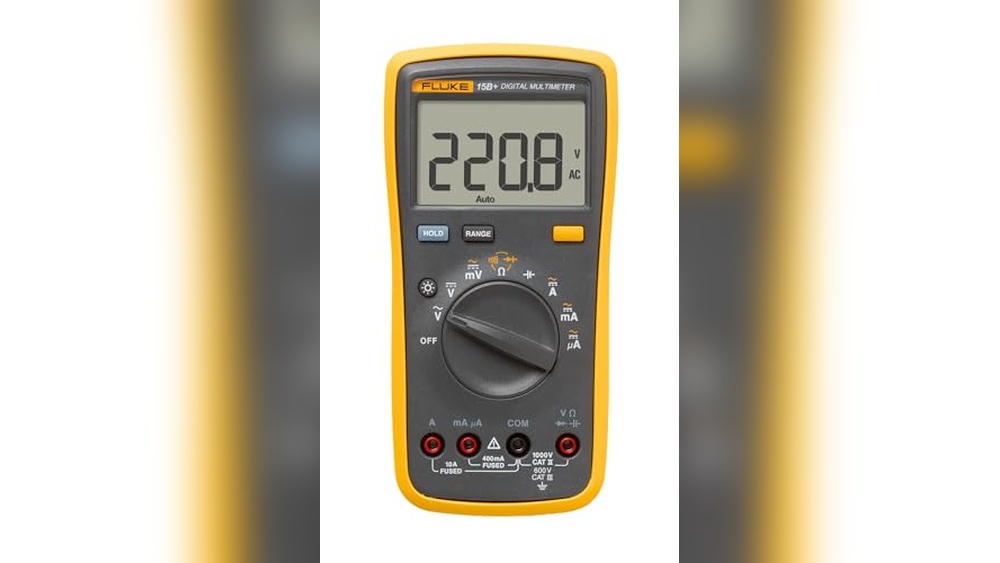
The Fluke 15B+ serves well for routine electrical maintenance. Its clear functions and reliable safety rating make it a practical choice for checking voltage, current, and resistance on a daily basis. It handles common electrical panels and automotive systems without fuss.
The Fluke 17B+ adds some versatility with frequency and temperature functions. I find it handy when working on HVAC systems or industrial equipment where temperature monitoring is necessary. The extra features do not complicate basic measurements, making it a good all-rounder.
Fluke 15b+ At A Glance For Electrical Troubleshooting

Where Fluke 15B+ Fits Best
- Basic electrical measurements in residential and commercial settings.
- Reliable for automotive electrical diagnostics.
- Users who prefer a simple tool without additional features.
- Work environments requiring CAT III 600V safety.
Where Fluke 15B+ May Fall Short
- Lacks temperature measurement capability.
- No frequency testing function.
- Limited to essential electrical testing functions only.
Fluke 17b+ Overview For More Advanced Electrical Work

Where Fluke 17B+ Excels
- Includes temperature measurement with type K thermocouple.
- Frequency testing for electrical troubleshooting.
- Suitable for industrial and HVAC applications.
- Maintains CAT III 600V safety rating.
- Includes diode testing for component checks.
Where Fluke 17B+ Has Limitations
- Higher price compared to simpler models.
- Slightly heavier than Fluke 15B+.
- Extra features may be unnecessary for basic users.
Comparing Practical Features For Everyday Electrical Testing
I compared the core measurement functions, additional features, and ease of use for both multimeters during typical troubleshooting tasks. The goal was to see how the extra capabilities of the 17B+ affect usability. I also looked at safety and comfort during extended use.Measurement Functions and Range
Which device covers more testing scenarios for daily electrical work?
| Aspect | Fluke 15B+ | Fluke 17B+ |
|---|---|---|
| AC/DC Voltage | Up to 1000V | Up to 1000V |
| AC/DC Current | Up to 10A | Up to 10A |
| Resistance and Continuity | Yes | Yes |
| Capacitance Measurement | Yes | Yes |
| Frequency Testing | No | Yes |
| Temperature Measurement | No | Yes (with thermocouple) |
Ratings: Fluke 15B+ – 7/10 | Fluke 17B+ – 8/10
Edge: Fluke 17B+ suits users who need more measurement options beyond standard electrical testing.
Safety and Build Quality
How do both models ensure safety during use?
| Aspect | Fluke 15B+ | Fluke 17B+ |
|---|---|---|
| Safety Rating | CAT III 600V | CAT III 600V |
| Weight | 1.01 Pounds | 1.04 Pounds |
| Dimensions | 5.91 x 2.76 x 8.46 inches | 5.91 x 2.76 x 8.46 inches |
| Build Quality | Robust and practical | Robust and practical |
Ratings: Fluke 15B+ – 8/10 | Fluke 17B+ – 8/10
Edge: Both provide solid safety features and build, suitable for demanding work environments.
Ease of Use and Interface
Are the extra features on the 17B+ easy to access and use?
| Aspect | Fluke 15B+ | Fluke 17B+ |
|---|---|---|
| Interface Simplicity | Simple dial and buttons | Simple dial with added functions |
| Access to Temperature Mode | Not available | Direct via thermocouple input |
| Menu Complexity | Minimal | Slightly higher due to more features |
| Display Readability | Clear and bright | Clear and bright |
Ratings: Fluke 15B+ – 8/10 | Fluke 17B+ – 7/10
Edge: Fluke 15B+ is better for users who prefer straightforward operation without extra modes.
Price and Value Consideration
How do costs relate to features for each model?
| Aspect | Fluke 15B+ | Fluke 17B+ |
|---|---|---|
| Current Price | $115.26 | $124.48 |
| Original Price | $135.99 | $172.99 |
| Savings | 15% | 28% |
| Feature Set | Basic electrical functions | Extended features including temperature |
Ratings: Fluke 15B+ – 7/10 | Fluke 17B+ – 7/10
Edge: Fluke 15B+ offers solid value if extra functions are not needed.
Long-term Experience And Reliability
Both multimeters have a manageable learning curve due to their straightforward design. The Fluke 15B+ stays consistent with essential features, which builds trust through familiarity. Its simplicity means fewer distractions when performing routine tests.
The Fluke 17B+ introduces additional functions that may require some time to master, but it remains dependable over time. The extra capabilities provide peace of mind for those who need more diverse measurements without switching devices.
Choosing The Right Fluke Multimeter For Your Electrical Needs
Choose the Fluke 15B+ if you want a reliable, no-nonsense multimeter for standard electrical measurements. It is well-suited for those who prioritize simplicity and consistent performance in common electrical tasks.
Opt for the Fluke 17B+ if your work involves temperature and frequency testing alongside basic measurements. It fits users who value versatility and the convenience of multiple functions in one device.
Both models deliver dependable results, so your choice should align with your specific testing requirements.
Common Questions About Fluke 15b+ Vs 17b+ Multimeters
Does the Fluke 15B+ measure temperature?
No, the Fluke 15B+ does not have temperature measurement capability. For temperature readings, you would need the Fluke 17B+ which includes this feature with a thermocouple.
Are both multimeters safe for residential electrical work?
Yes, both models have a CAT III 600V safety rating, making them suitable for residential and commercial electrical systems.
Can the Fluke 17B+ test frequency?
Yes, the Fluke 17B+ includes frequency testing, which is not available on the Fluke 15B+.
Is there a significant size or weight difference between the two?
Both multimeters have very similar dimensions. The Fluke 17B+ is slightly heavier but the difference is minimal and unlikely to affect daily use.
Which model is better for industrial use?
The Fluke 17B+ is better suited for industrial applications due to its additional temperature and frequency measurement capabilities.
Does the Fluke 15B+ include diode testing?
Yes, the Fluke 15B+ includes diode testing, similar to the Fluke 17B+.
Are extra features on Fluke 17B+ difficult to use?
The added features on the Fluke 17B+ are designed to be accessible, but it may take some time to get used to them if you only need basic measurements.

I’m Asif Ur Rahman Adib, an Electrical Engineer and lecturer. My journey began in the lab, watching students struggle with instruments they used every day without fully understanding them. Over time, I’ve combined teaching, research, and hands-on experience to help others grasp electrical concepts clearly, safely, and practically—whether it’s understanding a circuit or mastering a multimeter.