Choosing Between Two Popular Fluke Multimeters
When shopping for a reliable digital multimeter, the choice between the Fluke 87V Industrial Digital Multimeter and the Fluke 287 True-RMS Electronics Logging Multimeter can be confusing. Both are respected tools with strong reputations. The decision is not just about specs but also about how you will use the tool daily. This article helps clear up the confusion by comparing their real-world fit. It guides you toward the right multimeter for your needs. You will gain clarity on strengths and limitations of each model.
Reasons This Choice Can Feel Overwhelming
Marketing materials often highlight advanced features that sound impressive but may not be essential for every user. This can make it difficult to know what truly matters for your work. Understanding which features add value in practice is key.
The technical specifications can be dense and hard to interpret. Terms like True RMS, low-pass filter, or datalogging might confuse buyers unfamiliar with electrical measurement nuances. This adds to the challenge of making a confident choice.
Buyers sometimes focus on specs that don’t match their priorities. For example, advanced logging capabilities may be less important than ruggedness or ease of use. Knowing your priorities helps avoid paying for features you won’t use.
Who Benefits Most From Each Multimeter
Professional electricians working in industrial environments need a rugged and precise tool for troubleshooting. The Fluke 87V fits well here with its industrial design and robust measurement options.
Electronics technicians and engineers who require detailed logging and data analysis will appreciate the Fluke 287’s datalogging features and graphical display. It suits labs and testing benches.
Hobbyists and DIYers who want accuracy but simpler operation often find the Fluke 87V easier to handle without extra complexity.
Those who need to monitor signals over time or analyze waveform anomalies will benefit more from the Fluke 287’s advanced logging and visualization capabilities.
Buyers focused on portability and lower weight might prefer the lighter Fluke 287, despite its larger footprint.
Overall, the Fluke 87V is better for rugged industrial use, while the Fluke 287 fits well for electronics logging and analysis.
Where The Fluke 87v Industrial Multimeter Fits Naturally
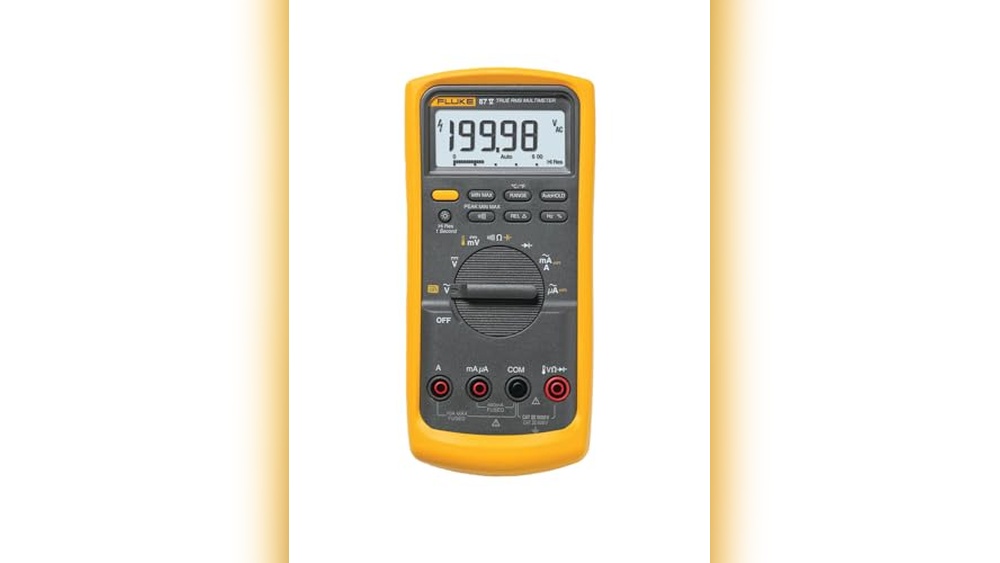
Using the Fluke 87V daily feels straightforward for troubleshooting electrical systems. Its rugged build suits work in workshops or on-site. The device handles a wide range of measurements reliably.
Over the long term, I find this multimeter consistent and durable. It stands up to rough handling and continues delivering accurate readings. Its safety ratings give confidence in tough environments.
One limitation is that it does not have advanced datalogging features. For users needing detailed recording, this might be a drawback.

What works well over time
- Robust build quality for industrial use
- Accurate frequency measurements with low-pass filter
- Captures fast intermittent signals reliably
- High display resolution for detailed readings
- Safety ratings for CAT III 1000V and CAT IV 600V
Things that may bother some users
- Lacks built-in datalogging capabilities
- Heavier and bulkier compared to some models
- No graphical display for trend analysis
Where The Fluke 287 Electronics Logging Multimeter Makes More Sense
The Fluke 287 suits daily use where logging and analyzing data trends matter. It works well on benches or in labs for monitoring voltage and current over time. I find the backlit display helpful in low light conditions.
For long-term use, the datalogging features and export options make troubleshooting complex electronics easier. The graphical display helps spot anomalies quickly. Its lighter weight aids in portability.
One limitation is a bigger physical size, which might feel cumbersome in tight spaces or fieldwork.

What works well over time
- Comprehensive datalogging and graphing features
- True RMS readings for accurate measurements
- Backlit display with multiple simultaneous readings
- Data export options for further analysis
- Certified for safety with multiple international standards
Things that may bother some users
- Larger footprint may limit portability
- Slightly steeper learning curve due to extra features
- Less rugged feeling compared to industrial models
Early Decision Signals Most Buyers Notice
The first impression of size and weight often influences preference. The Fluke 87V feels solid and compact, while the 287 is larger but lighter.
Users looking at the display notice the Fluke 287’s advanced graphical screen, which can be appealing for data analysis but may seem complex.
Safety ratings and ruggedness matter for on-site electricians, pushing them toward the Fluke 87V. Its CAT III and IV ratings reassure in demanding environments.
Buyers focused on data logging and trend spotting find the Fluke 287’s capabilities a clear early advantage. This can outweigh simpler operation for some.
Finally, the type of measurements you perform often signals the better choice: industrial troubleshooting or electronics testing.
Comparing Early Decision Signals
Here is a quick look at how the two multimeters compare on key initial impressions.
| Decision signal (before buying) | Fluke 87V Industrial Multimeter | Fluke 287 Electronics Logging Multimeter |
|---|---|---|
| Size and Weight | Compact but slightly heavier (1.3 lbs) | Larger footprint but lighter (1.0 lbs) |
| Display Type | Standard digital display | Backlit LCD with graphical trend plots |
| Safety Ratings | CAT III 1000V, CAT IV 600V | Certified for Category I up to 1000V, Category II up to 300V |
| Ease of Use | Straightforward controls for industrial tasks | More complex due to datalogging features |
| Measurement Features | High accuracy for AC/DC, frequency, and peak capture | Wide range with logging, pulse width, duty cycle |
| Portability | Good for field and shop use | Best suited for bench or lab environments |
Living With These Multimeters Over Time
Maintenance for both is minimal. Regular battery replacement and keeping probes clean are typical. Both models are built for long-lasting use.
The Fluke 87V maintains consistent accuracy even after months of rough handling. Its rugged case protects internal components well.
The Fluke 287 requires some familiarization to use all features efficiently. Minor annoyances include navigating menus for logging setup.
Trust builds as you rely on either meter for critical measurements. The 87V inspires confidence in tough environments, while the 287 reassures with detailed data.
Overall, both deliver reliable performance but differ in how they fit into daily routines.
Long-term Ownership Comparison
Consider these factors based on extended use experience.
| Ownership reality (after weeks/months) | Fluke 87V Industrial Multimeter | Fluke 287 Electronics Logging Multimeter |
|---|---|---|
| Reliability | Highly reliable in harsh conditions | Reliable with careful handling |
| Habit Fit | Fits well with hands-on troubleshooting | Best for data analysis and logging routines |
| Mental Load | Simple interface lowers mental load | Feature-rich interface requires learning |
| User Satisfaction | High among electricians and field techs | High among engineers and testers |
| Maintenance | Minimal, durable design | Minimal, needs care with display |
| Trust Over Time | Builds quickly with consistent results | Builds with familiarity of features |
Common Mistakes Buyers Make
Focusing solely on specs without considering daily use can lead to dissatisfaction. Understand how you will actually use the meter before deciding.
Ignoring safety ratings is risky. Make sure the multimeter matches the voltage categories you will encounter.
Overvaluing datalogging when it’s not needed may lead to unnecessary complexity. Choose simpler if you don’t need advanced logging.
Underestimating the importance of display readability in your working environment can cause frustration. The Fluke 287’s backlight helps in dim settings.
Not testing the feel and interface before purchase can result in a tool that feels awkward. If possible, try handling both models.
Making The Right Choice For Your Situation
If your work involves industrial troubleshooting with a need for ruggedness and reliable measurement of AC/DC voltage and frequency, the Fluke 87V is the better fit. It handles harsh conditions and offers quick, accurate readings.
For users focused on electronics testing, logging data, and analyzing signal trends, the Fluke 287 offers features that support detailed work. Its graphical display and data export capabilities cater to this use case.
Remember, choosing the multimeter that fits your daily needs and comfort is more important than chasing specs. A well-matched tool will serve you better over time than a feature-packed but complex option.
Faqs About Fluke 87v Vs 287
Which multimeter is better for industrial troubleshooting?
The Fluke 87V is generally better suited for industrial troubleshooting due to its rugged design and safety ratings. It performs well in harsh environments and measures a wide range of electrical parameters.
Does the Fluke 287 support data logging?
Yes, the Fluke 287 includes advanced datalogging features with on-screen graphing and data export options. This is useful for monitoring measurements over time.
Are both meters True RMS?
Both the Fluke 87V and Fluke 287 provide True RMS measurements. This ensures accurate readings for both linear and non-linear loads.
Which model is easier to use for beginners?
The Fluke 87V has a simpler interface and is easier for beginners to use. The Fluke 287’s additional features may require a steeper learning curve.
Can I use the Fluke 287 in the field?
The Fluke 287 is designed more for bench and lab use. It is lighter but has a larger footprint, so it may be less convenient in tight or rugged field environments.
What are the safety ratings for these multimeters?
The Fluke 87V is rated CAT III 1000V and CAT IV 600V, suitable for heavy industrial use. The Fluke 287 meets Category I up to 1000V and Category II up to 300V standards.
Is the Fluke 87V capable of capturing intermittent signals?
Yes, the Fluke 87V features Peak Capture technology that can capture intermittent events as fast as 250 microseconds.
Which multimeter has a better display for analyzing signals?
The Fluke 287 has a backlit LCD that displays multiple measurements simultaneously and plots graphs for trend analysis. The Fluke 87V uses a standard digital display.

I’m Asif Ur Rahman Adib, an Electrical Engineer and lecturer. My journey began in the lab, watching students struggle with instruments they used every day without fully understanding them. Over time, I’ve combined teaching, research, and hands-on experience to help others grasp electrical concepts clearly, safely, and practically—whether it’s understanding a circuit or mastering a multimeter.