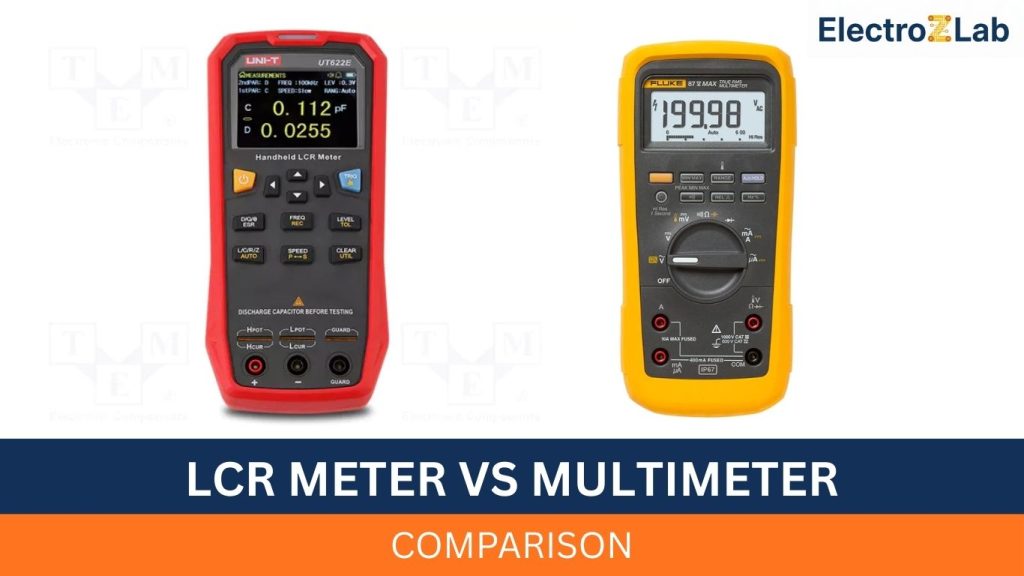
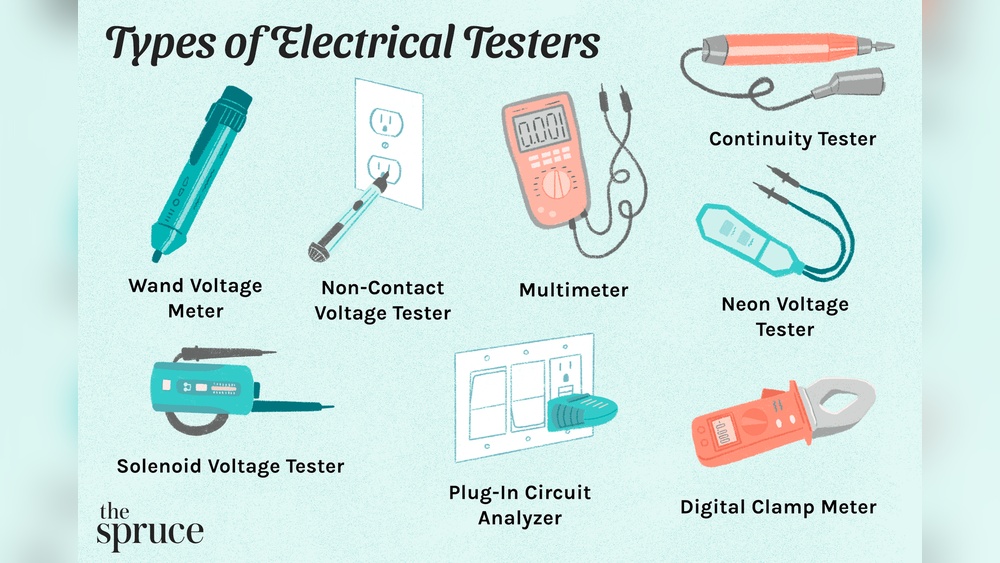
Are you trying to figure out whether a multimeter or a cable tester is the right tool for your electrical projects? Choosing the right device can save you time, money, and frustration.
Both tools seem similar but serve very different purposes. Understanding these differences will help you work smarter and avoid costly mistakes. Keep reading to discover which tool matches your needs and how to use it effectively. Your next project depends on it!
Credit: www.cs2n.org
Multimeter Basics
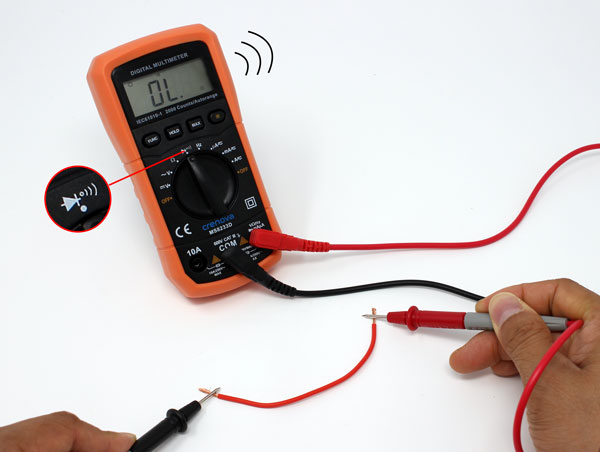
A multimeter is a tool used to measure electrical values. It helps to check voltage, current, and resistance. This tool is essential for electricians, engineers, and hobbyists alike. Understanding its basics can make electrical tasks easier and safer.
Key Functions
Multimeters measure voltage to see how much power flows. They check current to find the flow rate of electricity. Resistance measurement shows if a wire or device blocks electricity. Some models test continuity, signaling if a circuit is complete.
Types Of Multimeters
There are two main types: analog and digital. Analog multimeters use a needle to show readings. Digital multimeters display numbers on a screen, making them easier to read. Digital types often have more features and better accuracy.
Common Uses
Multimeters find electrical problems in wires and devices. They test batteries to see if they still work. Users check fuses and circuits in homes and cars. They also measure components when building or repairing electronics.
Credit: www.walmart.com
Cable Tester Essentials
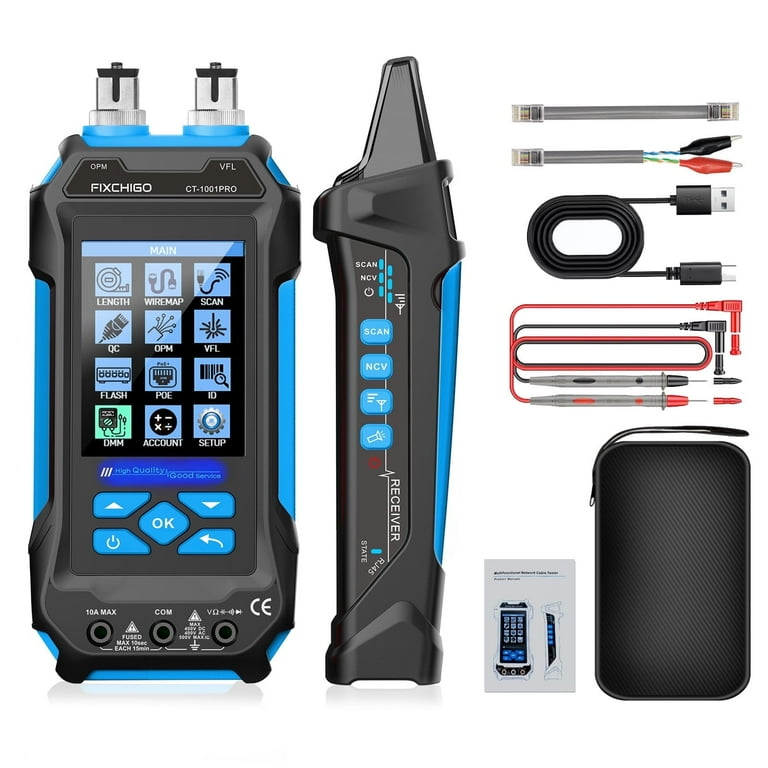
Cable testers are essential tools for anyone working with wiring and networks. They help check if cables are working correctly and find faults quickly. These devices save time and prevent errors in wiring projects.
Understanding the basics of cable testers helps in choosing the right tool for the job. Below are key details about their features, types, and uses.
Primary Features
Cable testers check wire continuity and signal strength. They identify open circuits, short circuits, and crossed wires. Many testers have LED displays for easy reading. Some models test cable length and wire mapping. They run on batteries for portability.
Variants Available
Basic cable testers check simple continuity in wires. Advanced models test network cables, coaxial cables, and telephone lines. Some testers include tone generators for tracing wires. There are handheld and benchtop versions. Each type suits different testing needs.
Typical Applications
Technicians use cable testers to install and repair networks. They check Ethernet cables in homes and offices. Cable testers help troubleshoot phone lines and video cables. They are useful in manufacturing and quality control. Anyone working with wiring benefits from these tools.
Comparing Capabilities
Comparing the capabilities of a multimeter and a cable tester helps you choose the right tool. Both devices serve different purposes in electrical work. Understanding their strengths guides your decision. Below, we explore key features to consider.
Measurement Accuracy
Multimeters provide precise readings of voltage, current, and resistance. They measure electrical values with high accuracy. Cable testers check cable continuity and wiring faults but do not measure electrical values. For detailed measurements, multimeters offer more accuracy.
Ease Of Use
Cable testers are simple and quick to use. They require minimal setup and deliver clear results. Multimeters need more knowledge to operate correctly. They have multiple functions and settings. Beginners find cable testers easier for basic cable checks.
Portability
Both tools are designed to be portable. Multimeters are compact and easy to carry in a toolbox. Cable testers are usually smaller and lighter. You can carry either tool without difficulty to job sites.
Durability
Multimeters often have rugged designs for tough environments. They can withstand drops and rough handling. Cable testers are also durable but may be less robust than multimeters. Both tools last long with proper care.
Choosing By Task
Choosing between a multimeter and a cable tester depends on the task you need to perform. Each tool has a specific use and works best in certain situations. Knowing what job you want to do helps pick the right tool quickly.
Some tasks need detailed electrical checks, while others focus on cable connections. Understanding these needs makes your work easier and more accurate.
Electrical Troubleshooting
A multimeter is perfect for electrical troubleshooting. It measures voltage, current, and resistance. This helps find broken circuits or faulty parts fast. Cable testers do not measure these values, so they are not suited for detailed electrical checks.
Network Installation
Cable testers work well for network installation. They check if cables connect properly and test for breaks or shorts. This ensures your network runs smoothly. Multimeters cannot test cable continuity as easily as cable testers.
Home Wiring Projects
For simple home wiring projects, multimeters are more useful. They help check power supply and wire connections. You can quickly find problems like open circuits or bad wiring. Cable testers have limited use in general home wiring tasks.
Cost And Value
Choosing between a multimeter and a cable tester often depends on cost and value. Both tools serve different purposes but come with varied price points. Understanding these differences helps make a better decision for your needs and budget.
Price Ranges
Multimeters generally cost more than basic cable testers. Prices start around $15 for simple cable testers. Multimeters can begin near $20 but rise to several hundred dollars for advanced models. Features and brand names affect the cost. More functions usually mean a higher price.
Long-term Investment
A multimeter offers broader use beyond cable testing. It can measure voltage, current, and resistance. This makes it a good long-term tool for many tasks. Cable testers focus mainly on checking cable faults. They suit users needing quick cable checks only. Consider what tasks you will do most.
Maintenance Needs
Both tools need basic care to last long. Replace batteries regularly to avoid damage. Keep them in dry, clean places to prevent rust. Multimeters may need calibration over time for accuracy. Cable testers usually require less upkeep. Proper handling increases the lifespan of both devices.
Safety Considerations
Safety is very important when using a multimeter or cable tester. Both tools measure electrical signals, which can be dangerous. Understanding safety helps avoid accidents and damage. Proper use and care keep users safe and tools working well.
Handling Precautions
Always check the tool before use. Look for cracks or broken parts. Use insulated gloves if working with high voltage. Never touch metal parts while testing. Turn off power before connecting the tool. Hold the tool by its handles only. Keep the workspace dry and clean to avoid slips.
Protective Features
Most multimeters and cable testers have built-in safety features. Fuses protect against overloads. Double insulation prevents shocks. Some tools have warning signals for wrong connections. Look for tools with clear displays and easy controls. These features reduce risk during measurements.
Compliance Standards
Choose tools that meet international safety standards. Look for CE, UL, or IEC certifications. These marks show the tool passed safety tests. Using certified tools ensures better protection. It also means the tool is reliable and accurate. Always check for these marks before buying.
Tips For Effective Use
Using a multimeter or cable tester properly makes your work easier and safer. These tools help you check electrical circuits and cables accurately. Knowing some simple tips improves your results and keeps the devices in good shape.
Calibration Practices
Check calibration often to ensure accurate readings. Use a known reference source to test your device. Calibrate your multimeter or cable tester before important tasks. This avoids mistakes and saves time. Follow the manufacturer’s instructions for calibration steps.
Battery Management
Keep batteries fresh for reliable performance. Replace batteries when the device shows weak signals. Remove batteries if you do not use the tool for long. This prevents battery leaks and damage. Carry spare batteries on job sites for quick changes.
Reading Interpretations
Understand what your device shows on the screen. Learn the symbols and units used in measurements. Read the manual to know how to interpret results correctly. Double-check unclear readings by testing again. Accurate reading helps you fix problems faster and safer.
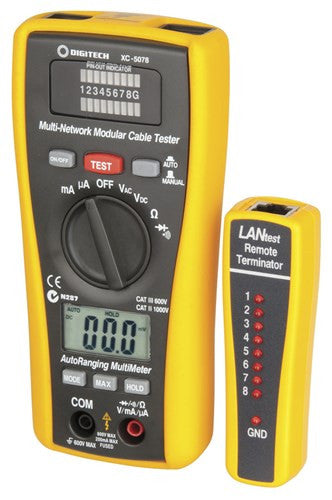
Credit: www.bnrindustrial.com.au
Frequently Asked Questions
What Is The Main Difference Between A Multimeter And Cable Tester?
A multimeter measures voltage, current, and resistance in circuits. A cable tester checks cable continuity and wiring integrity. Both tools serve different purposes in electrical diagnostics and installation tasks.
Can A Multimeter Replace A Cable Tester For Wiring Tests?
No, a multimeter cannot fully replace a cable tester. Cable testers are designed specifically to verify cable wiring and faults. Multimeters are more versatile but less specialized for cable diagnostics.
Which Tool Is Better For Troubleshooting Electrical Circuits?
A multimeter is better for troubleshooting circuits due to its ability to measure various electrical parameters. Cable testers focus on cable condition rather than circuit functionality.
Are Cable Testers Useful For All Cable Types?
Cable testers are generally designed for specific cable types like Ethernet, coaxial, or telephone cables. Ensure the tester matches your cable type for accurate testing results.
Conclusion
Choosing between a multimeter and a cable tester depends on your needs. A multimeter measures voltage, current, and resistance. A cable tester checks wiring and cable connections. Both tools help find electrical problems quickly. Using the right tool saves time and effort.
Keep safety in mind when working with electricity. Understanding each device’s use makes your work easier. Simple tools can prevent bigger issues later. Pick the tool that fits your task best. Stay safe and work smart every time.

I’m Asif Ur Rahman Adib, an Electrical Engineer and lecturer. My journey began in the lab, watching students struggle with instruments they used every day without fully understanding them. Over time, I’ve combined teaching, research, and hands-on experience to help others grasp electrical concepts clearly, safely, and practically—whether it’s understanding a circuit or mastering a multimeter.