When it comes to choosing the right oscilloscope for your work, you might find yourself stuck between MDO and MSO models. Both offer powerful features, but which one truly fits your needs?
Understanding the key differences can save you time, money, and frustration. You’ll discover how MDO and MSO oscilloscopes compare, helping you make a confident decision for your projects. Keep reading to find out which oscilloscope matches your goals perfectly.
Key Features Of Mdo
The Mixed Domain Oscilloscope (MDO) offers unique features that set it apart. These features help engineers analyze complex electronic signals easily. The MDO combines different tools into one device. This makes it ideal for modern testing needs.
Mixed Signal Analysis
MDOs can capture both analog and digital signals at once. This helps you see how signals interact in real time. It simplifies debugging by showing all data on one screen. No need for separate instruments or guesswork.
Spectrum Analyzer Integration
MDOs include a built-in spectrum analyzer. This tool shows the frequency components of signals. It helps detect noise, interference, and signal distortion quickly. You can switch between time and frequency views easily.
Advanced Triggering Options
Advanced triggers let you capture specific events precisely. You can set triggers on analog, digital, or RF signals. This helps isolate rare or complex signal problems. It saves time and improves test accuracy.
Core Capabilities Of Mso
Mixed Signal Oscilloscopes (MSOs) combine the features of digital and analog oscilloscopes. They help engineers see both analog signals and digital data in one device. This dual capability is key for testing modern electronic systems. MSOs provide tools that go beyond traditional oscilloscopes.
These core capabilities make MSOs essential for complex circuit analysis. They allow users to capture, analyze, and debug signals faster and more accurately. Let’s explore the main features that define an MSO.
Digital Channel Support
MSOs include multiple digital channels alongside analog inputs. These channels capture digital signals from microcontrollers and other digital circuits. Users can observe digital patterns and timing easily. This helps find issues in digital communication and logic states.
Logic Analysis
Logic analysis allows MSOs to decode and display digital protocols. Users can track signals like I2C, SPI, and UART. This makes it simpler to understand data flow and detect errors. Logic analysis saves time during debugging and verification.
High Channel Count
MSOs offer a high number of channels for extensive testing. More channels mean capturing multiple signals at once. This is useful for large, complex systems with many components. High channel count helps see how signals interact and affect each other.
Performance Metrics
Performance metrics play a key role in choosing between an MDO and an MSO oscilloscope. These metrics show how well the device handles signals. They affect the accuracy and speed of your measurements.
Understanding these metrics helps you pick the right tool. This section covers bandwidth and sample rate, memory depth, and waveform capture rate. Each metric impacts your oscilloscope’s performance differently.
Bandwidth And Sample Rate
Bandwidth defines the highest frequency an oscilloscope can measure accurately. A wider bandwidth captures more detail in fast signals. MDOs usually have higher bandwidth for mixed signals. MSOs focus more on digital channels but still offer good bandwidth.
Sample rate is the number of samples per second. Higher sample rates give clearer waveforms. MDOs often provide higher sample rates to handle both analog and digital inputs. MSOs balance sample rate with many digital channels.
Memory Depth
Memory depth stores waveform data. More memory lets you capture longer signals without losing detail. MDOs tend to have larger memory depth for complex waveforms. MSOs prioritize memory to store multiple digital channels simultaneously.
Deep memory helps analyze long events and rare glitches. It also allows zooming into waveforms for better inspection. Both types benefit from good memory depth, but focus varies by use case.
Waveform Capture Rate
Waveform capture rate shows how fast the oscilloscope records waveforms. Higher rates catch more transient events and glitches. MDOs usually have faster capture rates to handle mixed-domain signals quickly.
MSOs maintain high capture rates across many digital channels. This is important for troubleshooting complex digital circuits. Fast capture rates improve the chance of seeing rare or short-lived signal changes.
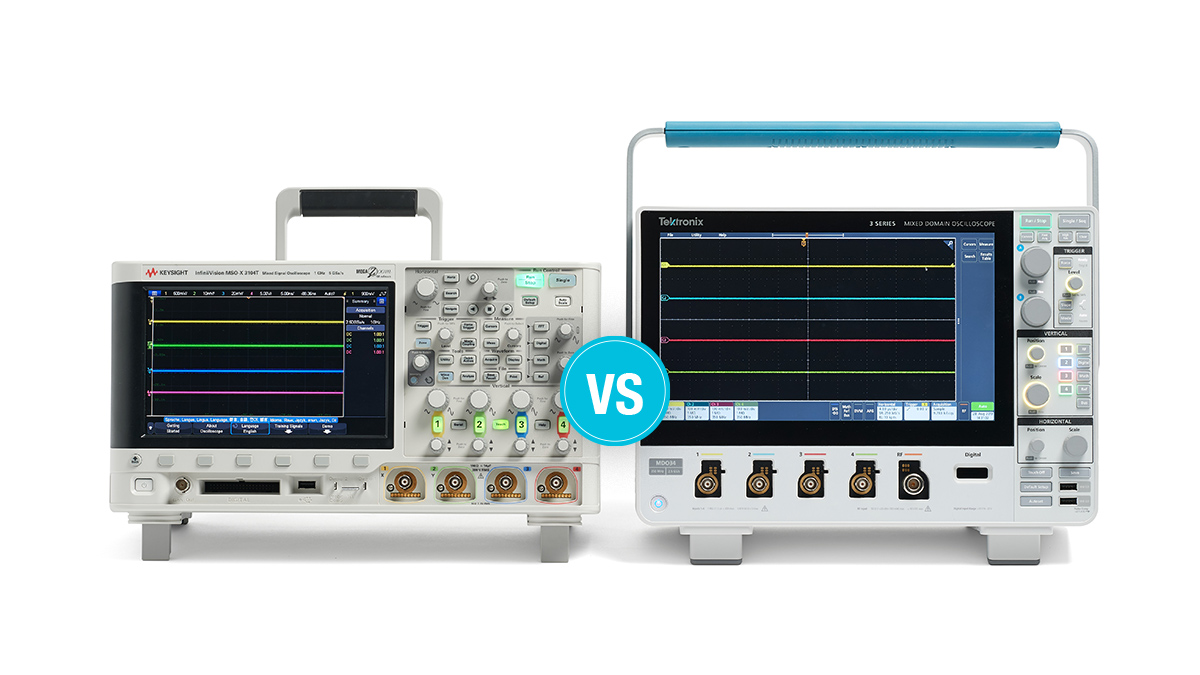
Credit: www.tek.com
User Interface And Software
The user interface and software of MDO (Mixed Domain Oscilloscope) and MSO (Mixed Signal Oscilloscope) play a big role in their effectiveness. These features affect how easily users can operate the devices and analyze data. Both instruments offer digital screens and software tools, but their designs differ to suit specific tasks.
Understanding these differences helps users choose the right tool for their needs. Below, we explore key aspects of the user interface and software, focusing on ease of use, customization, and analysis tools.
Ease Of Use
MDO interfaces are designed to show both analog and digital signals clearly. The layout is simple, with menus that guide users step-by-step. MSO devices offer a clean interface but focus more on digital signal viewing. Both types have touchscreen options to speed up navigation. Users find MDO easier for mixed signal work, while MSO suits those focused on digital signals.
Customization
MDO software allows users to change display settings and add measurement types. Customizable views help users focus on important data. MSO also offers customizable channels and triggers, but with more options for digital signal grouping. Both tools support saving user presets. This saves time for frequent tasks and improves workflow.
Analysis Tools
MDO includes built-in spectrum analyzers and protocol decoders for mixed signals. These tools make it easier to spot issues in complex systems. MSO focuses on digital analysis, offering deep inspection of digital buses. Both provide automated measurements and math functions. These features reduce manual work and help users get quick results.
Applications And Use Cases
Oscilloscopes serve many roles across different industries. Choosing between MDO and MSO oscilloscopes depends on the specific tasks. Both tools offer unique features that fit various applications. Understanding these helps select the right oscilloscope for your work.
Embedded System Debugging
MSO oscilloscopes excel at debugging embedded systems. They can capture multiple digital and analog signals at once. This ability helps engineers find bugs in microcontroller circuits. MSOs show timing relationships between signals clearly. They simplify checking communication protocols like SPI and I2C. This makes MSOs valuable in embedded system development and testing.
Rf Signal Testing
MDO oscilloscopes are ideal for RF signal testing. They integrate a spectrum analyzer with a standard oscilloscope. This combination allows capturing both time-domain and frequency-domain data. Engineers use MDOs to analyze wireless signals and interference. MDOs help measure signal strength, frequency, and distortion. They are essential for testing radios, Wi-Fi, and Bluetooth devices.
Automotive Electronics
Both MDO and MSO oscilloscopes play roles in automotive electronics. MSOs help test digital communication buses like CAN and LIN. They catch faults in sensors and control units quickly. MDOs assist with testing radar and communication systems in cars. They provide detailed views of high-frequency signals and noise. These tools support developing safer and smarter vehicles.
Cost And Value
Choosing between an MDO and an MSO oscilloscope often depends on cost and value. These tools have different price points and benefits. Understanding their cost helps you pick the right one for your needs. Value means more than just price. It includes how much you get for the money spent.
Price Comparison
MDO oscilloscopes usually cost more than MSO models. This is because MDOs combine multiple instruments in one device. MSOs focus mainly on mixed-signal analysis. The extra features in MDOs raise their price. MSOs are simpler and more affordable. Your budget may limit your choices.
Return On Investment
Return on investment depends on your work type. MDOs save space and time by combining tools. This can increase productivity for some users. MSOs offer good value for basic mixed-signal tasks. The right choice boosts efficiency and lowers costs over time. Think about how often you will use each feature.
Maintenance And Support
Both MDO and MSO scopes require regular maintenance. MDOs might need more support due to complex parts. MSOs are easier and cheaper to maintain. Check the warranty and service options before buying. Good support ensures long-term use without extra costs. This adds to the overall value of your purchase.
Choosing The Right Oscilloscope
Choosing the right oscilloscope is important for any electronics project. It affects how well you can measure and understand signals. Different types of oscilloscopes serve different needs. Knowing which one fits your work saves time and money. It also makes your tasks easier and more accurate.
Project Requirements
First, think about what your project needs. Do you need to see many signals at once? Mixed-signal oscilloscopes (MSO) show both digital and analog signals. Mixed-domain oscilloscopes (MDO) add spectrum analysis for radio frequencies. Choose based on what signals you must study and how complex they are.
Budget Constraints
Price matters a lot. MSOs are usually less expensive than MDOs. If your work does not need spectrum analysis, an MSO can save money. Spending less helps if you have a tight budget. But avoid buying a cheaper scope that lacks key features. It could slow you down or cause errors.
Future Proofing
Think about upcoming projects and growth. MDOs offer more tools for advanced testing. They handle complex signals and wireless signals better. Buying one now may save costs later. It avoids the need to upgrade soon. Plan for your future needs, not just today’s.
Credit: www.tek.com.cn
Credit: www.testequity.com
Frequently Asked Questions
What Is The Difference Between Mdo And Mso Oscilloscopes?
MDO oscilloscopes combine mixed-domain analysis with spectrum capabilities. MSO oscilloscopes focus on mixed-signal analysis, combining analog and digital channels. MDO is ideal for RF and time-domain signals. MSO excels in digital and analog signal debugging. Both serve different testing needs effectively.
Which Oscilloscope Is Better For Mixed-signal Analysis?
MSO oscilloscopes are better for mixed-signal analysis. They integrate analog and digital channels for comprehensive signal inspection. MSOs help identify timing and logic issues in embedded systems. MDOs are more suited for RF and spectrum analysis tasks, not purely mixed-signal debugging.
Can Mdo Oscilloscopes Analyze Rf Signals Effectively?
Yes, MDO oscilloscopes can analyze RF signals effectively. They combine time-domain oscilloscope functions with built-in spectrum analyzers. This allows simultaneous viewing of RF and time-domain signals. MDOs are ideal for RF, wireless, and communication device testing. They offer versatile signal analysis in one tool.
Are Mso Oscilloscopes Suitable For Embedded System Debugging?
MSO oscilloscopes are highly suitable for embedded system debugging. They provide multiple digital and analog channels to analyze complex signals. MSOs help trace logic errors and timing issues efficiently. This makes them essential for embedded software and hardware development. They improve debugging speed and accuracy.
Conclusion
Choosing between MDO and MSO oscilloscopes depends on your needs. MDOs combine oscilloscope and spectrum analyzer features. MSOs add multiple digital channels for mixed signal testing. Both tools help with signal analysis and troubleshooting. Think about what signals you test most often.
Consider your budget and required features. Each scope serves different tasks well. Pick the one that fits your projects best. Understanding their differences makes your choice clearer. Use this knowledge to work smarter and faster.

I’m Asif Ur Rahman Adib, an Electrical Engineer and lecturer. My journey began in the lab, watching students struggle with instruments they used every day without fully understanding them. Over time, I’ve combined teaching, research, and hands-on experience to help others grasp electrical concepts clearly, safely, and practically—whether it’s understanding a circuit or mastering a multimeter.