When you’re choosing an oscilloscope, the bit depth can make a huge difference in how clearly you see your signals. But what exactly sets an 8 bit oscilloscope apart from a 12 bit one?
And which one is the right fit for your needs? Understanding this can save you time, frustration, and even money. You’ll discover the key differences between 8 bit and 12 bit oscilloscopes, how they affect your measurements, and what to look for to get the best performance for your projects.
Keep reading to make a smarter, more confident choice.
Bit Depth Basics
Bit depth is a key factor in choosing an oscilloscope. It affects how clearly the device shows electrical signals. Understanding bit depth basics helps you pick the right tool for your needs. This section explains what bit depth means and its impact on signal resolution.
What Bit Depth Means
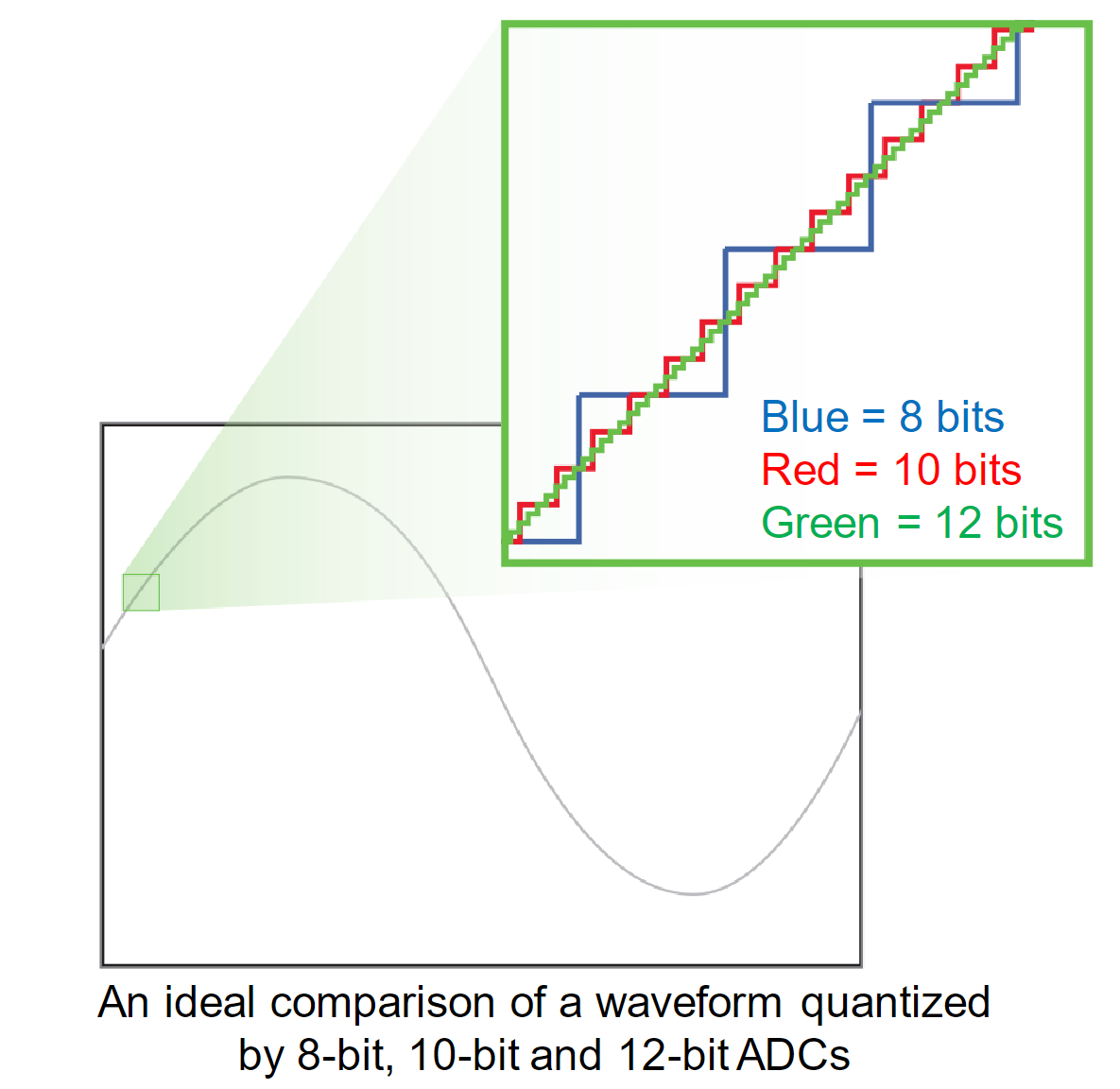
Bit depth refers to the number of bits used to measure a signal’s voltage. It defines how many levels the oscilloscope can detect. A higher bit depth means more levels. For example, an 8-bit oscilloscope can show 256 levels (2 to the power of 8). A 12-bit scope shows 4096 levels (2 to the power of 12). More levels mean more precise signal measurement.
Impact On Signal Resolution
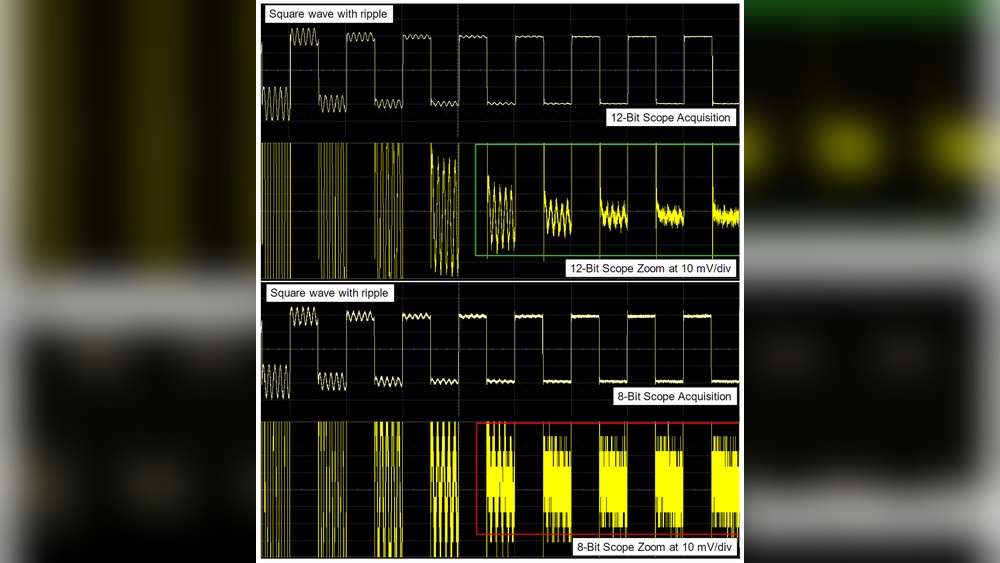
Signal resolution is how detailed the oscilloscope’s display is. Higher bit depth improves resolution by reducing the smallest voltage step it can detect. This helps in seeing small changes in the signal. With an 8-bit scope, some details might be lost. A 12-bit scope captures finer details, making the signal clearer. Better resolution helps in accurate analysis and troubleshooting.

Credit: www.researchgate.net
8 Bit Oscilloscope Features
The 8 Bit oscilloscope is a popular tool in many electronics labs. It offers basic features suitable for simple signal analysis. This oscilloscope converts analog signals into digital form using 8 bits for each sample. This process allows it to show waveforms on the screen.
While it is less detailed than 12 Bit scopes, the 8 Bit model still meets many testing needs. It balances cost and performance, making it widely used. Let’s explore its key features under different aspects.
Signal Accuracy
The 8 Bit oscilloscope has a resolution of 256 levels. This limits how finely it can measure signal changes. Small details in the waveform may not be clear. Noise and small signal variations can get lost. It works well for general waveform shapes and timing. Precise amplitude measurement is not its strong point.
Common Applications
These oscilloscopes are common in schools and hobby projects. They serve well for learning and basic troubleshooting. Simple circuits and audio signals are easy to test. It helps check signal timing and frequency. Electronics repair shops also use them for routine checks. They fit situations where high resolution is not critical.
Limitations
8 Bit scopes struggle with low-level signals. They cannot capture very small voltage changes accurately. Complex waveforms may appear distorted or unclear. High-frequency signals might not display well. The limited resolution affects detailed analysis. Professionals needing precise data often choose higher bit scopes. It is less suitable for advanced research or design work.
12 Bit Oscilloscope Features
12 bit oscilloscopes offer features that improve signal accuracy and detail. They provide higher resolution than 8 bit models. This means they capture more precise data from electronic signals. Such clarity helps engineers and technicians analyze waveforms more effectively.
The increased bit depth allows the oscilloscope to show subtle changes in voltage. This is crucial for complex or low-level signals. 12 bit scopes reduce noise and improve measurement quality. Their advanced features suit demanding testing environments.
Enhanced Signal Detail
12 bit oscilloscopes provide finer signal resolution. They can detect smaller voltage differences. This leads to clearer waveform shapes and better signal representation. Users see more detailed signal variations than with 8 bit scopes. This helps in troubleshooting and design verification.
Typical Use Cases
These oscilloscopes are ideal for precision electronics work. Applications include audio testing, medical devices, and research labs. They help in measuring low-level signals accurately. Users working on sensitive circuits benefit from their higher resolution. Industrial quality control also often requires 12 bit scopes.
Potential Drawbacks
12 bit oscilloscopes tend to cost more than 8 bit models. They may also have slower data acquisition speeds. This can affect real-time signal analysis in some cases. Their complexity might require more training to operate effectively. Still, the trade-off is often worth the improved accuracy.
Performance Comparison
Performance is a key factor in choosing between 8 bit and 12 bit oscilloscopes. These devices differ in how they handle signals and display data. Small changes can affect the accuracy and clarity of the results. Understanding these differences helps in making the right choice for your needs.
Noise Floor Differences
The noise floor is the smallest signal the oscilloscope can detect. An 8 bit oscilloscope has a higher noise floor. This means it may miss small details in the signal. A 12 bit oscilloscope has a lower noise floor. It can detect weaker signals more clearly. This improves the overall signal quality and reduces errors in measurement.
Dynamic Range
Dynamic range shows the difference between the smallest and largest signal the scope can measure. An 8 bit scope has a smaller dynamic range. This limits its ability to capture both weak and strong signals well. A 12 bit scope offers a wider dynamic range. It captures a broader range of signals without distortion. This helps in analyzing complex waveforms with high precision.
Sampling Rate Effects
Sampling rate is how often the oscilloscope reads the signal per second. Both 8 bit and 12 bit scopes can have similar sampling rates. But the 12 bit scope’s higher resolution gives it an edge. It records more accurate signal levels at each sample. This leads to better detail in the displayed waveform. It is especially useful for signals with subtle changes over time.
Choosing The Right Oscilloscope
Choosing the right oscilloscope depends on several key factors. Your choice affects the quality and accuracy of your measurements. Understanding the difference between 8 bit and 12 bit oscilloscopes helps you select the best tool for your needs. Focus on budget, application, and future needs to make a good decision.
Budget Considerations
Price plays a big role in choosing an oscilloscope. 8 bit models usually cost less than 12 bit ones. If your budget is tight, an 8 bit oscilloscope may be enough. It offers basic features and decent performance for simple tasks. Spending more on a 12 bit scope gives you better resolution and detail. Decide how much you want to spend before choosing.
Application Needs
Think about what you will use the oscilloscope for. 8 bit oscilloscopes work well for general testing and education. They handle most everyday signals with ease. 12 bit oscilloscopes suit complex signals and detailed analysis. They capture small signal changes more clearly. Choose the oscilloscope that matches the precision your work requires.
Future Proofing
Technology changes fast. A 12 bit oscilloscope offers more accuracy for future projects. It handles advanced and high-speed signals better. If you plan to work on more complex tasks soon, invest in a 12 bit model. This choice can save money in the long run. It keeps your setup ready for new challenges and upgrades.
Real World Testing Scenarios
Real world testing scenarios reveal clear differences between 8 bit and 12 bit oscilloscopes. Each has strengths that affect how well they perform in daily use. Understanding these helps choose the right tool for the task.
Measuring Low-level Signals
Low-level signals need careful measurement. A 12 bit oscilloscope offers better resolution for small signals. It shows finer details that an 8 bit scope might miss. This makes it easier to detect noise and subtle changes. For sensitive circuits, 12 bit scopes provide clearer insight.
High-speed Signal Capture
High-speed signals change quickly over time. Both 8 bit and 12 bit oscilloscopes can capture fast signals. The difference lies in how much detail they show. An 8 bit scope captures fast signals well but with less depth. A 12 bit scope captures the same speeds with more precision. This helps in analyzing complex waveforms.
Data Analysis Accuracy
Accurate data analysis depends on signal clarity and resolution. The 12 bit oscilloscope gives more accurate data points. This leads to better calculations and fewer errors. An 8 bit scope provides good data but with less accuracy. For detailed analysis, 12 bit scopes are a better choice.
Technological Advances
Oscilloscopes have evolved significantly with advances in technology. These changes improve how engineers and technicians measure and analyze signals. Bit depth plays a key role in this evolution. Higher bit depth offers better signal resolution and detail. This section explores trends in bit depth and how software tools work with oscilloscopes.
Trends In Bit Depth
Bit depth defines how many levels a signal can be divided into. Early oscilloscopes used 8-bit depth. This limits signal detail and accuracy. Recent models use 12-bit or higher. This allows capturing finer signal changes. More bit depth means clearer signal display. It reduces noise and enhances measurement precision. The shift from 8-bit to 12-bit is a major step forward. It supports advanced applications like medical devices and communications.
Integration With Software Tools
Modern oscilloscopes connect easily with software tools. These tools help analyze data quickly and accurately. Software can filter noise and highlight key signal parts. It also stores large data sets for later review. Integration allows remote control and real-time monitoring. Users can customize views and measurements. This makes testing more flexible and efficient. Software support is now essential for advanced oscilloscope use.

Credit: blog.teledynelecroy.com
Credit: knowhow.distrelec.com
Frequently Asked Questions
What Is The Difference Between 8 Bit And 12 Bit Oscilloscope?
An 8 bit oscilloscope displays 256 voltage levels, while a 12 bit shows 4096 levels. The 12 bit oscilloscope offers higher resolution and more precise signal measurement than the 8 bit.
Which Oscilloscope Bit Depth Is Better For Accuracy?
A 12 bit oscilloscope is better for accuracy. It captures finer signal details and reduces quantization error compared to an 8 bit oscilloscope.
How Does Bit Depth Affect Oscilloscope Signal Quality?
Higher bit depth improves signal quality by increasing vertical resolution. This means clearer, more detailed waveforms with less noise and distortion.
Are 12 Bit Oscilloscopes More Expensive Than 8 Bit?
Yes, 12 bit oscilloscopes typically cost more. They use advanced technology to provide better resolution, making them suitable for professional and precise measurements.
Conclusion
Choosing between 8 bit and 12 bit oscilloscopes depends on your needs. 12 bit offers better signal detail and accuracy. 8 bit models work well for basic tasks and cost less. Think about what you want to measure and your budget.
Both types have strengths that fit different users. Understanding these differences helps you pick the right tool. In the end, the best oscilloscope matches your specific projects and goals. Simple and clear choices lead to better results.

I’m Asif Ur Rahman Adib, an Electrical Engineer and lecturer. My journey began in the lab, watching students struggle with instruments they used every day without fully understanding them. Over time, I’ve combined teaching, research, and hands-on experience to help others grasp electrical concepts clearly, safely, and practically—whether it’s understanding a circuit or mastering a multimeter.