Choosing the right digital multimeter matters for everyday electrical tasks.
The Fluke 107 and Fluke 117 differ mainly in features like non-contact voltage detection and input impedance.
Imagine needing a reliable tool to check household wiring or troubleshoot appliances. You want something easy to use in dimly lit spaces. Sometimes you need quick voltage checks without touching wires. Other times, accurate readings on complex electronics are essential. Both meters serve well but suit different needs.
This article will help you understand which multimeter fits your daily tasks better.
How Practical Is The Fluke 107 For Basic Electrical Measurements?
Yes, the Fluke 107 handles common electrical checks effectively. It covers voltage, current, resistance, and capacitance with ease.
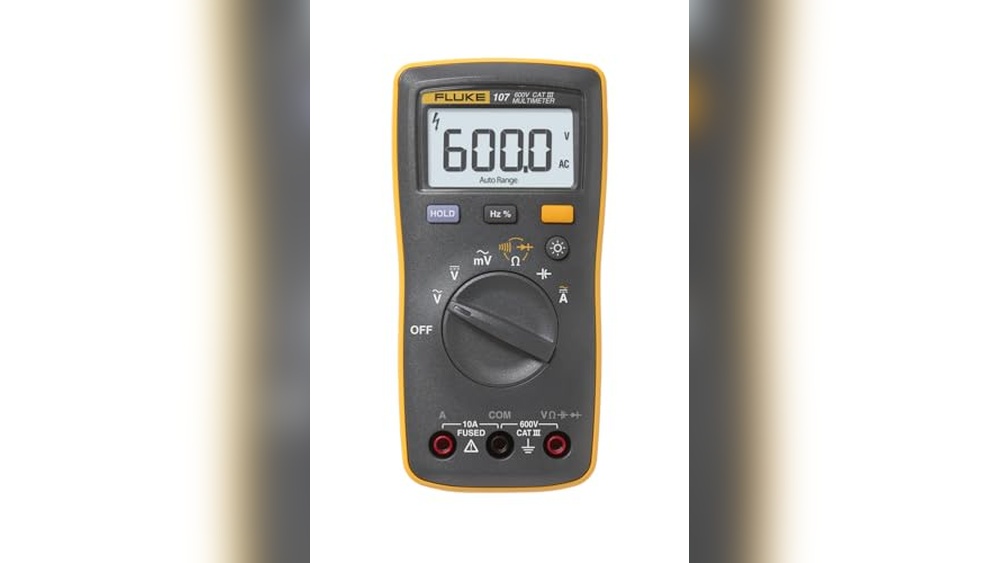
I found the Fluke 107 straightforward for routine tests around the house. Its data hold and backlit display helped when working in less bright areas. The device feels compact and safe with its CAT III 600 V rating. While it lacks some advanced features, it covers essential functions well. Its simplicity makes it a solid choice for those who want reliable, no-frills performance.

Key features that define the Fluke 107’s usefulness
- Measures AC/DC voltage, current, resistance, and capacitance
- Data hold function and backlit display for ease of use
- Includes diode test, frequency, and duty cycle measurements
- CAT III 600 V safety rating ensures safe handling
Where the Fluke 107 performs smoothly
- Simple and fast readings for standard electrical work
- Compact and lightweight for easy handling
- Backlit screen helps in low light environments
- Good for basic maintenance and troubleshooting tasks
Considerations when using the Fluke 107
- No non-contact voltage detection available
- Lacks true RMS measurement for complex loads
- Not equipped with low input impedance mode
When the Fluke 107 fits best in your toolkit
This multimeter is best for homeowners or technicians who need straightforward measurements without extra features. It makes daily checks easier by focusing on core functions without complexity. Beginners will find it simple to operate, while experienced users can rely on its accuracy for basic tasks. In my experience, using this meter reduces the fuss of unnecessary settings. A tip is to use the data hold feature when working in tight spots to avoid retaking measurements. It offers peace of mind with its safety rating and reliable readings.
What Advantages Does The Fluke 117 Offer For Electrical Troubleshooting?
It depends on your need for advanced features and convenience. The Fluke 117 includes non-contact voltage detection and low input impedance, which help avoid false readings.
The Fluke 117 impressed me with its VoltAlert technology. It allows quick checks without touching wires, which adds safety and saves time. The automatic AC/DC voltage selection and true RMS make it versatile for various electrical environments. The bright white LED backlight is useful when working in poorly lit areas. Although it’s heavier than the Fluke 107, the added features justify the weight for more detailed diagnostics.

Features that enhance the Fluke 117’s electrical testing
- VoltAlert technology for safe, non-contact voltage detection
- AutoVolt automatic AC/DC voltage selection
- Low input impedance to prevent ghost voltage readings
- True RMS for accurate measurements on complex loads
- Large white LED backlight for dark workspaces
What makes the Fluke 117 a preferred choice for detailed work
- Quick voltage presence check without touching wires
- Accurate readings on non-linear and distorted waveforms
- Good battery life even with backlight usage
- Compact but slightly heavier, feels solid in hand
Potential compromises when opting for the Fluke 117
- Higher price point compared to simpler models
- Heavier and bulkier than basic multimeters
Who benefits most from choosing the Fluke 117
The Fluke 117 suits electricians and serious DIYers who need more than basic measurements. It simplifies tasks with non-contact voltage detection and accurate readings on tricky circuits. Beginners can adapt quickly thanks to automatic settings, while pros will appreciate the precision. In my experience, this meter reduces guesswork and improves safety on the job. A practical tip is to use the low impedance mode to avoid false voltage signals. It brings peace of mind when diagnosing sensitive electronics.
How The Fluke 107 And Fluke 117 Compare In Everyday Electrical Work
I tested both meters on household wiring, appliance troubleshooting, and simple circuit checks. The Fluke 107 handled basic tasks well, while the Fluke 117 provided more confidence with voltage detection features. Both were easy to use, but the 117 offered extra convenience in tricky situations. Size and weight differences were noticeable in longer use. Overall, their performance depends on the complexity of the job.
Which meter offers better voltage detection and safety features?
The Fluke 117 has non-contact voltage detection and low impedance mode, enhancing safety and accuracy. The Fluke 107 lacks these but maintains a solid safety rating.
| Metric | Fluke 107 Basic Multimeter | Fluke 117 Advanced Multimeter |
|---|---|---|
| Non-contact voltage detection | No | Yes (VoltAlert) |
| Low input impedance mode | No | Yes |
| Safety rating | CAT III 600 V | CAT III 600 V |
Ratings: Fluke 107 – Good for basic safety, Fluke 117 – Better for added protection.
Edge: Fluke 117 suits users prioritizing safety and voltage detection.
How do these models differ in measurement capabilities?
Both measure AC/DC voltage, current, resistance, and capacitance. The Fluke 117 adds true RMS for accuracy on complex loads, unlike the 107.
| Metric | Fluke 107 Basic Multimeter | Fluke 117 Advanced Multimeter |
|---|---|---|
| True RMS measurement | No | Yes |
| Frequency and duty cycle | Yes | Yes |
| Diode test | Yes | No mention |
Ratings: Fluke 107 – Covers essential functions, Fluke 117 – More precise for complex signals.
Edge: Fluke 117 is better for accurate diagnostics on non-linear loads.
What are the differences in size and portability?
The Fluke 107 is lighter and slightly bulkier in width, while the Fluke 117 is more compact but heavier.
| Metric | Fluke 107 Basic Multimeter | Fluke 117 Advanced Multimeter |
|---|---|---|
| Weight | 0.44 pounds | 1.21 pounds |
| Dimensions (HxWxL) | 2.17″ x 11″ x 8.27″ | 1.82″ x 3.31″ x 6.67″ |
Ratings: Fluke 107 – Lighter but wider, Fluke 117 – More compact, heavier.
Edge: Fluke 117 fits better in tight spaces; Fluke 107 is easier to carry for quick checks.
How do they perform in low light or difficult working conditions?
Both have backlit displays; the Fluke 117 uses a large white LED backlight, making it easier to see.
| Metric | Fluke 107 Basic Multimeter | Fluke 117 Advanced Multimeter |
|---|---|---|
| Backlit display type | Standard backlight | Large white LED backlight |
| Battery life (typical) | Not specified | 400 hours without backlight |
Ratings: Fluke 107 – Adequate visibility, Fluke 117 – Better for dim environments.
Edge: Fluke 117 is preferable when working in poorly lit or cramped areas.
Deciding Between The Fluke 107 And Fluke 117 For Your Electrical Needs
Choose the Fluke 107 if you want a straightforward, lightweight multimeter for routine electrical checks. It’s ideal for beginners or anyone focused on basic measurements without extra features. Its simplicity and safety rating make it a dependable companion for standard tasks.
The Fluke 117 is better for those who require additional safety features and accurate readings on complex circuits. Electricians and advanced DIYers will benefit from its non-contact voltage detection and true RMS capability. It offers more versatility and convenience for detailed troubleshooting.
Both are solid tools, and your choice depends on the level of functionality you need in daily use.
Common Questions About Fluke 107 Vs 117 For Everyday Electrical Work
Can the Fluke 107 detect live wires without contact?
No, the Fluke 107 does not have non-contact voltage detection. You need to use probes to check voltage manually. For contact-free detection, the Fluke 117 is a better option.
Is the Fluke 117 suitable for beginners?
Yes, the Fluke 117 offers automatic AC/DC voltage selection and simple operation, making it beginner-friendly. However, its advanced features might be more beneficial for experienced users.
Do both meters provide accurate readings on complex electronic devices?
The Fluke 117 includes true RMS measurement, which improves accuracy on non-linear loads. The Fluke 107 lacks this, so it may be less precise in such scenarios.
Which multimeter is more portable for fieldwork?
The Fluke 107 is lighter but wider, making it easy to carry for quick checks. The Fluke 117 is more compact but heavier, which may affect portability depending on your preference.
How long do the batteries last on these multimeters?
The Fluke 117 typically lasts about 400 hours without backlight use. Battery life for the Fluke 107 is not specified but is generally sufficient for routine tasks.

I’m Asif Ur Rahman Adib, an Electrical Engineer and lecturer. My journey began in the lab, watching students struggle with instruments they used every day without fully understanding them. Over time, I’ve combined teaching, research, and hands-on experience to help others grasp electrical concepts clearly, safely, and practically—whether it’s understanding a circuit or mastering a multimeter.