How To Decide Between Fluke 114 And 117 Multimeters
- Pick Fluke 114 if you want straightforward voltage and continuity testing without extra features.
- Choose Fluke 117 when non-contact voltage detection is important for your safety and convenience.
- Go with Fluke 114 for clear readings in dim conditions with its bright white LED backlight.
- Prefer Fluke 117 if you need True RMS for accurate measurements on complex electrical loads.
- Fluke 114 makes more sense for basic electrician work focused on reliability and ease of use.
- Fluke 117 is the safer bet for those who want extended functionality and advanced detection tech.
Does The Fluke 114 Cover Essential Electrician Needs Well?
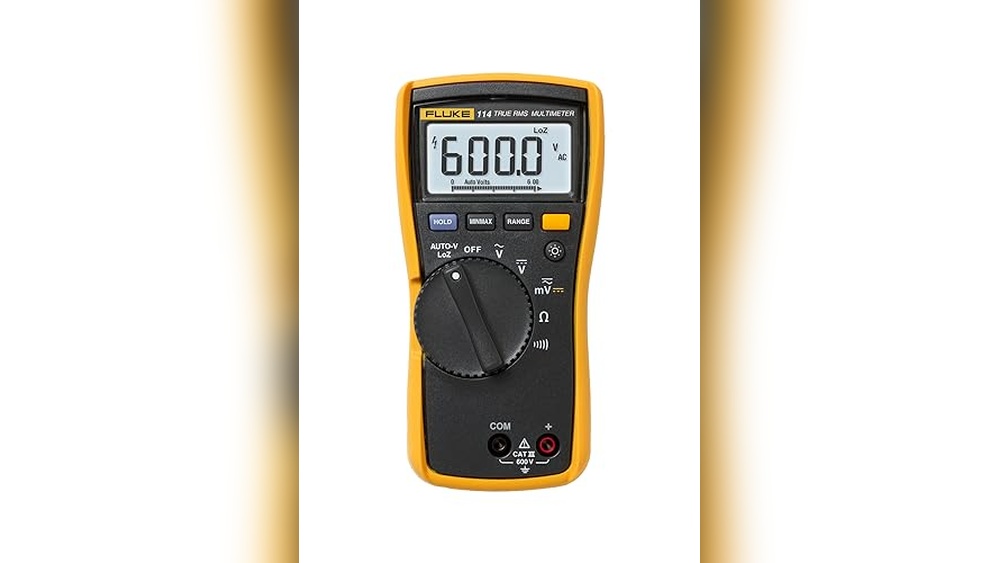
Yes, the Fluke 114 offers reliable features tailored for electricians focusing on voltage, resistance, and continuity checks. Its AutoVolt function automatically selects AC or DC voltage, simplifying operation. The low input impedance reduces false readings caused by ghost voltage. Its large white LED backlight makes it practical in poorly lit spaces. In daily use, I find the Fluke 114 comfortable to handle and efficient for routine electrical troubleshooting. The ability to record signal fluctuations with Min/Max/Average is useful for observing unstable circuits. The device feels robust without overwhelming with unnecessary functions. Its size and weight balance portability with ease of grip during extended work sessions.
Core strengths of the Fluke 114 for electricians
- AutoVolt automatic AC/DC voltage selection for ease of use
- Low input impedance to prevent false ghost voltage readings
- Large white LED backlight helps in low-light environments
- Resistance and continuity measurement functions
- Record signal changes with Min/Max/Average feature
Key considerations before choosing Fluke 114
- Lacks non-contact voltage detection found in some advanced models
- No True RMS feature for non-linear load measurements
- Relatively larger dimensions compared to more compact testers
A practical take on the Fluke 114’s daily value
This model suits electricians who prioritize straightforward, dependable readings without extra complexity. It removes stress by minimizing false readings and lighting challenges during work. Beginners will find it intuitive, while experienced users appreciate its focused design. A practical tip is to regularly use the Min/Max/Average function to monitor signal stability. In my experience, the Fluke 114 offers peace of mind through solid reliability in everyday electrical tasks.
Is The Fluke 117 The Right Choice For Enhanced Electrical Testing?
It depends on your needs for additional features like non-contact voltage detection and True RMS accuracy. The Fluke 117 includes VoltAlert technology which detects voltage without physical contact, increasing safety. It also supports True RMS measurements, which is helpful for non-linear loads. These features come alongside a similar automatic AC/DC voltage selection and backlit display. Daily use of the Fluke 117 reveals convenience when working around live circuits without probes touching wires. The compact size and yellow casing make it easy to spot and handle. Battery life is solid, and the variety of measurement options covers resistance, frequency, capacitance, and more. I appreciate how it balances advanced features with straightforward operation, making it versatile for both pros and hobbyists.
What the Fluke 117 excels at in electrical measurements
- VoltAlert non-contact AC voltage detection for safety
- True RMS for accurate readings on complex electrical loads
- AutoVolt automatic AC/DC voltage selection
- Large white LED backlight for visibility in dark areas
- Measures resistance, continuity, frequency, capacitance, and more
Important points before opting for Fluke 117
- Higher price point compared to simpler models
- Compact size may feel smaller for some users
- Battery life can vary if backlight is used extensively
Insight on the Fluke 117’s role in advanced toolkits
The Fluke 117 fits well for users who need extra safety and precision features. It eliminates common worries about touching live wires with its non-contact voltage detection. Beginners might take a bit to get familiar with all functions, but experienced users benefit from the True RMS accuracy. I recommend keeping the backlight off unless necessary to extend battery life. In my experience, this multimeter delivers solid confidence on varied electrical jobs, balancing innovation with ease.
Key Questions To Clarify Your Multimeter Choice
Do you need non-contact voltage detection for safer measurements? Is True RMS important for the types of electrical loads you test? How often will you work in low-light or cramped spaces? Do you prefer a compact tool or one with a larger display? Are you focused on basic voltage and continuity checks or a broader range of functions? How important is price versus advanced features in your selection?Fluke 114 Vs 117: Practical Differences In Everyday Use
Both models handle basic voltage and resistance tests well, but the 117 adds convenience and safety with non-contact detection. The 114 offers a larger form factor and simpler feature set, while the 117’s True RMS measurement suits more complex loads. Display visibility is strong on both, though the 114’s backlight is very bright. Pricing reflects added features in the 117, but the 114 remains a practical choice for straightforward tasks.Which model is better for voltage detection safety?
The Fluke 117 includes VoltAlert technology allowing non-contact AC voltage detection, which the 114 lacks. This reduces the need to touch wires directly, improving user safety during testing.| Feature | Fluke 114 | Fluke 117 |
|---|---|---|
| Non-contact voltage detection | No | Yes (VoltAlert) |
| Touch contact required for voltage | Yes | Yes |
| Safety during live wire testing | Standard | Enhanced |
| User confidence in hazardous environments | Moderate | Higher |
So what? Those prioritizing safety around live circuits should consider the 117’s non-contact detection.
How do they differ in measurement accuracy on complex loads?
The Fluke 117 provides True RMS measurement, which yields accurate readings on non-linear loads. The Fluke 114 lacks this, making it less suitable for some modern electrical systems.| Decision point | Fluke 114 | Fluke 117 |
|---|---|---|
| True RMS capability | No | Yes |
| Accuracy on non-linear loads | Limited | Reliable |
| Ideal for advanced diagnostics | No | Yes |
| Use in industrial or residential settings | Basic | Advanced |
So what? For precise work on modern electronics, the 117 is the preferred tool.
Which multimeter is easier to use in dim or cramped spaces?
Both devices have large white LED backlights, but the Fluke 114’s bigger size may offer a more comfortable grip. The 117 is more compact and easier to carry but smaller in hand.| Use case | Fluke 114 | Fluke 117 |
|---|---|---|
| Backlight quality | Bright and large | Bright and large |
| Form factor | Larger, less pocket-friendly | Compact and portable |
| Grip comfort | Good for longer use | Smaller hand feel |
| Storage convenience | Less convenient | More convenient |
So what? Users needing portability might prefer the 117, while those wanting comfort during longer tasks may favor the 114.
How do their prices compare relative to features?
The Fluke 114 is more affordable, focusing on essential functions. The Fluke 117 costs more but includes extra capabilities like non-contact voltage and True RMS.| Metric | Fluke 114 | Fluke 117 |
|---|---|---|
| Current price | $168.08 | $216.62 |
| Original price | $227.54 | $304.99 |
| Feature set | Basic electrician needs | Advanced measurements |
| Value for price | Good | Strong |
So what? Budget-conscious buyers find the 114 sufficient, while those needing extras accept the 117’s higher cost.
Choosing The Right Fluke Multimeter For Your Electrical Tasks
The Fluke 114 fits users focused on straightforward voltage, resistance, and continuity testing. It suits electricians who want a dependable and easy-to-use tool without extra complexity. Its larger size and clear backlight reduce reading errors in low light. The Fluke 117 is better for those who need enhanced safety with non-contact voltage detection and more accurate True RMS measurements. It appeals to professionals dealing with modern electrical loads and who value compactness. The additional measurement functions broaden its usefulness. If unsure, consider how often you require advanced features versus basic testing. For simple and reliable everyday work, the Fluke 114 is practical. For added safety and precision, the Fluke 117 makes a confident choice.Common Questions About Fluke 114 Vs 117 Multimeters
Can I use the Fluke 114 for non-contact voltage detection?
No, the Fluke 114 does not have non-contact voltage detection. For that feature, the Fluke 117 includes VoltAlert technology.
Which model is better for measuring complex electronic devices?
The Fluke 117 is preferable because it has True RMS capability, providing accurate readings on non-linear loads, unlike the Fluke 114.
Are these multimeters suitable for beginners?
Yes, both are usable by beginners. The Fluke 114 is simpler, while the Fluke 117 offers more features that may take some getting used to.
How long does the battery last on these models?
The Fluke 117 typically lasts about 400 hours without backlight. Battery life varies depending on usage, especially backlight use. Battery life for the Fluke 114 is solid but not specifically detailed.
Is the display easy to read in dim conditions?
Both have large white LED backlights that improve readability in low light. The Fluke 114’s larger size may make it easier to handle during prolonged use.
Are there size differences affecting portability?
Yes, the Fluke 117 is more compact and easier to carry, while the Fluke 114 is larger but offers a more comfortable grip for longer work sessions.
Do these multimeters come with any special measurement modes?
The Fluke 114 includes Min/Max/Average recording for signal fluctuations. The Fluke 117 adds frequency and capacitance measurement options alongside that.

I’m Asif Ur Rahman Adib, an Electrical Engineer and lecturer. My journey began in the lab, watching students struggle with instruments they used every day without fully understanding them. Over time, I’ve combined teaching, research, and hands-on experience to help others grasp electrical concepts clearly, safely, and practically—whether it’s understanding a circuit or mastering a multimeter.