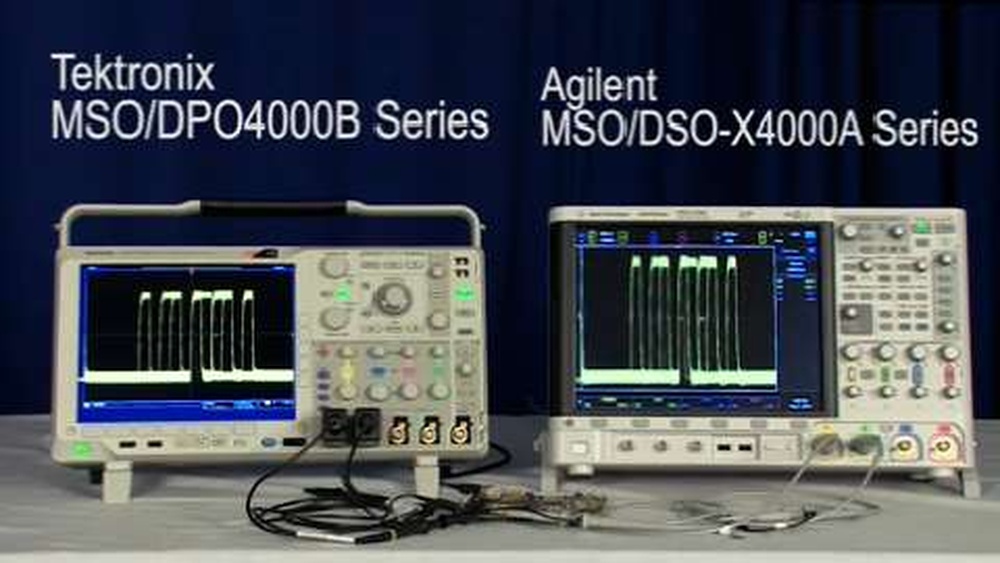
When it comes to choosing the right test and measurement equipment, you want to make sure you pick the best fit for your needs. Agilent and Tektronix are two big names you’ve probably heard of, but which one truly stands out?
Whether you’re a seasoned engineer or just starting out, understanding their strengths and differences can save you time, money, and frustration. You’ll discover clear insights that help you decide which brand matches your goals perfectly. Keep reading to find out how Agilent and Tektronix compare, so you can make a smart choice with confidence.
Company Backgrounds
Understanding the background of Agilent and Tektronix helps to see their place in the tech world. Both companies have rich histories that shape their products and services today. Their stories reveal their strengths and focus areas.
Agilent History And Evolution
Agilent started in 1999 as a spin-off from Hewlett-Packard. It focused on test and measurement equipment and life sciences. The company quickly built a strong reputation for quality and innovation. Over time, Agilent expanded into various scientific instruments. It serves industries like healthcare, environment, and electronics. Agilent’s growth came from investing in research and acquiring smaller firms. It aims to provide precise and reliable tools for professionals worldwide.
Tektronix Origins And Growth
Tektronix was founded in 1946 in Oregon, USA. The company began by making oscilloscopes, which became its signature product. Tektronix gained fame for its user-friendly, accurate instruments. The business grew steadily and expanded into other test and measurement tools. It served customers in communications, aerospace, and education sectors. Tektronix’s focus on innovation helped it stay relevant for decades. Today, it remains a trusted name in electronic test equipment.
Product Range
Choosing the right test equipment depends on the product range each brand offers. Both Agilent and Tektronix provide a wide variety of tools. These tools serve different industries and testing needs. Understanding their product lineups helps pick the best option for your projects.
Agilent Test Equipment Lineup
Agilent offers many test instruments. They focus on precision and reliability. Their range includes oscilloscopes, signal generators, and spectrum analyzers. These tools support electronics design and troubleshooting. Agilent also produces network analyzers and power meters. Their products suit labs and production lines. Agilent’s tools often come with advanced software. This helps simplify complex measurements. The lineup covers both basic and high-end testing needs.
Tektronix Test Instruments
Tektronix is known for its strong oscilloscope lineup. They provide digital and analog oscilloscopes. Tektronix also offers signal generators and logic analyzers. Their instruments focus on ease of use and innovation. Users find their interfaces clear and intuitive. Tektronix tools are popular in education and research. They also produce spectrum analyzers and protocol analyzers. Their product range balances performance with affordability. Tektronix caters well to engineers and technicians.
Performance And Accuracy
Performance and accuracy play a vital role in choosing the right test equipment. Both Agilent and Tektronix offer strong options. Their devices aim to deliver clear signals and precise measurements. Understanding how they handle signal quality and measurement consistency helps users pick the best fit.
Signal Quality And Precision
Agilent devices provide clean, sharp signal displays. Their technology reduces noise and interference effectively. This clarity helps users see true waveform details. Tektronix also excels in signal quality. It offers high resolution and fast signal processing. Both brands support precise data capture for detailed analysis.
Precision is key for accurate results. Agilent uses advanced algorithms to enhance signal fidelity. Tektronix focuses on real-time signal accuracy and minimal distortion. Users can trust both for critical testing and development.
Measurement Consistency
Consistent measurements ensure reliable test results over time. Agilent instruments maintain stable readings across different tests. This stability reduces the need for frequent recalibration.
Tektronix also delivers steady measurements with low drift. Their equipment stays accurate even in varying environments. Both brands provide tools to verify and adjust measurement consistency.
Choosing between Agilent and Tektronix depends on specific needs. Both offer strong performance and trustworthy accuracy for many applications.
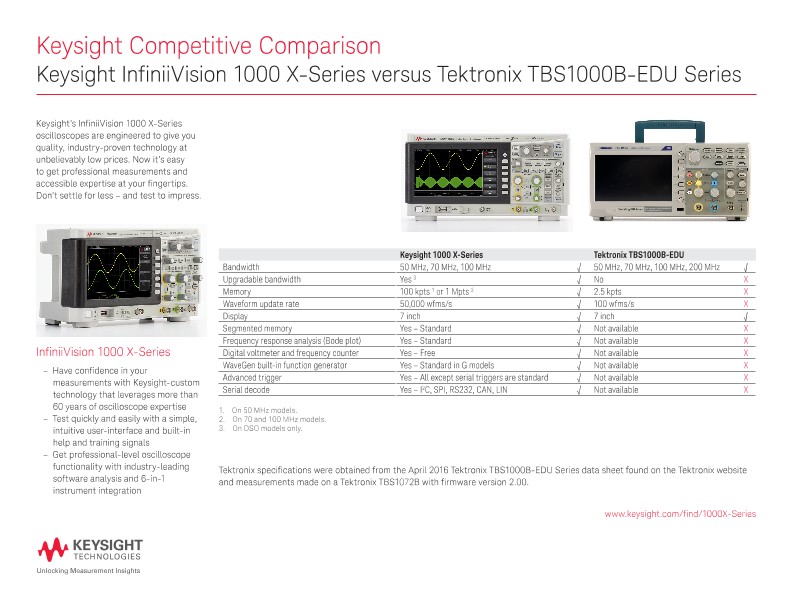
Credit: www.keysight.com
User Interface And Ease Of Use
User interface and ease of use are key factors for test equipment. Both Agilent and Tektronix focus on making their devices simple and clear. Users spend less time learning and more time testing. The design affects how quickly users complete tasks and reduce errors.
Each brand offers distinct approaches in software and hardware. These differences shape the overall user experience. Understanding them helps choose the right tool for your needs.
Software Features
Agilent software is known for its clean layout. Menus are easy to navigate with clear labels. Users can access common functions with few clicks. The touchscreen responds smoothly, improving control speed.
Tektronix software also offers a user-friendly interface. It includes helpful tutorials and guided steps. The system supports quick setup with preset configurations. Users can customize views to suit their workflow.
Both brands support remote control through apps. This feature adds flexibility for monitoring tests from a distance. The software updates regularly to fix bugs and add useful functions.
Hardware Design
Agilent devices have a compact and sturdy build. Buttons are well spaced and easy to press. The screen is bright and shows clear details. Knobs turn smoothly, allowing precise adjustments.
Tektronix instruments focus on ergonomic design. The layout groups controls logically by function. The screen size is slightly larger for better visibility. Physical controls provide tactile feedback, helping users avoid mistakes.
Both brands design their hardware to reduce fatigue during long use. They use durable materials to withstand tough environments. Portability and weight are balanced to suit different workspaces.
Connectivity And Integration
Connectivity and integration are vital for modern test and measurement tools. Both Agilent and Tektronix design their devices to connect easily with other equipment and networks. This helps users share data quickly and work more efficiently. Reliable connections reduce downtime and simplify complex setups.
Communication Options
Agilent devices offer multiple communication ports like USB, Ethernet, and GPIB. These allow fast data transfer and remote control. Tektronix also provides similar ports, with added options for Wi-Fi on some models. This wireless option supports flexible setups without cables. Both brands support standard protocols for easy device communication.
Compatibility With Other Devices
Agilent instruments work smoothly with many software platforms and hardware tools. They support common file formats for easy data sharing. Tektronix ensures compatibility with popular analysis and automation software. Their devices fit well into existing systems, making upgrades simpler. Users can connect oscilloscopes, signal generators, and analyzers without extra adapters.
Pricing And Value
Pricing and value play a big role in choosing between Agilent and Tektronix. Both brands offer strong features but vary in cost. Understanding the pricing helps buyers decide which tool fits their budget and needs. Value is not just the price tag but the benefits and reliability you get over time.
Cost Comparison
Agilent devices generally come with a higher price. The brand targets professionals who need precision and advanced functions. Tektronix offers more budget-friendly options. It suits those with basic to mid-level requirements. Both brands provide different models at various price points. This range helps users select instruments that match their financial limits.
Long-term Investment
Investing in test equipment is about more than initial cost. Agilent products often last longer and need less repair. This lowers expenses over time. Tektronix devices may require more maintenance but cost less upfront. Consider how often you will use the equipment. Also, think about potential upgrades and support services. A tool that works well for years offers better value.
Customer Support And Service
Customer support and service are crucial factors when choosing between Agilent and Tektronix. Both companies offer reliable assistance to ensure users get the most from their instruments. Good support helps reduce downtime and improves the overall experience with the product.
Support covers several areas, such as warranty, repairs, and training. Each brand has a unique approach to these services. Understanding their offerings helps users decide which suits their needs better.
Warranty And Repairs
Agilent provides a standard warranty that covers defects and malfunctions. Repairs are handled quickly through authorized service centers. They use original parts to maintain product quality.
Tektronix also offers a solid warranty with clear terms. Their repair service is known for fast turnaround times. Users can send devices to certified technicians for reliable fixes.
Training And Resources
Agilent offers extensive training materials online. Videos, manuals, and webinars help users learn at their own pace. Their support site has a large library of resources.
Tektronix provides hands-on training sessions and detailed user guides. They focus on practical learning to improve skills. Online tutorials and forums are also available for user support.
Use Cases And Industry Applications
Understanding the use cases and industry applications helps to see how Agilent and Tektronix fit into different fields. Each brand offers tools designed for specific needs. These tools support engineers, technicians, and researchers in their daily tasks. Both brands serve many industries but with different focuses.
Agilent In Different Sectors
Agilent products are common in healthcare and life sciences. Their instruments help analyze chemicals and biological samples. Labs use Agilent equipment for drug development and quality testing. The electronics sector relies on Agilent for precise measurement tools. These tools assist in designing and testing electronic devices. Agilent also supports environmental monitoring. Their devices measure pollutants and ensure safety standards. Manufacturing industries use Agilent for material testing and process control. This ensures products meet high-quality standards.
Tektronix In Various Industries
Tektronix is well-known in electronics and telecommunications. Their oscilloscopes and signal analyzers test circuits and networks. These tools help engineers fix and improve devices. Tektronix products are popular in education for training students. They provide hands-on learning with real equipment. Automotive industries use Tektronix to test vehicle electronics. This helps improve safety and performance. Aerospace and defense sectors rely on Tektronix for reliable testing solutions. Their products support mission-critical systems and research.
Pros And Cons Summary
The pros and cons summary helps to see the main points clearly. It shows what each brand does best and where it lacks. This makes it easier to pick the right tool for your needs. Let’s explore the strengths of Agilent and Tektronix.
Strengths Of Agilent
Agilent offers reliable and accurate test instruments. Their devices have strong signal analysis features. They provide excellent support for complex measurements. Agilent tools often come with user-friendly interfaces. They are well-suited for advanced research and development. The brand ensures long-term product durability. Agilent’s software updates keep instruments current. Their products support a wide range of applications.
Strengths Of Tektronix
Tektronix is known for easy-to-use equipment. Their oscilloscopes deliver fast and clear readings. Tektronix devices have strong waveform analysis tools. They offer compact and portable designs. The brand provides good customer support and training. Tektronix products often have competitive pricing. Their instruments work well in education and industry. Tektronix focuses on innovation and practical features.

Credit: www.youtube.com
Credit: www.tek.com
Frequently Asked Questions
What Are The Main Differences Between Agilent And Tektronix?
Agilent focuses on high-precision measurement instruments, while Tektronix offers versatile test and measurement solutions. Both excel in oscilloscopes, but Agilent emphasizes advanced analysis, and Tektronix prioritizes user-friendly interfaces.
Which Brand Offers Better Oscilloscopes For Engineers?
Tektronix provides a wide range of user-friendly oscilloscopes suitable for various engineering needs. Agilent’s oscilloscopes are preferred for high accuracy and advanced features in specialized fields.
Are Agilent Products More Expensive Than Tektronix?
Generally, Agilent products are priced higher due to advanced technology and precision. Tektronix offers competitive pricing with a focus on usability and broad application support.
How Does Customer Support Compare Between Agilent And Tektronix?
Both companies provide strong customer support, but Tektronix is often praised for faster response times. Agilent offers extensive online resources and detailed technical assistance.
Conclusion
Choosing between Agilent and Tektronix depends on your specific needs. Both brands offer reliable and accurate test equipment. Agilent often suits users who want advanced features and detailed analysis. Tektronix provides easy-to-use tools for quick and effective testing. Consider your budget and the type of projects you handle.
Think about the support and warranty each brand offers. Both companies have strong reputations in the market. Your decision should match your skill level and work demands. This way, you get the best value for your investment.

I’m Asif Ur Rahman Adib, an Electrical Engineer and lecturer. My journey began in the lab, watching students struggle with instruments they used every day without fully understanding them. Over time, I’ve combined teaching, research, and hands-on experience to help others grasp electrical concepts clearly, safely, and practically—whether it’s understanding a circuit or mastering a multimeter.