Are you trying to figure out whether a spectrum analyzer or an oscilloscope is the right tool for your work? Both devices look similar and seem to do the same job, but they serve very different purposes.
Choosing the wrong one can waste your time and money, and slow down your project. You’ll discover the key differences between a spectrum analyzer and an oscilloscope, how each works, and when you should use one over the other. By the end, you’ll have the confidence to pick the perfect tool for your needs and get the job done right.
Keep reading to unlock the secrets that can make your work easier and more precise.
Key Features Of Spectrum Analyzers
Spectrum analyzers are essential tools for examining signals in the frequency domain. They help users see how signal power spreads across different frequencies. This makes them useful for tasks like testing wireless devices, troubleshooting interference, and designing circuits.
Understanding the key features of spectrum analyzers reveals why they are valuable in many fields. These features focus on frequency range, signal strength measurement, and user interface. Each aspect plays a role in how effectively the device performs.
Frequency Range And Resolution
Spectrum analyzers cover a wide frequency range from very low to very high frequencies. This allows them to capture signals from radios, Wi-Fi, and other sources. The frequency resolution defines how close two signals can be while still being seen as separate. Better resolution helps detect small differences in frequency, improving accuracy.
Signal Strength Measurement
These devices measure the power level of signals. They show how strong or weak a signal is at different frequencies. Signal strength is usually displayed in units like dBm or volts. Accurate measurement helps identify interference and signal quality issues quickly.
Display And Interface
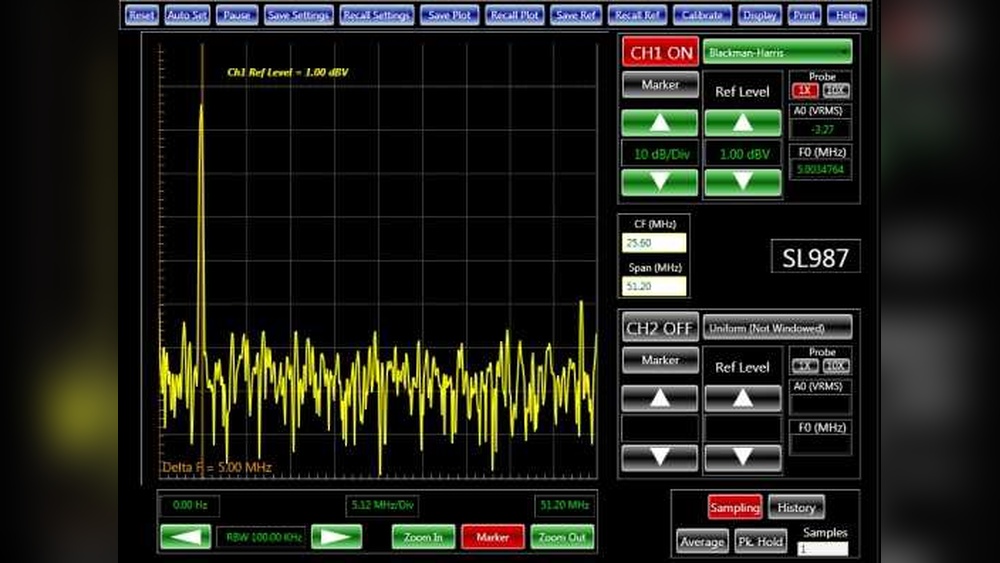
Spectrum analyzers feature clear displays that show frequency on the horizontal axis and signal strength on the vertical axis. Many models have color screens and easy-to-use menus. Simple controls make it faster to set up tests and analyze results. Good interfaces reduce errors and save time.
Credit: www.learningaboutelectronics.com
Core Features Of Oscilloscopes
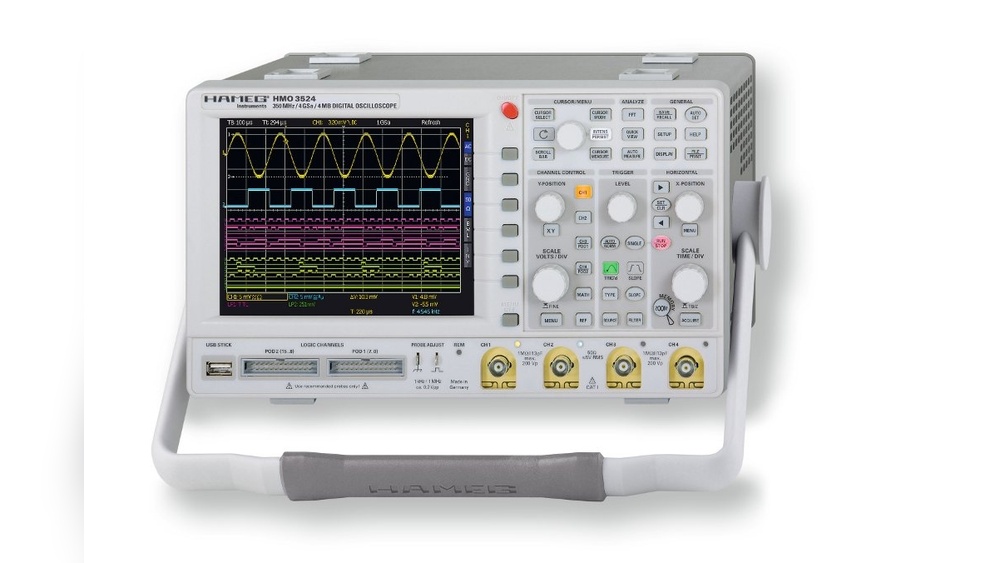
Oscilloscopes are essential tools for anyone working with electronic signals. They show how signals change over time. This helps users understand signal behavior and troubleshoot circuits effectively.
Oscilloscopes have key features that make them useful. These features focus on showing signals clearly and measuring them accurately. Understanding these core features helps choose the right tool for your needs.
Time Domain Signal Visualization
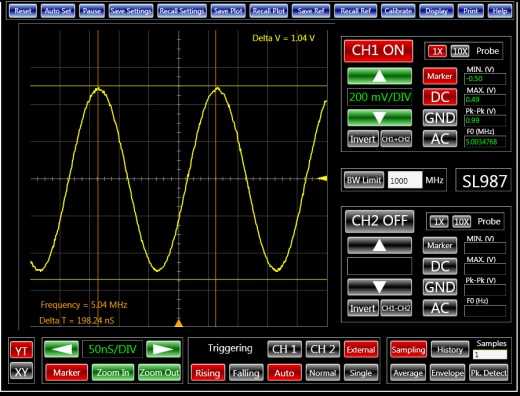
Oscilloscopes display signals in the time domain. This means they show voltage changes over time on a screen. Users see wave shapes and how they evolve. This helps spot problems like noise or distortion in signals.
The screen shows a graph with time on the horizontal axis. Voltage appears on the vertical axis. This clear view makes it easy to analyze signal patterns and timing.
Triggering And Sampling Rates
Triggering locks the signal display at a specific point. This stabilizes repeating signals on the screen. Users can examine signals in detail and catch specific events.
Sampling rate is how often the oscilloscope measures the signal. Higher rates capture more detail and faster signals. This is important for accurate and clear signal display.
Display And Measurement Tools
Oscilloscopes include tools to measure signal properties. These tools show voltage peaks, frequency, and timing differences. They provide exact numbers, not just graphs.
The display is bright and easy to read. It often supports multiple signals at once. This helps compare signals or check how different parts of a circuit work together.
Primary Differences In Functionality
The primary differences in functionality between a spectrum analyzer and an oscilloscope lie in how they process and display signals. Each tool serves a unique purpose in electronics and signal analysis. Understanding their core functions helps in choosing the right instrument for a specific task.
Frequency Vs Time Domain Analysis
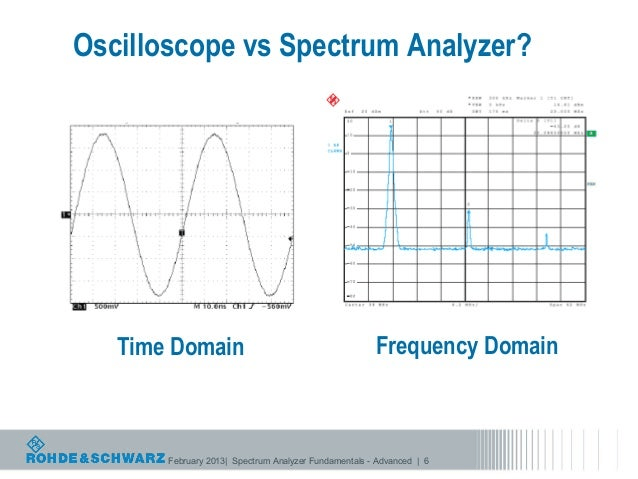
A spectrum analyzer shows signals in the frequency domain. It breaks down signals into individual frequencies and displays their strength. This helps identify frequency components and interference.
An oscilloscope displays signals in the time domain. It shows how a signal changes over time. This view is useful for observing wave shapes, timing, and transient events.
Signal Types And Applications
Spectrum analyzers are ideal for radio frequency (RF) signals and wireless communication. They analyze bandwidth, harmonics, and noise in signals. This makes them common in broadcasting and signal testing.
Oscilloscopes work best with time-varying signals like pulses and digital data. They capture fast changes in voltage over time. Engineers use oscilloscopes for debugging circuits and timing issues.
Measurement Accuracy And Limitations
Spectrum analyzers offer precise frequency measurements but less detail on signal timing. They can miss short, fast events due to sweeping speeds. Noise floor and dynamic range affect their accuracy.
Oscilloscopes provide high accuracy in time and voltage but limited frequency resolution. Sampling rate and bandwidth limit the highest frequency measurable. They may not clearly show frequency components.
Credit: www.oscopes.info
Use Cases For Spectrum Analyzers
Spectrum analyzers play a vital role in many fields. They help measure signal frequencies and power levels. These tools provide a clear picture of the signal environment. Engineers use spectrum analyzers to detect and solve signal problems quickly. Their ability to show frequency details makes them essential in different applications.
Wireless Communication Testing
Spectrum analyzers check wireless signals for quality and strength. They find signal interference that could cause problems. These devices help test Wi-Fi, Bluetooth, and cellular networks. Engineers use them to ensure signals meet standards. This testing improves communication reliability and speed.
Emi And Noise Analysis
Spectrum analyzers detect electromagnetic interference (EMI) from devices. They identify noise sources that affect system performance. This analysis helps in reducing unwanted signals. It ensures electronic products work without causing interference. Engineers use this tool to improve product safety and quality.
Component Characterization
Spectrum analyzers measure the frequency response of components. They test filters, amplifiers, and oscillators for accuracy. This helps in designing and verifying electronic parts. Engineers check if components meet required specifications. It speeds up the development of reliable devices.
Use Cases For Oscilloscopes
Oscilloscopes are essential tools in electronics. They show how electrical signals change over time. This makes them valuable for many tasks in design and repair.
They help engineers and technicians understand circuit behavior. Oscilloscopes provide visual feedback that is hard to get with other tools. This section explains key uses of oscilloscopes in different situations.
Circuit Debugging And Validation
Oscilloscopes help find problems in circuits. They show voltage changes on wires and components. This makes it easy to spot faults and errors. Engineers can check if circuits work as planned. Adjustments can be made quickly using this feedback.
Waveform Analysis
Oscilloscopes display wave shapes of signals. This helps analyze signal quality and form. Users can measure amplitude, frequency, and noise. Waveform analysis is vital for audio, radio, and digital signals. It ensures signals meet required standards.
Transient And Timing Measurements
Oscilloscopes capture fast changes in signals called transients. They measure timing between events with high accuracy. This is important for digital circuits and communication systems. Timing errors and glitches become visible. Engineers can improve system reliability with this data.
Choosing The Right Tool
Choosing the right tool between a spectrum analyzer and an oscilloscope depends on your specific needs. Both devices serve unique purposes in signal analysis. Understanding your requirements helps select the best fit for your tasks. Consider factors like budget, ease of use, and compatibility with other gear. This ensures efficient work and accurate results.
Budget And Performance Needs
Budget plays a big role in choosing equipment. Oscilloscopes often cost less than spectrum analyzers. Think about the signals you want to measure. Oscilloscopes show time-based waveforms well. Spectrum analyzers display frequency details clearly. Choose the tool that matches the performance you need within your budget.
Portability And Ease Of Use
Portability matters for fieldwork or quick checks. Some oscilloscopes are compact and battery-powered. They fit in small spaces and move easily. Spectrum analyzers can be larger and heavier. User-friendly interfaces save time and reduce errors. Pick the device that feels simple and convenient to use.
Integration With Other Equipment
Check how the tool connects with other devices. Oscilloscopes often link to computers for data analysis. Spectrum analyzers may support advanced software and external modules. Look for compatibility with your existing setup. Smooth integration improves workflow and increases productivity.
Latest Trends And Innovations
Technology in spectrum analyzers and oscilloscopes changes fast. These tools help engineers test signals and waves. New features improve accuracy and ease of use. Innovations also make devices smaller and smarter. This section covers the latest trends and innovations in these tools.
Software Enhancements
Software updates add new functions to both devices. Users get better data analysis and visualization tools. Some apps offer automatic signal detection and noise reduction. Cloud integration allows saving and sharing data easily. Software also helps control devices remotely. These improvements make testing faster and simpler.
Hybrid Devices Combining Both Tools
New devices combine spectrum analyzers and oscilloscopes in one unit. This saves space and reduces costs. Users can switch between modes without changing tools. Hybrid devices suit many tasks, from simple to complex tests. They also offer better synchronization between frequency and time views. This fusion supports more detailed signal analysis.
Future Technology Directions
Future devices may use artificial intelligence for smarter testing. AI can identify patterns and suggest fixes in real time. Portable and handheld models will get more powerful. Battery life improvements will allow longer field use. Wireless connectivity will enable seamless device communication. These advances will help engineers work faster and smarter.
Credit: threevista.mystrikingly.com
Frequently Asked Questions
What Is The Main Difference Between Spectrum Analyzer And Oscilloscope?
A spectrum analyzer shows signal frequency components and power levels. An oscilloscope displays signal voltage over time. Both help analyze electronic signals but serve different purposes in testing.
When Should I Use A Spectrum Analyzer Instead Of Oscilloscope?
Use a spectrum analyzer for frequency analysis, signal strength, and interference detection. Choose an oscilloscope to observe waveform shapes, timing, and signal amplitude variations.
Can Oscilloscopes Perform Frequency Domain Analysis Like Spectrum Analyzers?
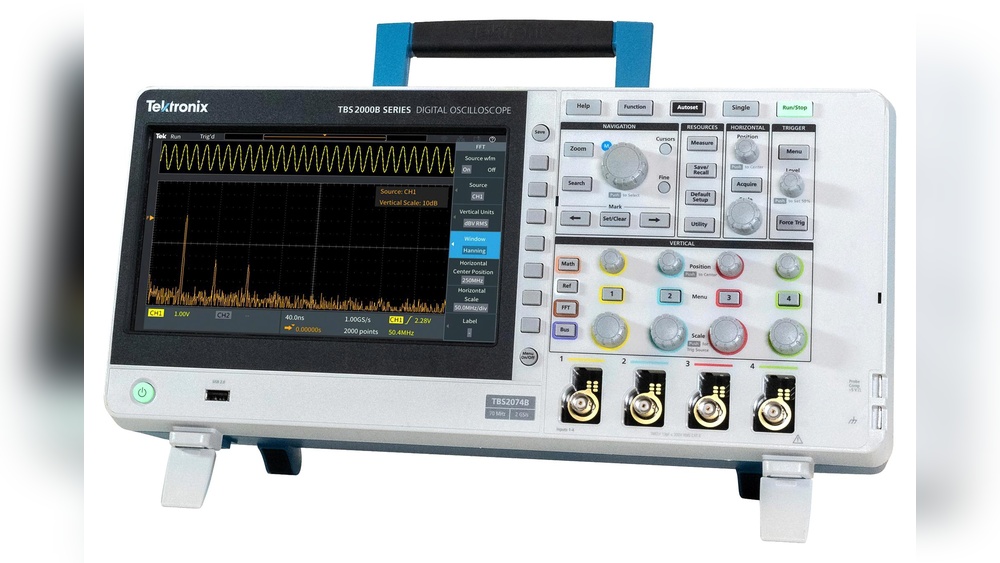
Basic oscilloscopes cannot analyze frequency directly. However, some digital oscilloscopes have FFT functions to display frequency domain, but spectrum analyzers offer more precise and detailed frequency analysis.
Are Spectrum Analyzers Or Oscilloscopes Better For Signal Troubleshooting?
Oscilloscopes are better for time-based troubleshooting and waveform inspection. Spectrum analyzers excel at identifying frequency-related issues and detecting unwanted signals or noise.
Conclusion
Both spectrum analyzers and oscilloscopes serve unique roles in electronics. Spectrum analyzers show signal frequencies and strength clearly. Oscilloscopes display signal shape and time changes well. Choosing the right tool depends on your specific needs. Think about what you want to measure first.
Each device gives valuable insights in different ways. Understanding their differences helps you work smarter and faster. Use this knowledge to pick the best instrument for your tasks. Simple tools. Clear results. Better decisions.

I’m Asif Ur Rahman Adib, an Electrical Engineer and lecturer. My journey began in the lab, watching students struggle with instruments they used every day without fully understanding them. Over time, I’ve combined teaching, research, and hands-on experience to help others grasp electrical concepts clearly, safely, and practically—whether it’s understanding a circuit or mastering a multimeter.