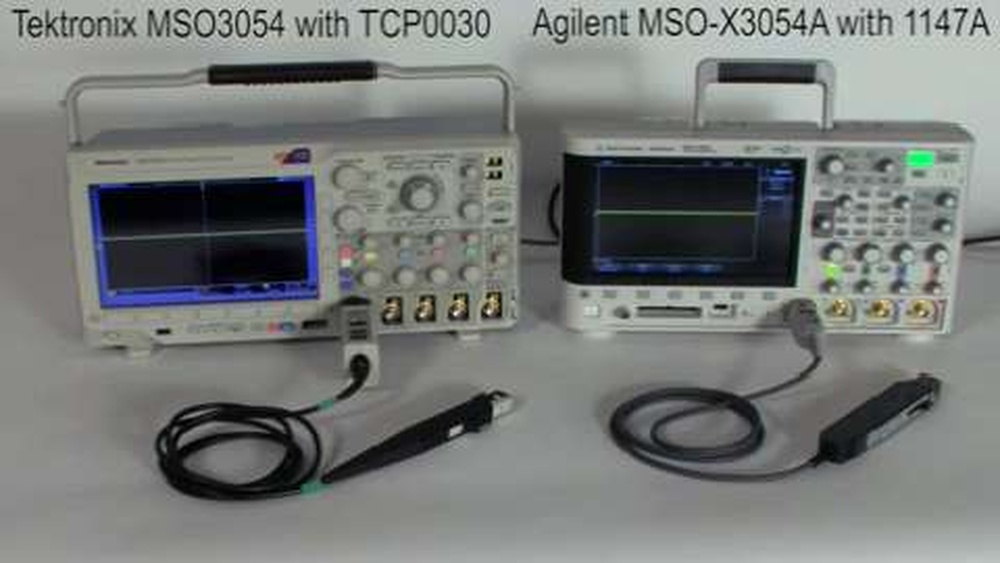
When it comes to choosing an oscilloscope, you want the best tool to get accurate and reliable results. Tektronix and Agilent are two top brands that often come up in this decision.
But which one fits your needs better? Understanding the key differences between Tektronix and Agilent oscilloscopes can save you time, money, and frustration. You’ll discover what sets these brands apart and how to pick the right oscilloscope that matches your projects perfectly.
Keep reading to make a confident choice that boosts your work and efficiency.
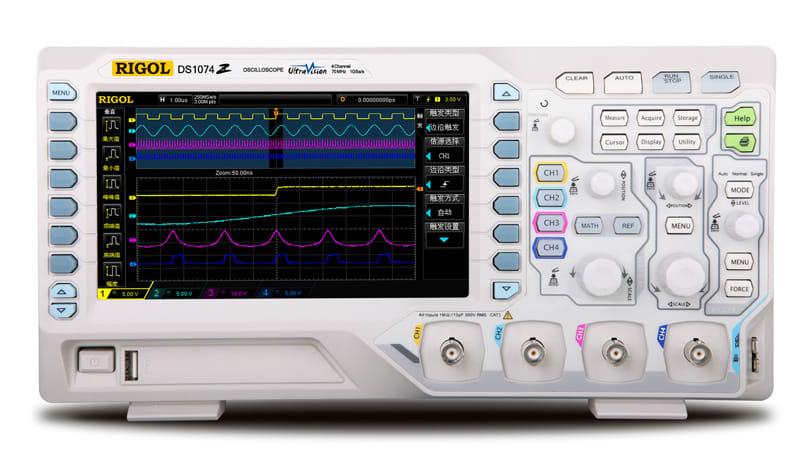
Credit: www.tequipment.net
Brand Histories
Understanding the histories of Tektronix and Agilent helps to see their role in oscilloscope technology. Both brands have deep roots and have shaped the test and measurement industry for decades. Their pasts reveal their strengths and focus areas.
Tektronix Legacy
Tektronix began in 1946, in Oregon, USA. It quickly earned a strong reputation for quality and innovation. The company introduced the first portable oscilloscope in 1954. Tektronix focused on user-friendly designs and reliable performance. Over time, it became a leader in analog and digital oscilloscopes. Tektronix products served engineers, technicians, and educators worldwide. The brand’s history shows a steady commitment to precision and ease of use.
Agilent Evolution
Agilent Technologies started as part of Hewlett-Packard in 1999. It split off to focus on test equipment and measurement tools. Agilent’s oscilloscopes built on HP’s strong research and technology. The brand grew by adding digital signal analysis and mixed-signal capabilities. Agilent aimed to serve high-tech industries with advanced features. It balanced innovation with solid engineering and customer support. Agilent’s history highlights progress in digital measurement and complex testing needs.
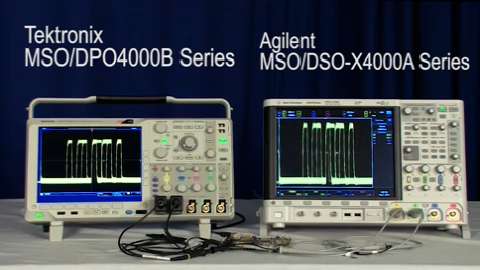
Credit: www.tek.com
Key Features Comparison
The key features of Tektronix and Agilent oscilloscopes define their performance and usability. Understanding these features helps choose the best tool for your needs. Each brand offers unique strengths in display, bandwidth, triggering, and memory.
Display And Interface
Tektronix oscilloscopes usually have bright, clear displays. Their color screens show waveforms with sharp details. The interface is user-friendly with easy menu navigation. Agilent oscilloscopes also offer good displays but may focus more on simplicity. The controls are straightforward, making it easy for beginners.
Bandwidth And Sampling Rate
Tektronix models often provide higher bandwidth options. This means they can capture faster signals accurately. Their sampling rates are fast, allowing detailed waveform views. Agilent scopes offer solid bandwidth too, suitable for most lab tasks. Sampling rates are reliable, supporting stable data capture.
Triggering Capabilities
Tektronix excels in advanced triggering features. These include complex triggers for precise signal analysis. This helps catch rare or unusual events quickly. Agilent scopes have basic triggering options, good for general use. They focus on ease and straightforward operation.
Memory Depth
Memory depth affects how much signal data the scope stores. Tektronix scopes tend to have larger memory buffers. This lets users capture long signals without losing detail. Agilent offers enough memory for most standard tests. Their memory is efficient and easy to manage.
Performance And Accuracy
Performance and accuracy are vital for any oscilloscope. These features ensure the device captures and displays signals correctly. Both Tektronix and Agilent offer strong options in this area. Understanding their differences helps users choose the right tool for their needs.
Signal Fidelity
Signal fidelity means how well the oscilloscope shows the original signal. Tektronix oscilloscopes provide clear and sharp signal views. Agilent models also deliver accurate signal shapes. Both brands minimize signal distortion for better analysis.
Noise Levels
Noise can hide important details in signals. Tektronix oscilloscopes have low noise levels, improving signal clarity. Agilent devices are designed to reduce noise effectively as well. Lower noise helps users see real signal patterns easily.
Measurement Precision
Measurement precision defines how exact the oscilloscope readings are. Tektronix scopes offer reliable and consistent measurements. Agilent scopes provide high accuracy in capturing data points. Both brands support precise testing and troubleshooting tasks.

Credit: www.youtube.com
User Experience
User experience plays a big role in choosing the right oscilloscope. It affects how easily users can operate the device and complete their tasks. Both Tektronix and Agilent offer features that impact user satisfaction. Understanding these differences helps buyers pick the best fit for their needs.
Ease Of Use
Tektronix oscilloscopes have clear menus and intuitive controls. Users find it simple to set up measurements and adjust settings. The screen layout is clean and easy to read. Agilent models also focus on user-friendly design but sometimes require more steps to access certain features. Tektronix often gets praise for faster learning curves among beginners.
Software Integration
Tektronix provides software that connects smoothly with their scopes. This allows easy data transfer and analysis on a computer. Agilent supports many software tools but may need extra configuration. Tektronix’s software tends to be more straightforward for daily use. Both brands support common formats for saving and sharing results.
Customer Support
Tektronix offers responsive customer service with helpful guides and tutorials. Their support team is quick to solve issues. Agilent also provides strong technical support and online resources. Some users find Tektronix’s support easier to access. Both companies have global service centers for repairs and maintenance.
Pricing And Value
Choosing between Tektronix and Agilent oscilloscopes means considering price and value closely. Both brands offer quality tools, but the cost and benefits can differ. Understanding these differences helps buyers pick the best fit for their budget and needs.
Cost Comparison
Tektronix oscilloscopes tend to have a higher starting price. Their models often include advanced features that raise the cost. Agilent oscilloscopes usually come at a lower price point. They provide solid performance but with fewer extras. Both brands cover a wide price range for different users. Buyers should compare specific models for exact pricing details.
Warranty And Service
Tektronix offers a standard warranty lasting about three years. This warranty covers parts and labor for repairs. Agilent provides similar warranty terms, often including quick service options. Both brands have strong customer support networks. Timely repairs and service add value to the initial cost.
Long-term Investment
Investing in an oscilloscope is about more than price. Tektronix models often hold their value well over time. Their durable build and regular updates help maintain usefulness. Agilent oscilloscopes may need more frequent upgrades or repairs. Still, they offer good value for tight budgets. Consider how long you plan to use the tool. This helps decide which brand offers better long-term value.
Ideal Applications
Choosing the right oscilloscope depends on the task at hand. Tektronix and Agilent offer different strengths suited for specific uses. Understanding their ideal applications helps in making the best choice. Each brand fits well in certain environments and jobs.
Education And Training
Tektronix oscilloscopes are widely used in classrooms and labs. They have user-friendly interfaces and clear displays. This makes learning easier for students and beginners. Agilent scopes also serve well but often suit advanced courses. Their detailed features help students explore complex signals. Both brands support hands-on training with reliable tools.
Industrial Use
In factories and production lines, durability matters most. Agilent oscilloscopes are known for rugged designs and stable operation. They handle tough conditions and long hours. Tektronix models also perform well but focus more on flexibility. Both brands offer fast measurement speeds to keep production efficient. They detect faults quickly, reducing downtime.
Research And Development
R&D labs need high precision and advanced features. Agilent oscilloscopes provide deep analysis and high bandwidth options. They capture detailed data for complex projects. Tektronix scopes excel in real-time signal processing. Their advanced triggering helps catch rare events. Both brands meet the high standards required in research environments.
Future Trends
The future of oscilloscopes is bright, with many changes on the horizon. Both Tektronix and Agilent continue to develop new features. These changes aim to make testing easier and more accurate. Understanding these trends helps buyers make smart choices.
Technological Advances
Oscilloscopes are becoming faster and more precise. Tektronix focuses on improving signal processing and display clarity. Agilent works on expanding bandwidth and enhancing connectivity options. Both brands invest in better software for data analysis. Portable and handheld models are getting more popular. Touchscreen controls and cloud integration are expected to grow. These advances help engineers solve complex problems quickly.
Market Outlook
The demand for oscilloscopes rises in electronics and automotive sectors. Tektronix and Agilent compete globally with new product launches. Tektronix targets high-end users needing advanced features. Agilent serves a wide range of customers with versatile models. The market shifts towards compact, affordable devices for education and small labs. Both companies aim to balance price and performance. This trend benefits buyers with more choices and better tools.
Frequently Asked Questions
What Are The Key Differences Between Tektronix And Agilent Oscilloscopes?
Tektronix offers advanced user interfaces, while Agilent focuses on high precision. Tektronix models suit complex analysis; Agilent excels in waveform accuracy. Both brands deliver quality but differ in features and pricing, catering to diverse testing needs.
Which Oscilloscope Brand Is Better For Beginners?
Tektronix is often preferred by beginners due to its intuitive controls and user-friendly interface. Agilent’s oscilloscopes may require more technical knowledge. Tektronix provides helpful tutorials and support, making it easier for new users to learn and operate.
How Does The Price Compare Between Tektronix And Agilent?
Agilent oscilloscopes generally have a higher price due to precision and build quality. Tektronix offers a broader range of models, including budget-friendly options. Pricing varies by features, bandwidth, and model series, so users should compare based on specific needs.
Are Tektronix Oscilloscopes More Reliable Than Agilent?
Both brands are highly reliable with solid reputations in the industry. Tektronix emphasizes durable hardware, while Agilent focuses on consistent measurement accuracy. Reliability depends on model and usage conditions rather than brand alone.
Conclusion
Both Tektronix and Agilent oscilloscopes offer solid features and reliable performance. Choose based on your budget and specific needs. Tektronix often suits users who want advanced tools and easy interfaces. Agilent works well for those seeking good value and simple use.
Think about what matters most: speed, accuracy, or price. Each brand has strengths that fit different projects. Testing each model can help you decide. The right oscilloscope makes your work easier and more precise. Keep your goals clear, and pick the best fit for you.

I’m Asif Ur Rahman Adib, an Electrical Engineer and lecturer. My journey began in the lab, watching students struggle with instruments they used every day without fully understanding them. Over time, I’ve combined teaching, research, and hands-on experience to help others grasp electrical concepts clearly, safely, and practically—whether it’s understanding a circuit or mastering a multimeter.