Deciding Between Two Fluke Network Testers
Choosing the right cable tester can feel confusing. Both Fluke Pro3000 and Pro3000F60 serve similar purposes. Yet, subtle differences matter in daily use. Many buyers struggle to see which fits their needs best. This article breaks down key points clearly. It helps you make a more informed decision.
Why Comparing These Two Models Can Be Tricky
Marketing terms often blur the real differences. Both devices mention tone tracing and clear signals, but nuances get lost. Buyers may feel overwhelmed by jargon rather than practical info.
Specs like weight, dimensions, and battery life are close but not identical. Deciding which spec matters more depends on personal use. This can lead to confusion.
Some buyers focus on features they don’t really need. For example, noise filtering might be crucial in some environments but unnecessary in others. Wrong priorities make the choice harder.
Who Benefits Most From Each Tester
If you work in quiet environments and want detailed tone options, the Fluke Pro3000 suits you better. It offers multiple distinct tones for precise wire identification.
For users in noisy or busy areas, the PRO3000F60’s filtered probe cuts interference, making tracing simpler. This helps reduce distractions during work.
Beginners might prefer the Pro3000 for its straightforward controls and clear tones. It is easier to learn without extra complexity.
Experienced technicians handling complex wiring may appreciate the PRO3000F60’s ability to switch modes quickly. It adds flexibility when conditions change.
Those needing a compact and lightweight tool might lean toward the PRO3000F60. It weighs less and has smaller dimensions.
Overall, quieter environments and detailed tone tracing fit the Pro3000 better. Noisy places and quick filtering needs align with the PRO3000F60.
Where Fluke Pro3000 Fits Naturally
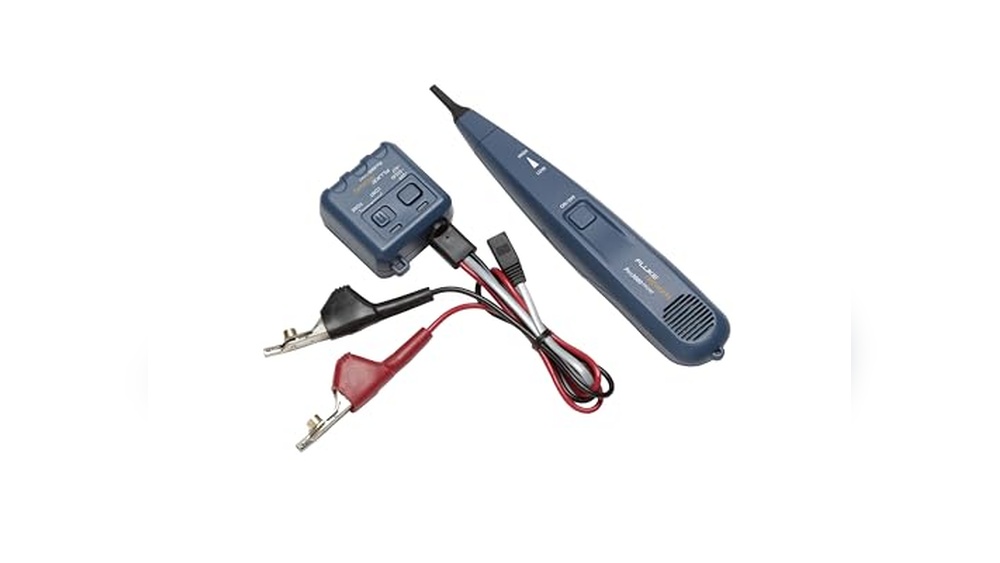
I use the Pro3000 daily for tracing wire pairs in controlled settings. Its SmartTone technology helps me identify cables accurately. The unfiltered probe design works well where noise is minimal.
Over time, the device feels robust and reliable. The replaceable tip adds to its durability. Battery life is solid with a 9-volt alkaline battery.
One limitation is that in very noisy environments, the unfiltered probe can pick up background sounds, making it harder to hear.

What works well over time
- Five distinct tones for precise wire pair identification
- Loud speaker audible in most environments
- Ergonomic probe design for comfortable use
- Replaceable tip extends probe life
- Simple push-button tone selection
Things that may bother some users
- Unfiltered probe picks up background noise in busy areas
- Heavier and larger compared to filtered probe
- No built-in noise filtering option
- Requires 9-volt alkaline battery replacement
Where Fluke Pro3000f60 Makes More Sense
I found the PRO3000F60 useful in noisy job sites. Its filter technology blocks buzz and interference. This makes tracing cables easier without distractions.
The device is lighter and smaller, which suits quick, on-the-go tasks. The one-button switch to toggle filtering mode adds convenience.
One drawback is that it lacks the multiple distinct tone options found in the Pro3000. This can limit detailed pair identification in some cases.

What works well over time
- Innovative filter blocks annoying buzz and interference
- Switch easily between filtered and unfiltered modes
- Compact and lightweight for portability
- Powerful speaker audible in noisy environments
- Auto-off feature helps extend battery life
Things that may bother some users
- Lacks multiple distinct tone cadences for detailed tracing
- Smaller size may feel less sturdy to some
- Limited to probe functionality without tone generator
Early Signals That Guide Your Choice
First, consider your work environment noise level. If it’s quiet, the detailed tone options on the Pro3000 stand out. In noisy places, the PRO3000F60’s filtering is a clear advantage.
Next, think about weight and size. The PRO3000F60 is noticeably lighter and smaller, which some find easier to handle during long tasks.
Also, pay attention to tone variety. The Pro3000 offers five distinct tones, which help when identifying exact wire pairs.
Battery and power habits matter too. The Pro3000 uses a 9-volt alkaline battery, while the PRO3000F60 includes auto-off to save battery life.
Finally, the ease of switching modes can influence choice. The PRO3000F60’s one-button toggle simplifies changing between filtered and unfiltered modes.
Comparing Key Decision Signals
This table highlights how the two testers differ in important early use aspects.
| Decision signal (before buying) | Fluke Pro3000 | Fluke PRO3000F60 |
|---|---|---|
| Learning curve | Simple controls, easy for beginners | Also simple, with added filter toggle |
| First impressions | Solid, robust with clear tone options | Compact, lightweight with noise filtering |
| Setup comfort | Standard probe setup, replaceable tip | Quick mode switch, auto-off feature |
| Clarity of tone | Five distinct cadences for pair ID | Clear tone with filter to block buzz |
| Portability | Heavier, larger size | Smaller, lighter design |
Living With These Testers: What To Expect
Maintenance for both is low but different. The Pro3000 may need tip replacements over time. The PRO3000F60 benefits from auto-off, saving battery life.
Both deliver consistent performance when used as intended. The Pro3000’s multiple tones remain reliable for wire tracing. The PRO3000F60’s filter consistently reduces noise interference.
Minor annoyances include the Pro3000’s sensitivity to background noise in busy areas. The PRO3000F60 might feel less rugged due to its smaller size.
Trust builds over time with both models. The Pro3000 feels dependable for detailed tasks. The PRO3000F60 is trusted for quick, clear cable identification in tough environments.
Long-term Ownership Comparison
Here is a side-by-side look at how ownership feels after weeks or months of use.
| Ownership reality (after weeks/months) | Fluke Pro3000 | Fluke PRO3000F60 |
|---|---|---|
| Reliability | Durable with replaceable parts | Reliable filter and speaker performance |
| Habit fit | Best for detailed, quiet environment work | Fits noisy, fast-paced job conditions |
| Mental load | Low once tone options are understood | Low with simple mode switching |
| Battery life | Good with 9-volt alkaline battery | Extended due to auto-off feature |
| User satisfaction | High for precision tracing | High for interference-free tracing |
Common Mistakes Buyers Make
One mistake is choosing based only on weight. While lighter tools are handy, ignoring tone variety can hurt tracing accuracy. Balance both factors.
Another is underestimating the environment noise. Ignoring this leads to frustration with unclear signals. Choose filtered probe models if noise is common.
Some buyers focus on extra features they rarely use. This adds cost and complexity without real benefit. Stick to what fits your daily needs.
Confusing model names can cause wrong purchases. Make sure to verify the exact model and its features before buying.
Lastly, neglecting battery type and life can interrupt work. Check battery requirements and features like auto-off to avoid downtime.
Choosing What Works Best For You
If you need detailed tone options and work mostly in quiet spaces, the Fluke Pro3000 is your better match. It offers clear wire pair identification and durability.
If you face noisy environments or want a lightweight, easy-to-use probe with noise filtering, the PRO3000F60 suits you well. It simplifies tracing where interference is common.
Remember, the right fit depends on your work habits and environment more than specs alone. Matching features to your situation brings better results and less hassle.
Faqs About Fluke Pro3000 Vs Pro3000f60
What is the main difference between the two testers?
The Pro3000 offers multiple distinct tone cadences for precise wire pair identification. The PRO3000F60 includes noise filtering to reduce interference in noisy environments.
Can the PRO3000F60 switch between filtered and unfiltered modes?
Yes, it has a one-button switch that allows easy toggling between filtered and unfiltered modes for flexible use.
Which tester is better for noisy work sites?
The PRO3000F60 is designed to block interference and buzz, making it more suitable for noisy environments.
Does the Pro3000 include a noise filter?
No, the Pro3000 uses an unfiltered probe and relies on distinct tone patterns for wire identification.
What type of battery do these testers use?
The Pro3000 uses a 9-volt alkaline battery. The PRO3000F60 also uses batteries and features an auto-off function to extend battery life.
Are these testers easy to learn for beginners?
Both devices have simple controls, but the Pro3000’s straightforward tone options may be easier for beginners to understand initially.
Is the probe tip replaceable on the Pro3000?
Yes, the Pro3000 has a replaceable tip, which helps extend the life of the probe.
Which tester is more portable?
The PRO3000F60 is smaller and lighter, making it more portable and easier to carry during fieldwork.

I’m Asif Ur Rahman Adib, an Electrical Engineer and lecturer. My journey began in the lab, watching students struggle with instruments they used every day without fully understanding them. Over time, I’ve combined teaching, research, and hands-on experience to help others grasp electrical concepts clearly, safely, and practically—whether it’s understanding a circuit or mastering a multimeter.