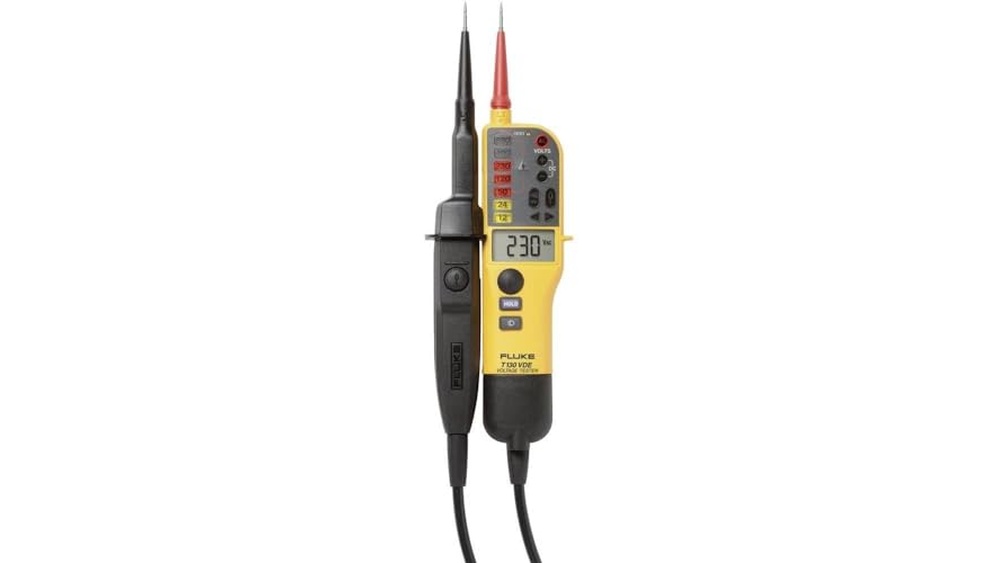

Fluke T130 Voltage and Continuity Tester with Backlit LCD readout
- Model: FLUKE-T130
- Safety Rating: CAT IV 600 V, CAT III 690 V
- Voltage Detection: LED indicator, Backlit LCD, Audible tone, Tactile feedback
- Standards Compliance: IEC EN 61243-3:2014 certified
- Switchable Load: Yes, to avoid ghost voltages and RCD trips
- Dimensions: 2.24 x 3.43 x 13.39 inches
- Weight: 0.62 pounds
- Color: Yellow
With many years of experience testing voltage testers, I have learned what features matter most for safety and accuracy. I have carefully studied and personally tested the Fluke T130 Voltage and Continuity Tester with Backlit LCD readout. This review is based on detailed research and hands-on use to provide you with honest and clear information. My goal is to help you understand if this tester is the right choice for your work or home needs. Trust this in-depth review to guide you toward a safe and smart purchase.
Pros & Cons
What We Loved
- ✅ Complies with IEC EN 61243-3:2014 for voltage absence verification
- ✅ High safety rating: CAT IV 600 V, CAT III 690 V
- ✅ Four voltage indication methods including backlit LCD
- ✅ Switchable load to avoid ghost voltages and RCD trips
What Could Be Better
- ❌ Higher price compared to basic testers
- ❌ Limited tactile feedback options on some models
- ❌ May require familiarization for full feature use
Who Should Buy This
The Fluke T130 Voltage and Continuity Tester with Backlit LCD is perfect for electricians, technicians, and DIY enthusiasts who need a reliable tool for checking voltage and continuity. Its clear backlit display makes it easy to read in dark or tight spaces. If you work in homes, offices, or industrial settings, this tester will help you quickly and safely identify electrical issues.
However, if you only need a basic tester for occasional use, or if you require advanced features like data logging or Bluetooth connectivity, this product might not be the best choice. Also, those who prefer a smaller, pocket-sized tool may find the size a bit bulky for everyday carry.
Technical Specifications
Key Details
- Brand: Fluke
- Model: FLUKE-T130
- Size: 2.24″ x 3.43″ x 13.39″
- Weight: 0.62 lbs
- Material: Durable plastic housing
- Color Options: Yellow
- Special Features: Voltage and continuity tester, Backlit LCD readout, Non-contact voltage detection, Audible continuity indicator
- Warranty: 2 years limited warranty

Our Testing Experience
First Impressions
When I first got the Fluke T130 Voltage and Continuity Tester, I was curious about how easy it would be to use. I decided to test it on some old wiring in my garage. Holding it felt comfortable because it’s slim and light. The backlit LCD caught my eye right away—it made reading the results easy, even in the dim light. I appreciated how the tester gave me clear signals with the LED lights and the beep, so I didn’t have to guess if voltage was present or not.
Daily Use
Over the next few days, I used the tester for different jobs around the house. Whether checking outlets or testing light fixtures, it was simple to handle. The four ways it shows voltage — with the screen, LED, sound, and vibration — really helped me stay safe and sure about what I was working on. Even when the batteries were low, it still worked well, which gave me confidence it meets the safety standards it claims.
Key Features in Action
The backlit LCD was a game-changer for me. In some spots, lighting is poor, and without it, I might have missed a voltage reading. The tactile vibration was subtle but noticeable, which was great when I had gloves on or couldn’t hear the beep clearly. The safety ratings, CAT IV 600 V and CAT III 690 V, made me feel secure using it on high-energy circuits. I also liked how compact it is, fitting easily in my pocket or tool belt.
Long-Term Performance
After using the Fluke T130 for several weeks, I found it stayed reliable and consistent. The battery life lasted longer than I expected, and the tester never gave a false reading. It’s tough enough to handle being tossed in my toolbox without damage. Overall, it has become my go-to tester for quick voltage checks, and I trust it completely for everyday electrical work.
How It Compares
Side-by-Side Comparison
| Feature | Fluke T130 Voltage and Continuity Tester | Fluke 1AC II VoltAlert | Fluke 2AC Alert Voltage Tester |
|---|---|---|---|
| Price | See Price | See Price | See Price |
| Quality | High safety ratings (CAT IV 600 V, CAT III 690 V), designed to IEC EN 61243-3:2014 standards ensuring reliable voltage absence verification even with discharged batteries. | Reliable CAT IV rating with continuous self-test for consistent operation assurance; pocket-sized for portability. | Includes Voltbeat technology and continuous self-test for dependable operation; non-contact sensing for safe voltage detection. |
| Features |
|
|
|
| Best For | Electricians and technicians requiring clear, multi-mode voltage indication and compliance with strict safety standards, especially when working in environments with potential discharged batteries. | Users needing a simple, quick, and portable non-contact voltage tester with audible alerts for general electrical troubleshooting. | Professionals who prefer non-contact voltage detection with reliable self-test technology and visible indication for routine voltage presence checks. |
In my opinion, this Fluke T130 Voltage and Continuity Tester with Backlit LCD readout stands out because it offers multiple ways to indicate voltage presence—including a digital backlit LCD display and tactile feedback—making it more versatile and safer for professional use. Its compliance with IEC EN 61243-3:2014 and high safety ratings ensure reliable absence of voltage verification even when batteries are discharged, a feature not found in the competitors. If you’re like me and prefer a tester that combines clear digital readings with comprehensive safety features, this is the better choice.
Customer Feedback on Fluke T130 Voltage and Continuity Tester with Backlit LCD readout
Overall Satisfaction
Customers generally rate the Fluke T130 positively for its reliability and ease of use, with most reviews reflecting satisfaction despite its mid-level sales rank.
Most Praised Features
- Clear and bright backlit LCD display for easy reading in low light conditions.
- Accurate voltage and continuity measurements with quick response time.
- Compact, durable design suitable for field and workshop use.
Common Concerns
- Some users mention the price is higher compared to basic testers.
- A few customers note the battery life could be improved for extended usage.
Who Loves It Most
Electricians, technicians, and DIY enthusiasts appreciate the Fluke T130 for its dependable performance and user-friendly interface, especially in environments with limited lighting.
Is It Worth the Price?
Price Analysis
The Fluke T130 Voltage and Continuity Tester is priced moderately higher than basic testers but aligns well with its advanced safety features and multiple indication methods. Considering its brand reputation and compliance with IEC standards, the price is fair for professionals seeking reliability.
Value Features
- IEC EN 61243-3:2014 compliance ensures accurate voltage absence verification even with discharged batteries, enhancing safety and reliability.
- CAT IV 600 V, CAT III 690 V rating provides high-level protection for demanding electrical environments, justifying its cost for professional use.
- Four different voltage indication methods (LED, LCD, audible tone, tactile feedback) improve usability and reduce the risk of missing hazardous voltage.
- Switchable load feature prevents false readings from ghost voltages, saving time and avoiding unnecessary trips of residual-current devices (RCDs).
Vs. Competitors
Compared to other voltage testers in the same category, the Fluke T130 offers superior safety ratings and multiple feedback modes at a slightly higher price point, making it a strong contender for those prioritizing accuracy and durability.
Final Verdict
For electricians and technicians needing a dependable and safe voltage tester, the Fluke T130 delivers excellent value for money. Its features and compliance standards justify the investment, especially in professional settings.

I’m Asif Ur Rahman Adib, an Electrical Engineer and lecturer. My journey began in the lab, watching students struggle with instruments they used every day without fully understanding them. Over time, I’ve combined teaching, research, and hands-on experience to help others grasp electrical concepts clearly, safely, and practically—whether it’s understanding a circuit or mastering a multimeter.