Choosing Between Fluke T5 1000 And T5 600 For Voltage Testing
Deciding between these two testers depends on your specific needs for voltage range and current measurement. Both offer reliable OpenJaw current sensing without direct contact. The T5 1000 covers a higher voltage range, while the T5 600 is suited for up to 600 volts and includes some added protections. Consider the environments you will work in and the types of circuits you test. Your comfort with device features and long-term reliability should guide your choice.
Who Might Choose Each Tester
- Electricians needing higher voltage range for commercial work.
- DIY enthusiasts working on household circuits.
- Technicians who prioritize compact design and easy probe storage.
- Users requiring a tester that can handle prolonged voltage exposure safely.
- Buyers looking for detachable probe tips suited to national standards.
- Those valuing automatic AC/DC voltage detection for convenience.
Where Fluke T5 1000 Shines For Voltage Testing
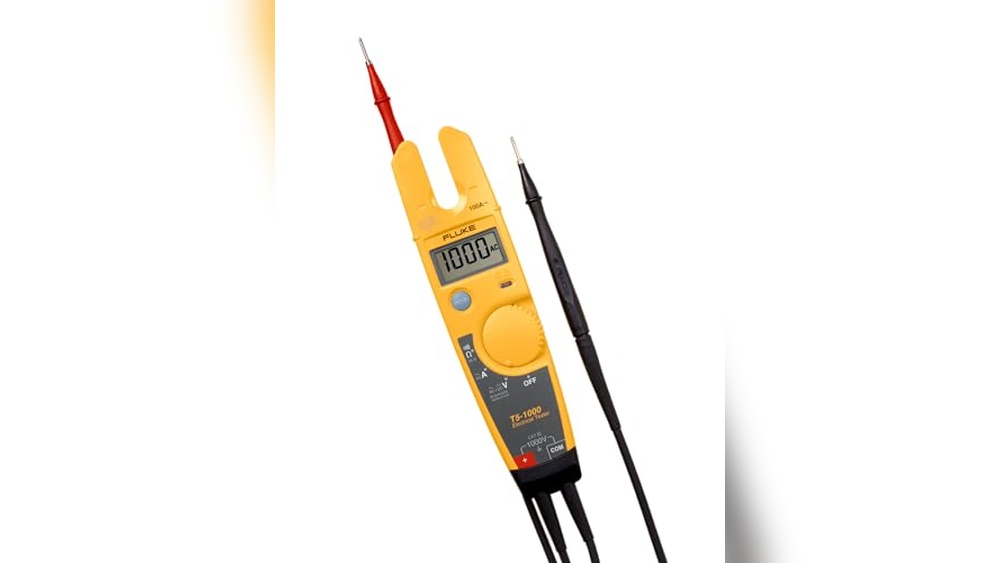
If I needed a tester for higher voltage applications, the T5 1000 would be my pick. It automatically measures both AC and DC volts with good precision and includes detachable SlimReach probes that meet national electrical standards. Its compact design and continuity beeper add to ease of use.

Strengths That Ease Testing
- Measures AC and DC volts with precise digital resolution.
- OpenJaw design allows current measurement without metallic contact.
- Continuity beeper for quick circuit checks.
- Detachable SlimReach probes tailored to electrical standards.
- Compact size with neat probe storage.
- Auto off mode conserves battery life.
Considerations To Keep In Mind
- Voltage limit is up to 1000 volts, which might be excessive for some home users.
- May not have integrated protection for prolonged voltage exposure.
When Fluke T5 600 Is The More Practical Option
In my experience, the T5 600 fits better if you work mostly with circuits up to 600 volts. It measures AC current up to 100 A without contact and has a protection circuit that lets you stay connected longer safely. The detachable SlimReach probe tips help in tight spaces.

Features That Increase Confidence
- Measures volts AC and DC up to 600 V with precise digital resolution.
- Displays resistance up to 1000Ω and continuity test.
- OpenJaw current measurement up to 100 A without contact.
- Detachable SlimReach probes designed for tight spaces.
- Integrated protection circuit for safer prolonged voltage contact.
Potential Limitations To Note
- Maximum voltage rating is 600 V, which may limit some higher voltage tasks.
- Size and weight are similar to T5 1000, so no gain in portability.
Key Questions To Help Your Final Choice
Do you often work with voltages above 600 volts? If yes, the T5 1000 might be necessary. Otherwise, the T5 600 is sufficient for most residential and light commercial tasks.
How important is the ability to measure higher AC current without contact? The T5 600 offers up to 100 A, useful in heavier duty scenarios.
Will you benefit from the integrated protection circuit that the T5 600 provides? It helps reduce risk during longer testing sessions on live circuits.
Are compactness and probe customization important? Both models offer detachable SlimReach probes, but the T5 1000’s probes are customized for national standards.
Think about battery life and auto-off features as well; the T5 1000 explicitly mentions auto-off to conserve power.
Side-by-side Look At These Voltage Testers
Voltage Range Needs
Choosing the right voltage range can prevent misuse or the need for additional tools.
| Decision factor | Fluke T5 1000 | Fluke T5 600 |
|---|---|---|
| Maximum Voltage | Up to 1000 volts | Up to 600 volts |
| Voltage Type | Auto selects AC/DC | Auto selects AC/DC |
| Best for | Higher voltage commercial or industrial use | Residential and light commercial use |
This matters most for buyers working beyond typical household voltages.
Current Measurement and Safety
Current range and protection affect how and where you can safely work.
| Decision factor | Fluke T5 1000 | Fluke T5 600 |
|---|---|---|
| AC Current Measurement | OpenJaw design without metallic contact | OpenJaw design up to 100 A without contact |
| Protection Circuit | No integrated protection circuit noted | Integrated protection for longer voltage connection |
| Best for | Basic current testing with contactless safety | Heavy-duty current measurements with added safety |
Important for those who test high current circuits often and want extra safety.
Design And Usability
Size, probe design, and added features impact convenience during use.
| Decision factor | Fluke T5 1000 | Fluke T5 600 |
|---|---|---|
| Probe Tips | Detachable SlimReach customized for national standards | Detachable SlimReach for tight spaces |
| Continuity Beeper | Yes | Yes |
| Auto Off | Yes | No specific mention |
| Weight and Size | Compact and lightweight | Compact and lightweight |
Mostly relevant to buyers valuing portability and ease of testing in confined areas.
Thinking About Post-purchase Regret
Regret often comes from choosing a tester that can’t handle your regular voltage tasks. The T5 1000’s higher voltage range can prevent this if you expect varied or high-voltage work.
On the other hand, overpaying for features you don’t use, like 1000 V range or lacking protection for long connections, may cause frustration. The T5 600’s protection circuit might avoid safety concerns during extended tests.
Make sure the tester fits your typical use cases in voltage, current, and working conditions to avoid disappointment later.
Making A Thoughtful Choice Between These Testers
Both testers offer solid features for voltage, continuity, and current testing with contactless measurement. Your choice depends largely on the voltage range you need and the environments you will work in. The T5 1000 is better for higher voltage applications, while the T5 600 offers additional safety for prolonged testing and is suited for lower voltages.
Consider how often you face higher voltage and current levels and whether added safety features matter in your tasks. Either option will serve well if matched to your actual needs.
Choosing carefully now will reduce hassle and ensure reliable use for years.
Faqs About Fluke T5 1000 Vs T5 600 Voltage Testers
What voltage ranges do these testers cover?
The Fluke T5 1000 covers voltages up to 1000 volts, while the T5 600 measures up to 600 volts. Choose based on the maximum voltage you expect to test.
Do both testers measure AC and DC voltage automatically?
Yes, both models automatically detect and measure AC and DC voltage, simplifying testing without manual mode switching.
Which tester is better for measuring current?
The T5 600 can measure AC current up to 100 amps without contact, offering a higher range than the T5 1000, which also uses OpenJaw design but does not specify current range.
Are the probe tips interchangeable or customizable?
Both testers include detachable SlimReach probe tips. The T5 1000’s probes are customized for national electrical standards, while the T5 600’s are designed for tight spaces.
Is battery life a concern with these testers?
The T5 1000 features an auto-off mode to conserve battery, which helps with longer battery life. The T5 600 does not specifically mention this feature.
Which tester offers better protection during testing?
The T5 600 includes an integrated protection circuit that allows it to stay connected to a voltage source longer safely, which may help reduce risk during extended tests.
Are these testers suitable for beginners?
Both models are user-friendly with straightforward features like continuity beepers and auto voltage detection. Beginners should select based on voltage needs and comfort with the tester’s range.

I’m Asif Ur Rahman Adib, an Electrical Engineer and lecturer. My journey began in the lab, watching students struggle with instruments they used every day without fully understanding them. Over time, I’ve combined teaching, research, and hands-on experience to help others grasp electrical concepts clearly, safely, and practically—whether it’s understanding a circuit or mastering a multimeter.