Choosing Between Two Handheld Oscilloscopes
- Choose the 2C23T Oscilloscope if you need a basic 10MHz bandwidth and straightforward multimeter functions.
- Pick the 2C53T Oscilloscope when you want higher bandwidth and enhanced features like math operations and XY mode.
- Go with 2C23T for longer waveform record depth and simple waveform storage options.
- Opt for 2C53T if you require a faster sampling rate and more waveform output types from the signal generator.
- Use the 2C53T Oscilloscope when precise cursor measurement and persistence mode are important for your tests.
How These Oscilloscopes Fit Daily Tasks
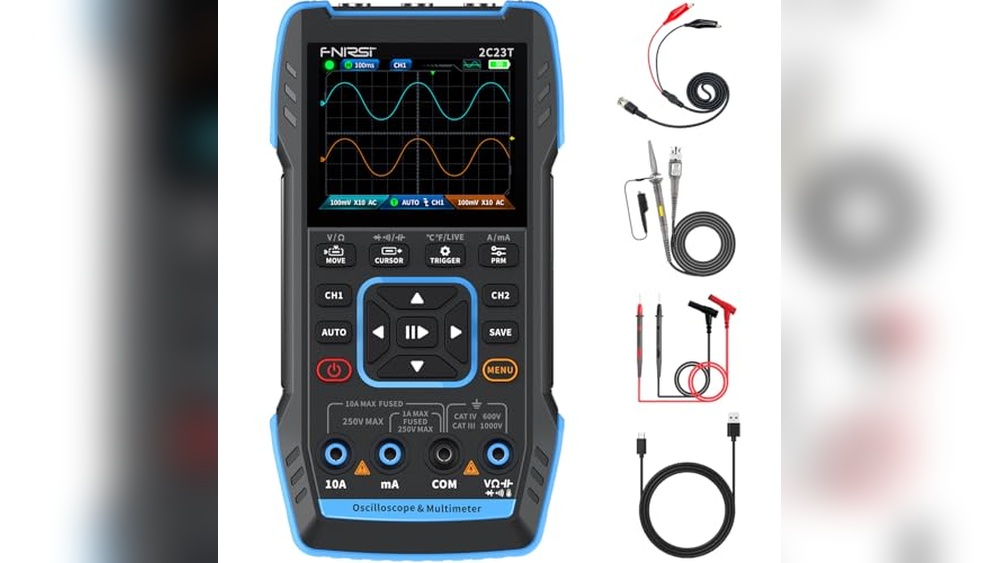
The 2C23T Oscilloscope is easy to carry and use for quick voltage, current, and component tests. Its clear display and simple save function make it reliable for routine checks and educational purposes.
Using the 2C53T Oscilloscope, I found its upgraded features helpful for more detailed signal analysis and complex measurements. The added math functions and higher sampling rate improve workflow on demanding projects.
2c23t Oscilloscope Overview

Best Used For
- Basic waveform and voltage testing up to 10MHz bandwidth
- Users needing simple, reliable multimeter functions
- Educational use and hobbyist projects
- Situations requiring easy waveform image storage and export
Limitations to Consider
- Lower bandwidth and sampling rate compared to newer models
- Signal generator limited to 2MHz max frequency
- Less advanced measurement modes and features
2c53t Oscilloscope Overview

Best Used For
- Advanced waveform analysis with 50MHz bandwidth
- Users needing math operations and enhanced measurement modes
- Projects requiring higher sampling rate and precision
- Signal generation with a variety of waveform outputs
Limitations to Consider
- Higher price point than basic models
- Shorter waveform record depth compared to 2C23T
- Signal generator limited to 50kHz frequency output
Comparing Key Features For Everyday Electrical Testing
I compared both oscilloscopes in daily scenarios such as signal capturing, voltage measurement, and waveform storage. These tests focused on responsiveness, clarity, and ease of use during regular troubleshooting. I also considered the usefulness of added features on the upgraded model.How do bandwidth and sampling rate affect measurement?
Both devices handle common electrical signals well. The 2C53T’s higher bandwidth and sampling rate allow clearer capture of fast-changing signals. For slower or less complex signals, the 2C23T performs adequately.| Aspect | 2C23T Oscilloscope | 2C53T Oscilloscope |
|---|---|---|
| Bandwidth | 10 MHz | 50 MHz |
| Sampling rate | 50 MSa/s | 250 MSa/s |
| Signal clarity | Good for basic signals | Better for fast signals |
| Record depth | 32 kb | 1 kpts |
Are the multimeter functions practical for daily use?
Both models include multimeter functions covering voltage, current, resistance, and capacitance. The 2C53T offers slightly better resolution and counts, which help in more precise measurements. The 2C23T is simpler but still reliable for common measurements.| Aspect | 2C23T Oscilloscope | 2C53T Oscilloscope |
|---|---|---|
| Counts | 10000 | 19999 |
| Voltage range | 0-999.9 V DC | 0-999.9 V DC |
| Current range | 0-9.999 A | 0-9.999 A |
| Resistance max | 99.99 MΩ | 19.99 MΩ |
| Capacitance max | 99.99 mF | 99.99 mF |
How do signal generators differ for practical application?
The 2C23T’s signal generator outputs up to 2MHz with seven waveform types. The 2C53T offers 50kHz max frequency but 13 waveform types. The 2C23T suits higher frequency needs, while the 2C53T covers more waveform variety.| Aspect | 2C23T Oscilloscope | 2C53T Oscilloscope |
|---|---|---|
| Max frequency output | 2 MHz | 50 kHz |
| Waveform types | 7 | 13 |
| Use cases | Higher frequency signals | More waveform variety |
Is waveform storage and export user-friendly?
Both devices allow one-click waveform saving and image export via PC connection. The 2C23T uses a standard data cable, while the 2C53T supports USB Type-C. Both make comparing waveforms easy by displaying reference and live signals.| Aspect | 2C23T Oscilloscope | 2C53T Oscilloscope |
|---|---|---|
| Save function | One-click save | One-click save with screening |
| PC connection | Data cable | Type-C cable |
| Waveform comparison | Reference and measured on same screen | Reference and measured on same screen |
How do device size and portability compare?
Both devices are similarly sized and lightweight, making them easy to carry. The 2C53T is slightly larger and heavier but not noticeably so in daily use.| Aspect | 2C23T Oscilloscope | 2C53T Oscilloscope |
|---|---|---|
| Dimensions (inches) | 3.4 x 6.6 x 1.4 | 3.5 x 6.57 x 1.38 |
| Weight (pounds) | 0.65 | 0.66 |
Living With These Oscilloscopes Over Time
Both models have a learning curve typical for handheld oscilloscopes but remain manageable with some practice. The 2C53T’s added features mean a bit more time to explore, but they offer greater long-term versatility. Consistent use of either device builds trust in their measurement reliability. The 2C23T offers peace of mind through simplicity, while the 2C53T gives confidence with its advanced functions and faster response.Which Handheld Oscilloscope Fits Your Needs?
The 2C23T Oscilloscope suits those who want a straightforward, reliable tool for basic waveform and multimeter measurements. It works well for casual users, students, or anyone who values simplicity and longer record depth. The 2C53T Oscilloscope is better for users needing higher bandwidth, more measurement features, and varied signal generation. It fits professionals or hobbyists requiring more detailed analysis and advanced options. Both devices provide practical functionality without unnecessary complexity.Common Questions About Fnirsi 2c23t Vs 2c53t Oscilloscopes
What is the main difference between 2C23T and 2C53T?
The 2C53T offers higher bandwidth and sampling rate along with extra features like math operations. The 2C23T is simpler with lower bandwidth but longer record depth.
Can both devices measure voltage and current accurately?
Yes, both have multimeter functions covering voltage and current ranges suitable for most typical applications. The 2C53T provides slightly higher counts for finer resolution.
Is the signal generator frequency range better on one model?
The 2C23T supports higher frequency output up to 2MHz, while the 2C53T maxes out at 50kHz but offers more waveform types.
Are the saved waveform images easy to export and compare?
Both allow easy saving and export to a PC. The 2C53T uses a newer Type-C connection, which may be more convenient.
Which model is easier to carry around?
Both are compact and lightweight handheld devices. There is little difference in portability between the two.
Does the 2C53T require more time to learn?
Yes, the 2C53T has extra features that may need some time to understand, but it adds value for advanced users.
Is the 2C23T suitable for beginners?
Its simpler interface and basic functions make the 2C23T a good starting point for beginners or casual users.

I’m Asif Ur Rahman Adib, an Electrical Engineer and lecturer. My journey began in the lab, watching students struggle with instruments they used every day without fully understanding them. Over time, I’ve combined teaching, research, and hands-on experience to help others grasp electrical concepts clearly, safely, and practically—whether it’s understanding a circuit or mastering a multimeter.