
Choosing Between Two Fieldpiece Stick Multimeters
When looking for a reliable HVAC multimeter, the choice between the Fieldpiece HS33 and HS36 can be puzzling. Both offer useful features but serve slightly different needs. The decision is not just about specs but how each fits your work style. It’s common to feel unsure which one suits daily tasks better. This article aims to clarify their differences and help you decide confidently.
Why This Comparison Can Be Confusing
Marketing can make both meters sound equally perfect, which blurs real differences. Each product highlights various features, making it hard to spot what truly matters for your specific use. Sales pages often focus on specs but don’t explain how those specs impact everyday work.
Technical specifications sometimes overlap, such as voltage indicators and capacitance measurement. This overlap causes confusion about which meter handles which tasks more efficiently. It becomes tricky to prioritize what you really need in a multimeter.
Buyers often focus on numbers or brand reputation instead of matching the meter to their actual work habits. This leads to wrong priorities, like choosing advanced features that won’t get used. Understanding user scenarios is key but rarely clear in product descriptions.
Who Benefits Most From Each Model
If you are a technician who prefers manual control and detailed data hold functions, the Fieldpiece HS33 fits well. It suits those who often work in environments requiring extra accessories included in the package.
For users who want a simpler, auto-ranging experience with backlight for low-light conditions, the Fieldpiece HS36 offers ease and clarity. It is good for those who value quick setup and versatile accessory compatibility.
Beginners might find the HS36 easier to use due to its autoranging feature and intuitive interface. It reduces the chance of errors during testing. The HS33, with manual ranges, demands more attention but offers precise control.
Experienced HVAC professionals who appreciate more hands-on control and bundled accessories may lean towards the HS33. It aligns with a methodical workflow and long-term reliability.
Those who work in dimly lit or varied lighting environments benefit from the HS36’s backlight feature. It enhances visibility and reduces eye strain, making it practical for evening or indoor work.
Where Fieldpiece Hs33 Fits Naturally
The HS33 is ideal for daily use by someone who prefers manual ranging and detailed control over measurements. I find it reliable for consistent HVAC/R troubleshooting with its included accessories. It fits well in a toolbox and feels solid in hand for long shifts.
Over time, this meter remains dependable and offers useful features like MIN/MAX recording and data hold. These help track changes in system performance during extended testing sessions.
One limitation is the absence of autoranging, which might slow down quick checks. Users need to understand ranges well to avoid measurement errors.

What works well over time
- Manual control gives precise readings
- Includes useful accessories in the package
- Good for detailed HVAC/R diagnostics
- Reliable build with solid feel
- MIN/MAX and data hold functions help track changes
Things that may bother some users
- No autoranging can slow testing speed
- Heavier weight compared to some models
- Learning curve for manual range selection
- Basic display without backlight
Where Fieldpiece Hs36 Makes More Sense
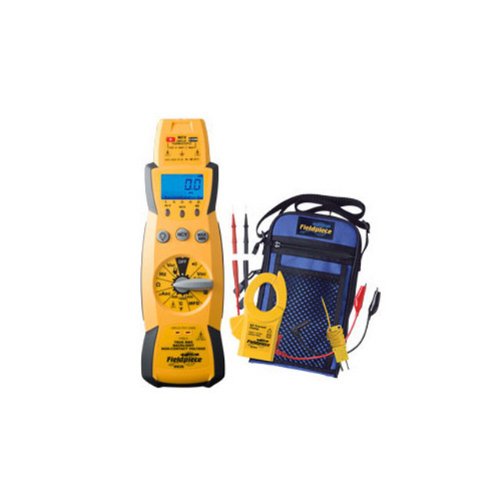
The HS36 suits users who prefer an autoranging meter for quicker, straightforward measurements. I appreciate the backlight and the ability to work easily in dim areas. It feels lighter and easier to handle during long tasks.
This meter works well for general HVAC testing and is compatible with many Fieldpiece accessories. It supports a wider range of parameters from a single meter without manual adjustments.
One limitation is the slightly higher price and fewer included accessories compared to the HS33 package. It might require buying extras separately.
What works well over time
- Auto ranging simplifies use and speeds up tests
- Backlight improves visibility in low light
- Works with a broad range of Fieldpiece accessories
- Lightweight and easy to hold
- Good for quick diagnostics and varied tasks
Things that may bother some users
- Fewer accessories included in the box
- Less manual control for advanced users
- Backlight may drain battery faster
- Price is typically higher than manual counterpart
Early Signals That Influence Choice
One early signal is whether you prefer manual or auto ranging. If you want full control, the HS33’s manual ranges stand out. If you want convenience and speed, the HS36’s autoranging is a clear advantage.
Another signal is package contents. The HS33 comes with several accessories, making it a better starter pack for those who want everything included. The HS36 may need extras added later.
Lighting conditions matter early on. The HS36’s backlight is useful for those working in dim spaces, while the HS33 lacks this feature.
Weight and size can influence first impressions. The HS36 feels lighter and slightly wider, which might affect comfort during extended use.
Finally, compatibility with existing accessories can push buyers toward the HS36, since it works with all Fieldpiece accessory heads for testing more parameters.
Comparing Early Decision Signals
Here is a quick look at how these two meters stack up on key first impressions and setup factors.
| Decision signal (before buying) | HS33 Manual Ranging Meter | HS36 Autoranging Meter |
|---|---|---|
| Learning curve | Requires understanding manual ranges | Easy for beginners with auto ranging |
| First impressions | Solid, robust feel with included accessories | Lightweight, with backlight and modern look |
| Setup comfort | Manual setup but straightforward | Quick to start, less setup needed |
| Clarity of display | Standard display, no backlight | Backlight improves visibility |
| Accessory compatibility | Includes several accessories in package | Works with all Fieldpiece accessory heads |
| Portability | Heavier at 1 pound | Very lightweight at 0.000625 pounds |
Living With These Multimeters Over Time
Both meters require minimal maintenance, mostly battery replacement and keeping probes in good condition. The HS33’s included deluxe test leads are durable and easy to replace.
Consistency is strong in the HS33 due to its manual control, which reduces surprises in readings. The HS36’s autoranging also provides reliable results but can occasionally take longer to settle on a reading.
Minor annoyances with the HS33 include the lack of backlight and weight, which may tire users in extended use. The HS36’s backlight can drain batteries faster, requiring more frequent changes.
Trust builds over time for both devices. The HS33 feels like a dependable tool in steady hands. The HS36 grows on users who appreciate its versatility and ease of use in varied conditions.
Both models hold up well with regular use but suit different user preferences for control versus convenience.
Long-term Ownership Comparison
Here’s how these meters compare after weeks or months of regular use.
| Ownership reality (after weeks/months) | HS33 Manual Ranging Meter | HS36 Autoranging Meter |
|---|---|---|
| Reliability | Very reliable with manual control | Consistently accurate, autoranging aids ease |
| Fit with habits | Best for users who value precise control | Better for those who want speed and simplicity |
| Mental load | Higher due to manual range selection | Lower, meter chooses ranges automatically |
| User satisfaction | High for experienced technicians | High for general users and beginners |
| Maintenance needs | Standard battery and probe care | Similar, but battery may drain faster |
| Accessory readiness | Includes many accessories for immediate use | May require additional accessories purchase |
Common Mistakes Buyers Make
One mistake is focusing solely on specs without considering daily use. Avoid this by thinking about how you will work with the meter each day.
Another error is ignoring included accessories. The HS33 offers a fuller starter kit, which can save money and effort. Check what comes in the package before deciding.
Some buyers underestimate the value of autoranging for speed. If you need quick checks, prioritize meters like the HS36 that simplify range selection.
Neglecting lighting conditions is common. If you work in dark spaces, a backlight feature like on the HS36 can make a big difference.
Finally, forgetting to consider weight and comfort leads to fatigue. Choose a meter that feels good in your hand during long tasks.
Making The Right Choice For Your Situation
If you prefer precise manual control, value included accessories, and work mostly in well-lit conditions, the Fieldpiece HS33 is a solid choice. It suits experienced users who want detailed measurement options.
If you want an easy-to-use, autoranging meter with backlight for varied environments, the Fieldpiece HS36 fits better. It works well for quick diagnostics and those who appreciate simplicity and versatility.
Remember, the best choice depends on your personal workflow and environment rather than just specs. Picking the right fit leads to better satisfaction and fewer frustrations over time.
Faqs About Fieldpiece Hs33 Vs Hs 36
Which meter is easier for beginners?
The Fieldpiece HS36 is easier for beginners because of its autoranging feature. It reduces the chance of selecting the wrong range.
Do both meters measure capacitance?
Yes, both the HS33 and HS36 can measure capacitance, useful for motor-start and motor-run capacitors.
Is the HS33 heavier than the HS36?
Yes, the HS33 weighs about 1 pound, while the HS36 is much lighter at roughly 0.000625 pounds.
Does the HS36 have a backlight?
Yes, the HS36 includes a backlight to improve visibility in low-light conditions. The HS33 does not.
Are accessories included with both meters?
The HS33 package includes several accessories like test leads and amp clamp. The HS36 usually requires buying accessories separately.
Can both meters detect non-contact voltage?
Yes, both models feature non-contact voltage detection for safety and convenience.
Which meter is better for detailed HVAC diagnostics?
The HS33 is better suited for detailed HVAC diagnostics due to its manual ranging and included accessories.
Does the HS36 work with all Fieldpiece accessory heads?
Yes, the HS36 is compatible with all Fieldpiece accessory heads, allowing testing of more parameters.

I’m Asif Ur Rahman Adib, an Electrical Engineer and lecturer. My journey began in the lab, watching students struggle with instruments they used every day without fully understanding them. Over time, I’ve combined teaching, research, and hands-on experience to help others grasp electrical concepts clearly, safely, and practically—whether it’s understanding a circuit or mastering a multimeter.