How To Decide Between Fnirsi 1013d And 1014d Oscilloscopes
- Pick Fnirsi 1013D if you want a compact, touchscreen-only oscilloscope for straightforward measurements.
- Choose Fnirsi 1014D when you need a built-in DDS signal generator for signal creation along with analysis.
- Go with Fnirsi 1013D for longer battery use and better portability in fieldwork.
- Prefer Fnirsi 1014D if you want more trigger options and automatic waveform adjustments.
- Fnirsi 1013D makes more sense for users focused purely on signal visualization and storage.
- Fnirsi 1014D is the safer bet for those who want multifunctional use with signal generation.
Is The Fnirsi 1013d Touchscreen Good For Daily Waveform Analysis?
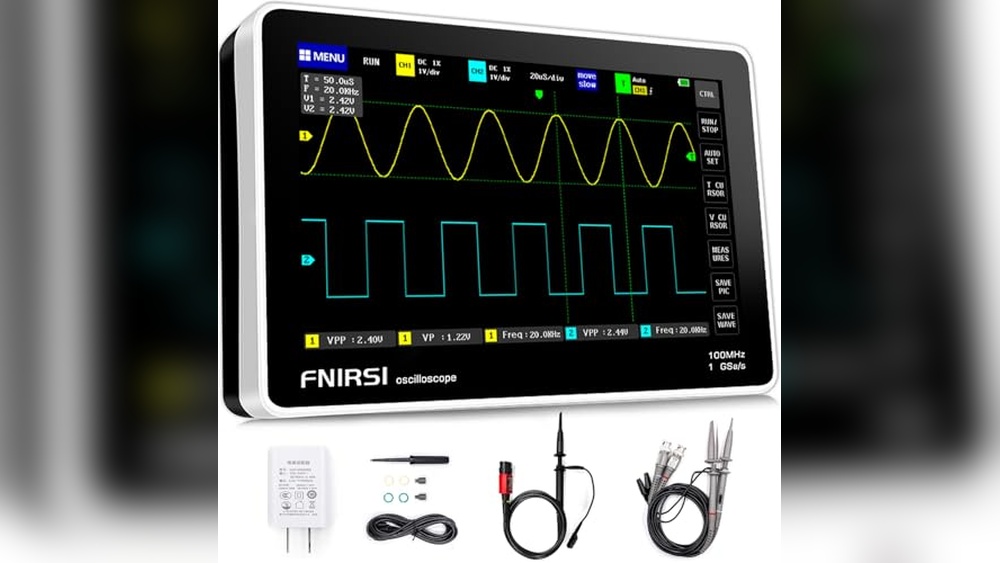
Yes, the Fnirsi 1013D excels as a touchscreen oscilloscope with a 7-inch display and gesture controls. It offers a 1 GSa/s sampling rate and 100 MHz bandwidth per channel, which covers most common testing scenarios. The device’s trigger modes support both analog and digital signals effectively. It also stores waveform images and data efficiently for later review. In daily use, I found the 1013D very handy because of its light weight and portability. The bright screen and capacitive touch make navigating menus and measuring signals intuitive. Battery life supports a few hours of continuous use, which is enough for typical troubleshooting sessions. Its high-voltage protection adds a layer of safety when working with live circuits. Overall, it feels designed for engineers and hobbyists who value quick setup and ease of use.
Strengths in signal display and usability
- 7-inch capacitive touchscreen with clear 800×480 resolution
- Complete trigger function for analog and digital signals
- Built-in high-voltage protection up to 400 V continuous
- 1 GB internal storage for 1000 screenshots and waveform sets
- Supports Lissajous graphics and FFT for signal analysis
Considerations before choosing
- No built-in signal generator, only oscilloscope functions
- Battery lasts about 4 hours of continuous use
- Limited to waveform analysis and measurement only
A practical tool for portable waveform viewing
This oscilloscope suits users who need a straightforward handheld device without extra signal generation features. It removes the stress of managing bulky equipment by being light and intuitive to operate. Beginners will find it easy to start with, while experienced users appreciate the clear display and trigger options. A practical tip is to use the waveform image manager for quick reference during troubleshooting. In my experience, it offers peace of mind knowing you have a reliable display and measurement tool wherever you go.Does The Fnirsi 1014d Add Valuable Features For Signal Testing?
Yes, the Fnirsi 1014D combines an oscilloscope with a DDS signal generator, making it versatile for testing and signal creation. It maintains the 1 GSa/s sampling rate and 100 MHz bandwidth per channel like the 1013D but adds a 2.5 VPP chopping output and multiple waveform options. The device includes trigger modes and a 7-inch LCD screen with the same resolution. This makes it a multifunctional choice for those needing both measurement and generation. In practical terms, I noticed the 1014D is slightly larger but still portable. Its auto-trigger and adaptive trigger settings simplify waveform observation, which helps when adjusting signals quickly. The signal generator is handy for designing and testing circuits without an external source. It suits technicians and engineers who want an all-in-one tool without switching devices. Battery life and build feel comparable to the 1013D but with added flexibility.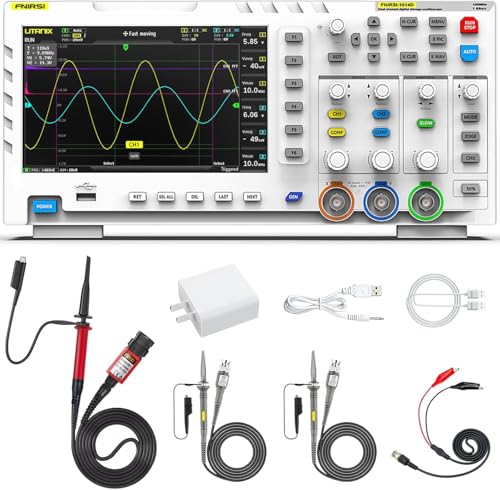
What it excels at for multifunctional use
- Integrated DDS signal generator with 14 waveform types
- 7-inch LCD with 800×480 resolution and one-button AUTO trigger
- Adaptive trigger levels at 25%, 50%, and 75%
- 1 GB storage for waveform data and screenshots
- Supports Lissajous and FFT displays for detailed signal analysis
Key points to keep in mind
- Heavier and slightly bulkier than the 1013D
- Battery duration similar but may vary with signal generator use
- More complex interface could require learning for beginners
Versatile choice for signal testing and generation
The 1014D fits users who want an oscilloscope and signal generator in one unit. It removes the hassle of carrying multiple devices for circuit design and troubleshooting. Beginners might need some time to get used to the extra functions, but experienced users will benefit from the flexibility. My tip is to explore the signal generator presets to save time during testing. In my experience, this model provides confidence by covering more test scenarios with one tool.Questions To Clarify The Right Oscilloscope For You
Do you need a built-in signal generator to create test waveforms? How important is having a touchscreen for quick navigation? Will you be using the device mostly in the field where portability matters? Do you prefer simple controls or more advanced trigger settings? Is storage space for waveform data a key factor in your work? Would you value adaptive trigger options to ease waveform capturing?Comparing Fnirsi 1013d And 1014d In Practical Use
The comparison focuses on usability, features, and portability based on daily testing tasks. Both models share core oscilloscope specs but differ in signal generation and interface options. User experience includes setup, measurement ease, and workflow impact. This approach highlights how each model suits different types of users and scenarios.Does the 1014D’s signal generator add meaningful value?
The 1014D offers a DDS signal generator with multiple waveform types and customizable signals, unlike the 1013D. This adds testing flexibility for circuit design and troubleshooting. If you need to generate signals frequently, the 1014D stands out.| Feature | Fnirsi 1013D | Fnirsi 1014D |
|---|---|---|
| Signal Generator | None | Built-in DDS with 14 waveforms |
| Sampling Rate | 1 GSa/s | 1 GSa/s |
| Bandwidth | 100 MHz per channel | 100 MHz per channel |
| Storage | 1 GB for waveforms | 1 GB for waveforms |
| Trigger Modes | Single/Normal/Auto | Single/Normal/Auto with adaptive levels |
How does portability compare between these oscilloscopes?
The 1013D is ultra-thin and lighter with a 6000 mAh battery lasting about 4 hours. The 1014D is heavier and bulkier, weighing 3.46 pounds, but still portable. Portability favors the 1013D for field use.| Portability Factor | Fnirsi 1013D | Fnirsi 1014D |
|---|---|---|
| Weight | Light and slim | 3.46 pounds |
| Battery Life | Up to 4 hours | Similar, varies with use |
| Size | Compact tablet style | Larger footprint |
Which model offers easier signal measurement and display?
Both provide cursors for amplitude and frequency with direct readouts. The 1014D adds adaptive trigger settings and one-button AUTO for faster setup. The 1013D uses capacitive touch and gestures, making manual measurement intuitive.| Measurement Ease | Fnirsi 1013D | Fnirsi 1014D |
|---|---|---|
| Display Type | Touchscreen with gesture | LCD with AUTO trigger |
| Trigger Options | Standard triggers | Adaptive triggers 25%, 50%, 75% |
| Cursor Measurement | Yes, peak-to-peak and frequency | Yes, direct readout |
| User Interface | Touch gestures | Button and menu driven |
How do storage and waveform management differ?
Both oscilloscopes have 1 GB storage for up to 1000 screenshots and waveform data. The 1013D includes a waveform image manager with thumbnails and zoom features. The 1014D also supports waveform storage but focuses more on multifunction use.| Storage Feature | Fnirsi 1013D | Fnirsi 1014D |
|---|---|---|
| Storage Capacity | 1 GB | 1 GB |
| Waveform Manager | Thumbnail browsing and zoom | Standard storage access |
| Data Handling | Up to 1000 waveforms | Up to 1000 waveforms |
Which Fnirsi Oscilloscope Fits Your Lab Or Field Needs?
If you want a portable, touchscreen oscilloscope focused on measurement, pick the Fnirsi 1013D. It suits users who prioritize ease of use and portability in everyday signal analysis. Its simple interface and durable battery life reduce hassle in mobile work. The Fnirsi 1014D fits those who need both an oscilloscope and signal generator in one device. It is ideal for users who work on circuit design and testing, requiring waveform creation and adaptive triggering. This model supports more complex tasks with its multifunction features. When deciding, consider if signal generation is essential. If not, go with the 1013D for simplicity and portability. Both models offer solid core oscilloscope functions, so your choice depends on your specific testing requirements.Common Questions About Fnirsi 1013d Vs 1014d Oscilloscopes
Can I use the Fnirsi 1013D for signal generation?
No, the Fnirsi 1013D does not have a built-in signal generator. It focuses solely on oscilloscope functions such as waveform viewing and measurement.
Is the touchscreen on the 1013D responsive enough for quick adjustments?
Yes, the 7-inch capacitive touchscreen responds well to gestures and taps, making it easy to navigate settings and cursors smoothly.
How does battery life compare between these models during continuous use?
The 1013D’s 6000 mAh battery lasts about 4 hours under typical use. The 1014D’s battery life is similar but can vary depending on signal generator use.
Does the 1014D require more learning time because of extra features?
Yes, the 1014D has additional functions like a signal generator and adaptive triggers, which may require some time to master for beginners.
Are both oscilloscopes safe to use with high voltage signals?
The 1013D includes a high-voltage protection module that tolerates continuous voltages up to 400 V, offering added safety during testing.
Can I store waveform data on both devices?
Yes, both models have 1 GB of storage space for screenshots and waveform data, supporting efficient data management.
Which model is better for portable fieldwork?
The 1013D is lighter and more compact, making it better suited for portable fieldwork where size and weight matter.

I’m Asif Ur Rahman Adib, an Electrical Engineer and lecturer. My journey began in the lab, watching students struggle with instruments they used every day without fully understanding them. Over time, I’ve combined teaching, research, and hands-on experience to help others grasp electrical concepts clearly, safely, and practically—whether it’s understanding a circuit or mastering a multimeter.