Choosing Between Two Popular Electronic Testers
When looking for a reliable electronic component tester, it’s easy to feel stuck between several good options. The FNIRSI LCR-P1 and DER EE DE-5000 both offer useful features but serve different needs. Deciding which one fits your work or hobby can be confusing. This article breaks down their differences plainly. It helps you see which device aligns best with your daily tasks. You’ll gain clarity on making a practical choice.
Why Picking Between These Testers Is Tricky
First, marketing messages can cloud judgment. Both brands list many impressive features, making it hard to see what really matters. Sometimes marketing overpromises or focuses on specs not relevant to everyday use.
Second, the technical specifications can be confusing. Numbers like counts, measurement ranges, and protocols require experience to interpret properly. Without a clear understanding, buyers may pick based on wrong priorities.
Third, each tester suits different types of users. Choosing without knowing your specific needs leads to frustration. Some buyers want advanced analysis, others want simplicity and portability.
Who Fits Each Tester Better
If you are a hobbyist working mainly with transistors and smaller parts, the FNIRSI LCR-P1 fits well. It offers detailed component identification and a compact design.
For professionals needing precise LCR measurements and multiple test frequencies, the DER EE DE-5000 is more suitable. It handles a wider range of parameters and test modes.
Beginners who want a straightforward tool with automatic detection might appreciate the FNIRSI’s friendly interface and auto pin identification.
Experienced users who prefer a traditional handheld meter with dual display and sorting modes may lean toward the DER EE device.
Those who prioritize portability and battery life will find the FNIRSI LCR-P1 easier to carry and charge via USB-C.
In summary, hobbyists and beginners usually prefer FNIRSI, while professionals and frequent testers benefit from the DER EE DE-5000.
Where The Fnirsi Lcr-p1 Fits Naturally
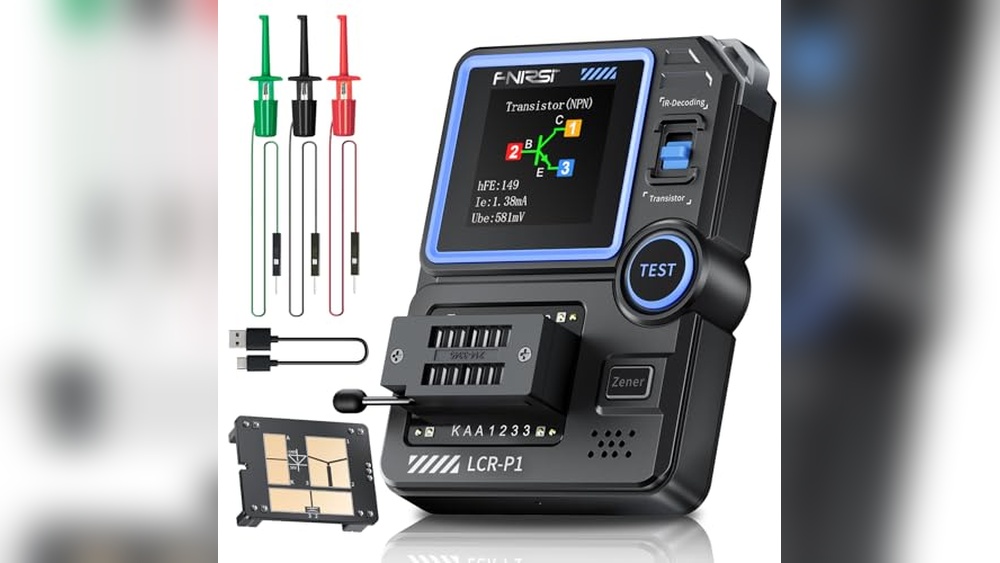
I use the FNIRSI LCR-P1 daily for quick checks on various small electronic components. Its lightweight and small size make it easy to carry around. The automatic pin detection saves time when testing unknown parts.
Over long periods, the clear color screen and replaceable patch seat remain practical for both tiny and larger components. The anti-burn protection adds peace of mind when handling sensitive capacitors.
One limitation is that it may not offer the advanced frequency options or sorting features found in some professional meters.

What works well over time
- Compact and lightweight for portability
- Automatic pin and model identification improves efficiency
- Anti-burn protection safeguards sensitive components
- Color screen enhances readability
- Type-C charging and firmware updates keep it current
Things that may bother some users
- Lacks advanced frequency options for detailed LCR analysis
- Small screen size may be limiting for some users
- Not ideal for sorting large batches of components
Where The Der Ee De-5000 Makes More Sense
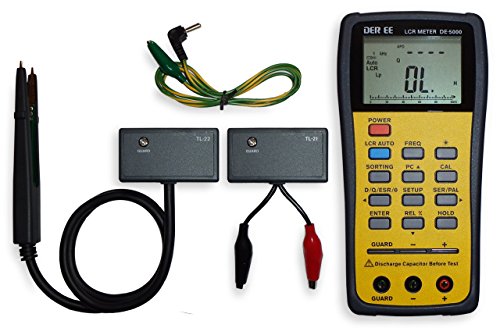
I rely on the DER EE DE-5000 when precise LCR measurements and multiple test frequencies are necessary. Its handheld design fits comfortably in my hand during longer testing sessions. The dual display shows detailed parameters clearly.
Professionally, it supports various test modes, including sorting, which speeds up batch testing. The ability to automatically select serial or parallel measurement suits diverse components.
One limitation is the larger size and weight compared to more portable testers. It also uses a traditional 9V battery instead of USB charging.
What works well over time
- High accuracy with multiple test frequencies
- Dual display for clear parameter viewing
- Sorting mode for quick component classification
- Automatic serial/parallel measurement mode
- Sturdy build suitable for professional use
Things that may bother some users
- Heavier and bulkier to carry around
- Uses 9V battery, no USB charging option
- Interface may feel complex for beginners
Early Signals That Influence Your Choice
The first signal is the type of components you test regularly. If you mostly check transistors and small parts, the FNIRSI LCR-P1’s automatic pin detection stands out.
Next, consider the measurement accuracy and range. The DER EE DE-5000 offers higher counts and more frequency options, ideal for precise LCR measurements.
Portability also matters early on. The FNIRSI device is compact and USB-chargeable, convenient for fieldwork or casual use.
Lastly, the display and ease of use can sway your decision. The DE-5000’s dual display shows more data but may require a learning curve.
Comparing Early Decision Signals
Here is a quick overview of how each tester matches key buying signals before purchase.
| Decision signal (before buying) | FNIRSI LCR-P1 | DER EE DE-5000 |
|---|---|---|
| Learning curve | Gentle and intuitive with auto detection | Moderate, more controls to learn |
| First impressions | Compact, colorful, modern design | Professional, traditional handheld look |
| Setup comfort | USB Type-C charging, easy patch replacement | 9V battery, standard test leads included |
| Display clarity | 1.44 inch color screen, simple layout | Dual display with detailed parameters |
| Measurement modes | Focus on transistor and component analysis | Full auto LCR with multiple frequencies |
| Portability | Lightweight and small | Heavier and larger |
What Living With These Testers Is Like
Maintaining the FNIRSI LCR-P1 is simple thanks to the rechargeable battery and firmware updates. The replaceable patch seat helps with wear and tear.
The DER EE DE-5000 requires occasional battery replacement and careful handling due to its size. Its robust build supports long-term use.
Both devices show consistent readings, but the DE-5000’s advanced features may need regular calibration checks in professional settings.
Minor annoyances include the FNIRSI’s smaller screen size and the DE-5000’s weight. Still, both earn user trust over time with reliable performance.
Long-term Ownership Comparison
Below is a comparison of how each tester performs after weeks or months of use.
| Ownership reality (after weeks/months) | FNIRSI LCR-P1 | DER EE DE-5000 |
|---|---|---|
| Reliability | Stable for general component testing | Highly reliable for precise measurements |
| Habit fit | Easy to incorporate into casual testing routines | Fits well with professional workflows |
| Mental load | Low due to automatic features | Moderate because of more settings |
| User satisfaction | Good for hobbyists and general use | Preferred by advanced users and pros |
| Maintenance needs | Minimal with USB charging and patch replacement | Regular battery changes and calibration checks |
Common Mistakes Buyers Make
One mistake is choosing based solely on specs without considering daily use. Avoid this by thinking about what measurements matter most to you.
Another is underestimating the importance of portability. If you move around a lot, the DER EE DE-5000’s weight could be a burden.
Some buyers overlook the learning curve. The DER EE device has more features but can be confusing for beginners.
Ignoring power options is also common. The FNIRSI’s USB charging is convenient compared to the DE-5000’s 9V battery.
Finally, not checking component compatibility can lead to frustration. Make sure the tester supports the parts you test regularly.
Making The Right Choice For Your Situation
If you need a compact, easy-to-use tester mostly for transistors and small components, the FNIRSI LCR-P1 is a solid pick. It suits hobbyists and those who want quick, automatic readings.
For those requiring detailed LCR measurements, multiple frequencies, and advanced sorting, the DER EE DE-5000 fits better. Professionals and serious testers appreciate its precision and features.
Remember, the best choice depends on your needs and workflow, not just on specs. Choosing the right tool will make your testing easier and more accurate over time.
Faqs About Fnirsi Lcr-p1 Vs De-5000
Which tester is better for beginners?
The FNIRSI LCR-P1 is generally better for beginners due to its automatic pin detection and simpler interface. The DER EE DE-5000 has more features but may feel complex at first.
Can the FNIRSI LCR-P1 measure inductance and capacitance?
Yes, the FNIRSI LCR-P1 measures inductance, capacitance, resistance, and also tests transistors and other components.
Does the DER EE DE-5000 support multiple test frequencies?
Yes, it offers selectable frequencies including 100Hz, 120Hz, 1kHz, 10kHz, and 100kHz, which help in detailed component analysis.
Is the FNIRSI LCR-P1 portable?
Yes, it is compact and lightweight, with USB Type-C charging, making it very portable and convenient for field use.
What power source does the DER EE DE-5000 use?
The DE-5000 uses a 9V battery, which needs replacement when drained. It does not support USB charging.
Which tester has a better display?
The FNIRSI LCR-P1 has a 1.44 inch full-color screen, while the DER EE DE-5000 features a dual display that shows more detailed parameters.
Can the DER EE DE-5000 sort components?
Yes, it includes a sorting mode to quickly categorize batches of components, which is useful for frequent testers.
Are firmware updates available for these testers?
The FNIRSI LCR-P1 supports firmware upgrades via its Type-C interface. The DER EE DE-5000 does not have firmware update features.

I’m Asif Ur Rahman Adib, an Electrical Engineer and lecturer. My journey began in the lab, watching students struggle with instruments they used every day without fully understanding them. Over time, I’ve combined teaching, research, and hands-on experience to help others grasp electrical concepts clearly, safely, and practically—whether it’s understanding a circuit or mastering a multimeter.