Choosing Between Compact And Advanced Digital Multimeters
- Pick Fluke 115 Compact Multimeter if you want a straightforward tool for general electrical measurements.
- Choose Fluke 117 Advanced Meter when you need non-contact voltage detection and auto voltage selection.
- Go with Fluke 115 Compact Multimeter for a large LED backlight and safety-rated use up to 600V.
- Prefer Fluke 117 Advanced Meter if low input impedance and ghost voltage prevention matter in your work.
- Fluke 115 Compact Multimeter makes more sense for those who value Min/Max/Average recording of signals.
- Fluke 117 Advanced Meter is the safer bet for frequent use on non-linear loads requiring true RMS accuracy.
Is The Fluke 115 Compact Multimeter Suitable For Field Technicians?
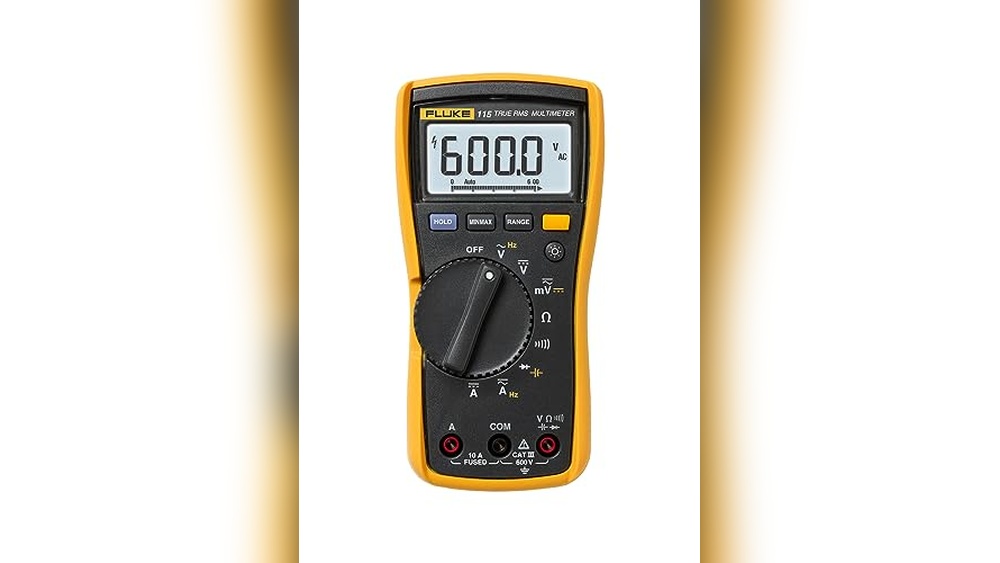
Yes, it is designed specifically for field technicians who need a compact and reliable device. It offers True-rms voltage and current measurements, plus resistance, continuity, frequency, and capacitance. The large white LED backlight supports work in dim environments, and its safety rating ensures confidence when measuring up to 600 volts. It also records signal fluctuations with Min/Max/Average functionality.
In daily use, I find the Fluke 115 easy to handle and rugged enough for various tasks. Its size fits well in a tool pouch, and the included holster adds protection. The measurement accuracy is consistent, and the test leads are comfortable to use. Working in poorly lit areas is less stressful thanks to the backlight. It feels like a dependable companion for routine diagnostics and repairs.

What it does best for electrical measurements
- Compact True-rms digital multimeter suited for field work
- Measures AC/DC voltage up to 600 V and current to 10 A
- Records Min/Max/Average for signal fluctuation tracking
- Safety rated CAT III 600V for enhanced user protection
- Large white LED backlight for visibility in low light
What to know before you buy this compact multimeter
- Bulkier dimensions compared to more pocket-sized models
- Standard test leads included, no advanced probe options
- No non-contact voltage detection feature
- Weight is over 1.3 pounds, may feel heavy in tight spaces
Practical thoughts on daily use and user fit
This multimeter suits technicians who prioritize sturdy build and essential measurement features. It removes guesswork when checking voltages and current levels, thanks to clear readings and backlighting. Beginners will find it straightforward while experienced users appreciate its reliability. In my experience, it handles frequent use without hiccups. A practical tip is to keep the holster handy to protect the meter in busy environments. Its durability delivers peace of mind on tough job sites.
Does The Fluke 117 Advanced Meter Improve Safety And Convenience?
It depends on your needs. The Fluke 117 adds VoltAlert non-contact voltage detection and AutoVolt automatic AC/DC voltage selection, making it more convenient for quick checks. Low input impedance reduces false readings caused by ghost voltages, which is helpful in complex wiring. Its true RMS capability ensures accuracy on non-linear loads, ideal for modern electrical systems.
I find the Fluke 117 handy for troubleshooting and general electrical maintenance. The non-contact feature speeds up identifying live wires without probes. It’s lighter and more compact, fitting well in one hand. The backlight is bright and useful in poorly lit spaces. Its battery life supports long workdays without frequent changes.

What it excels at in electrical diagnostics
- VoltAlert technology for non-contact AC voltage detection
- AutoVolt for automatic AC/DC voltage selection
- Low input impedance to avoid false ghost voltage readings
- True RMS measurement on non-linear loads
- Long battery life, about 400 hours without backlight
Important points to consider before choosing this meter
- Smaller display area compared to bulkier models
- Lacks Min/Max/Average signal recording found in some models
- Non-contact detection may not replace probe precision for all tasks
- Only standard test leads included, no specialty probes
A hands-on perspective on convenience and accuracy
The Fluke 117 fits best with users who need quick voltage checks and reliable measurements in one tool. It reduces stress by preventing false readings and simplifying voltage detection. Beginners can use it with ease, while pros gain efficiency. I recommend keeping the non-contact feature as a first step before deeper testing. In my experience, this meter brings confidence in identifying live circuits safely. The combination of features offers reassurance during daily electrical work.
Key Questions To Decide Between Fluke 115 And 117 Multimeters
Do you need non-contact voltage detection for safer initial checks? Are you looking for automatic AC/DC voltage selection to simplify measurements? How important is avoiding false ghost voltage readings in your environment? Would you benefit from Min/Max/Average recording to track signal changes? Is the size and weight of the multimeter a factor for your daily carry? Do you require true RMS accuracy for complex or non-linear electrical loads?Daily Use Comparison Of Compact Vs Advanced Digital Multimeters
Choosing between these two meters comes down to convenience features and measurement specifics. Both handle essential electrical tests well, but their differences affect usability in practice. The compact model prioritizes ruggedness and signal tracking, while the advanced one focuses on safety and ease of voltage detection. Understanding these contrasts helps align the tool with your workflow.Does non-contact voltage detection improve safety?
The advanced multimeter includes VoltAlert technology, allowing you to detect live voltage without touching wires. The compact model requires probe contact for voltage detection, which might be less convenient but still safe with care.| Metric | Fluke 115 Compact Multimeter | Fluke 117 Advanced Multimeter |
|---|---|---|
| Non-contact voltage detection | No | Yes |
| Safety in initial checks | Probe required | Touch-free detection |
| Ease of use | Manual probing | Automatic alert |
| False positive risk | Lower risk with care | Reduced ghost voltage errors |
So what? If safety and quick voltage alerts matter, the advanced meter is a strong choice.
How do they handle voltage and current measurement?
Both meters measure AC/DC voltage up to 600V and current to 10A with True-rms accuracy. The compact model offers signal fluctuation recording, while the advanced model includes automatic AC/DC voltage selection.| Decision point | Fluke 115 Compact Multimeter | Fluke 117 Advanced Multimeter |
|---|---|---|
| Max voltage range | 600 V AC/DC | 600 V AC/DC |
| Current measurement max | 10 A | 10 A |
| Auto AC/DC selection | No | Yes |
| Min/Max/Average recording | Yes | No |
So what? For manual control and signal tracking, the compact model works well; auto selection suits faster tasks.
Which multimeter offers better backlighting and visibility?
Both models have large white LED backlights to assist in low-light environments. The compact meter’s backlight is robust, while the advanced meter’s brightness supports longer battery life.| Use case | Fluke 115 Compact Multimeter | Fluke 117 Advanced Multimeter |
|---|---|---|
| Backlight size | Large LED | Large LED |
| Battery life with backlight off | Standard | 400 hours typical |
| Usability in dark spaces | Good | Good |
| Power saving features | No | Yes |
So what? The advanced meter slightly edges out in battery life and power management.
How do size and weight affect daily handling?
The compact multimeter is larger and heavier, which might be less convenient for long use. The advanced meter is smaller and lighter, fitting easily in one hand.| Metric | Fluke 115 Compact Multimeter | Fluke 117 Advanced Multimeter |
|---|---|---|
| Dimensions (inches) | 6.57 x 3.31 x 1.82 | 6.67 x 3.31 x 1.82 |
| Weight (pounds) | 1.32 | 1.21 |
| Portability | Moderate | Better |
| Comfort for extended use | Average | Good |
So what? For frequent handheld use, the advanced meter offers better comfort and portability.
Which Digital Multimeter Fits Your Electrical Testing Needs?
If you want a rugged, straightforward multimeter that tracks signal fluctuations and prioritizes safety with CAT III rating, the Fluke 115 Compact Multimeter fits well. It suits field technicians who need a reliable, durable tool for general measurements.
The Fluke 117 Advanced Multimeter is better for those who value non-contact voltage detection, automatic voltage selection, and reduced false readings. It’s ideal for users who want convenience and accuracy in complex electrical environments.
When choosing, consider if you prefer simplicity and signal recording or enhanced safety and convenience features. Both models deliver trusted measurements, so your choice depends on specific daily use preferences and workflow.
Faqs About Fluke 115 Vs 117 Digital Multimeters
Can I use the Fluke 117 for non-contact voltage detection?
Yes, the Fluke 117 includes VoltAlert technology which detects AC voltage without physical contact. This feature helps identify live wires quickly and safely before probing.
Does the Fluke 115 support automatic AC/DC voltage selection?
No, the Fluke 115 requires manual selection between AC and DC voltage modes. The Fluke 117 offers automatic voltage selection for easier measurements.
Which multimeter is better for measuring noisy or fluctuating signals?
The Fluke 115 provides Min/Max/Average recording, useful for tracking signal fluctuations. The Fluke 117 does not have this feature.
Are these multimeters suitable for beginners?
Both models are user-friendly, but the Fluke 117’s automatic features and non-contact detection may ease the learning curve for beginners. The Fluke 115 is straightforward and reliable for basic use.
How do the sizes compare for carrying on the job?
The Fluke 117 is smaller and lighter, making it more portable for daily carry. The Fluke 115 is bulkier but offers a protective holster for field use.
Is battery life a concern with these multimeters?
The Fluke 117 has a longer battery life, especially without backlight. The Fluke 115 has standard battery life but includes a battery in the package for immediate use.
Will low input impedance on the Fluke 117 prevent false voltage readings?
Yes, the low input impedance feature helps avoid ghost voltage errors, which can cause false readings on energized but inactive circuits.

I’m Asif Ur Rahman Adib, an Electrical Engineer and lecturer. My journey began in the lab, watching students struggle with instruments they used every day without fully understanding them. Over time, I’ve combined teaching, research, and hands-on experience to help others grasp electrical concepts clearly, safely, and practically—whether it’s understanding a circuit or mastering a multimeter.