How To Decide Between Fluke 115 And Fluke 175 Multimeters
- Pick Fluke 115 if you want a compact, versatile meter for general field tasks.
- Choose Fluke 175 when you need higher safety ratings and advanced measurement options.
- Go with Fluke 115 for work in low-light areas thanks to its bright LED backlight.
- Prefer Fluke 175 if you value lifetime warranty and more precise AC current readings.
- Fluke 115 makes more sense for users who want a lightweight, easy-to-handle tool.
- Fluke 175 is the safer bet for industrial environments with its CAT IV 600V rating.
Does The Fluke 115 Cover Everyday Electrical Testing Needs?
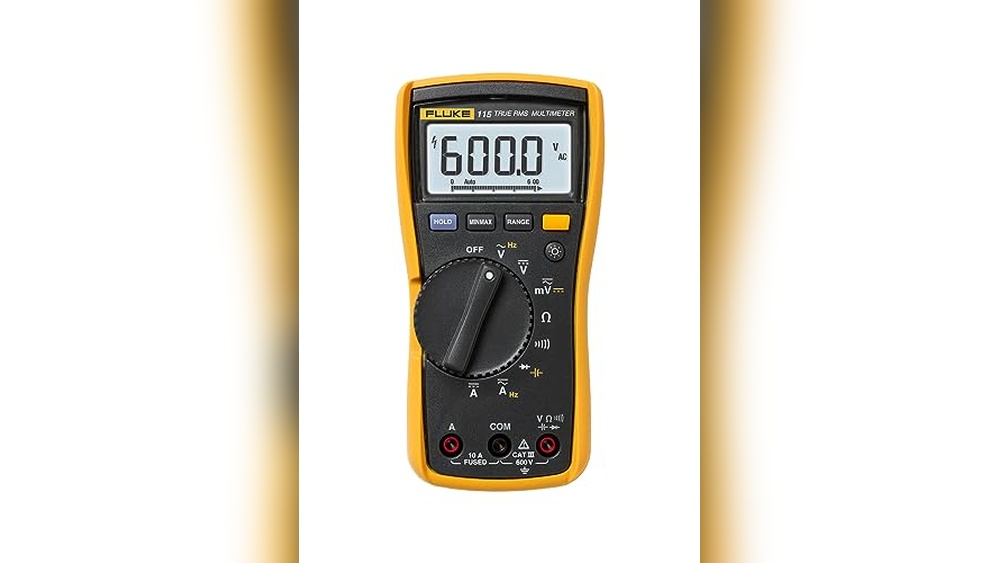
Yes, the Fluke 115 covers most daily electrical testing needs effectively. It measures AC/DC voltage up to 600 V and current up to 10 A. It also handles resistance, continuity, frequency, and capacitance, which are common requirements for field technicians. The compact design and True-rms technology ensure reliable readings in various conditions.
In daily use, I find the Fluke 115 comfortable to hold and easy to operate with one hand. The large white LED backlight is helpful when working in dim spaces or under panels. It feels sturdy yet lightweight enough to carry around all day. The Min/Max/Average function is useful when monitoring fluctuating signals without constantly watching the display.

Core Strengths for Field Technicians
- True-rms measurements for voltage and current accuracy
- Measures resistance, continuity, frequency, and capacitance
- Large white LED backlight for low-light conditions
- Compact and lightweight design for easy portability
- Safety rated CAT III 600V for standard electrical environments
- Min/Max/Average function to track signal fluctuations
What to Consider Before Choosing This Multimeter
- Limited to 600 V max voltage rating, not suited for high-voltage industrial use
- No diode test feature compared to some higher-end models
- Backlight is bright but only white, no color differentiation
- Manual ranging may be slower for some users
Practical Take on the Fluke 115
This multimeter suits field technicians and DIY users who handle general electrical troubleshooting. It removes the stress of carrying a bulky device while still delivering accurate readings. Beginners will find it straightforward, while experienced users appreciate its reliable True-rms performance. In my experience, keeping it handy in a tool belt makes quick testing easier. A practical tip is to use the backlight feature whenever lighting is poor to avoid misreading values. The peace of mind comes from its solid build and safety rating for most home and light commercial jobs.
Is The Fluke 175 Suitable For Industrial And Advanced Diagnostics?
It depends on your work environment. The Fluke 175 offers higher safety ratings (CAT III 1000 V, CAT IV 600 V) making it better for industrial settings. It includes features like diode testing and automatic ranging that speed up troubleshooting. Its lifetime warranty provides long-term assurance. For advanced users or those needing extra measurement precision, this model fits well.
I find the Fluke 175 comfortable for longer diagnostic sessions due to its balanced weight and size. The manual and automatic ranging options help when switching between different tests. Auto Hold and Min/Max-average recording are handy for capturing fluctuating signals without constant monitoring. It feels like a step up in professional tools but remains user-friendly enough for intermediate users.

Advanced Features for Troubleshooting and Repair
- True-RMS AC current and voltage with frequency and capacitance measurement
- Includes diode test and continuity for circuit diagnostics
- Manual and automatic ranging for flexible use
- Display Hold, Auto Hold, and Min/Max-average recording functions
- Safety rated for CAT III 1000 V and CAT IV 600 V environments
- Lifetime warranty for long-term reliability
Important Considerations Before Buying
- Higher price point may not suit casual or infrequent users
- Slightly heavier than simpler models, less pocket-friendly
- More features could mean a steeper learning curve for beginners
- Not as compact as some field-focused multimeters
Who Benefits Most from the Fluke 175
This model fits electricians and technicians who face complex diagnostic tasks daily. It reduces the stress of needing multiple instruments by combining essential measurements in one unit. Experienced users will appreciate the lifetime warranty and safety features. Beginners might find it a bit advanced but will benefit from its automatic functions. In my experience, investing in this multimeter means fewer trips back to the toolbox and more confidence on site. A practical tip is to explore the Auto Hold feature for hands-free readings. Overall, it offers dependable performance that lasts.
Key Questions To Choose Your Digital Multimeter
Do you need a multimeter that handles industrial voltage levels safely? How often will you use advanced functions like diode testing or Auto Hold? Is portability and ease of use a priority over extra features? Would a lifetime warranty influence your decision? Are you comfortable with manual ranging or prefer automatic adjustments? Will you mostly work in well-lit or dim environments?
Everyday Performance Comparison Of Fluke 115 And Fluke 175
This comparison focuses on how both multimeters perform during typical electrical troubleshooting tasks. It looks at measurement capabilities, usability, safety ratings, and feature sets. The goal is to highlight practical differences that affect daily workflow and peace of mind.
Which Multimeter Offers Better Safety for Industrial Use?
Safety ratings differ significantly between the two models, affecting where you can use them confidently.
| Metric | Fluke 115 Digital Multimeter | Fluke 175 ESFP Multimeter |
|---|---|---|
| Safety Rating | CAT III 600V | CAT III 1000V, CAT IV 600V |
| Weight | 1.32 Pounds | 0.93 Pounds |
| Dimensions (HxWxL) | 3.94″ x 16.0″ x 10.83″ | 3.5″ x 16.5″ x 10.98″ |
| Warranty | Standard | Lifetime |
How Do They Compare for Measurement Range and Accuracy?
Both provide True-rms voltage and current readings, but the 175 extends features and ranges for advanced diagnostics.
| Decision point | Fluke 115 | Fluke 175 |
|---|---|---|
| Voltage Range | Up to 600 V AC/DC | Up to 1000 V AC/DC |
| Current Range | Up to 10 A | Up to 10 A with better accuracy |
| Additional Measurements | Frequency, capacitance, continuity | Same plus diode test |
| Ranging | Manual | Manual and automatic |
Which Model Is Easier to Use in the Field?
Ease of use depends on design, weight, and helpful features like backlight and hold functions.
| Use case | Fluke 115 | Fluke 175 |
|---|---|---|
| Backlight | Large white LED | Standard display lighting |
| Weight | 1.32 Pounds | 0.93 Pounds |
| Display Hold | No Auto Hold | Display Hold and Auto Hold |
| Portability | Compact, easy to carry | Moderate size, balanced weight |
How Do Pricing and Value Compare?
Price differences reflect feature sets and warranty coverage, impacting long-term value.
| Metric | Fluke 115 | Fluke 175 |
|---|---|---|
| Current Price | $197.99 | $379.39 |
| Original Price | $279.99 | $440.99 |
| Savings | $82.00 (29%) | $61.60 (14%) |
| Warranty | Standard | Lifetime |
Making The Right Choice For Your Electrical Testing Needs
If you want a compact, reliable multimeter for everyday electrical work and field tasks, the Fluke 115 is a solid pick. It balances portability with essential measurement functions and a helpful backlight for dim areas.
Choose the Fluke 175 if your work involves higher voltages, industrial environments, or you need additional features like diode testing and automatic ranging. Its safety ratings and lifetime warranty add peace of mind for heavy use.
When in doubt, consider your typical work setting and which features you’ll use most. Both models deliver accurate True-rms measurements and are built to last, so your choice depends on fit rather than performance alone.
Faqs About Choosing Between Fluke 115 Vs 175 Digital Multimeters
Can the Fluke 115 handle industrial voltage levels safely?
The Fluke 115 is rated for CAT III 600V, which covers most residential and commercial environments but not all industrial settings. For higher voltage or CAT IV environments, the Fluke 175 is more suitable.
Is the Fluke 175 difficult for beginners to use?
The Fluke 175 has more features, which might require some learning, but it includes automatic ranging and helpful hold functions that simplify use. Beginners willing to spend time learning will find it manageable.
Does the Fluke 115 have a backlight feature?
Yes, the Fluke 115 features a large white LED backlight, making it easier to read measurements in poorly lit areas. This is useful for field technicians working in tight or dark spaces.
What warranty coverage do these multimeters have?
The Fluke 115 comes with a standard warranty, while the Fluke 175 offers a lifetime warranty. The latter provides extra assurance for users relying on long-term durability.
Are both meters suitable for measuring capacitance and frequency?
Yes, both the Fluke 115 and Fluke 175 measure capacitance and frequency accurately, supporting a range of troubleshooting tasks involving these parameters.
How portable are these multimeters for daily field use?
The Fluke 115 is more compact and slightly heavier, designed for easy carry in the field. The Fluke 175 is balanced but less compact, suitable for users who prioritize features over size.
Can the Fluke 175 replace other diagnostic tools?
The Fluke 175’s advanced features like diode testing and Auto Hold reduce the need for additional instruments, making it a versatile choice for professional troubleshooting.

I’m Asif Ur Rahman Adib, an Electrical Engineer and lecturer. My journey began in the lab, watching students struggle with instruments they used every day without fully understanding them. Over time, I’ve combined teaching, research, and hands-on experience to help others grasp electrical concepts clearly, safely, and practically—whether it’s understanding a circuit or mastering a multimeter.