Choosing The Right Multimeter For Electrical Testing
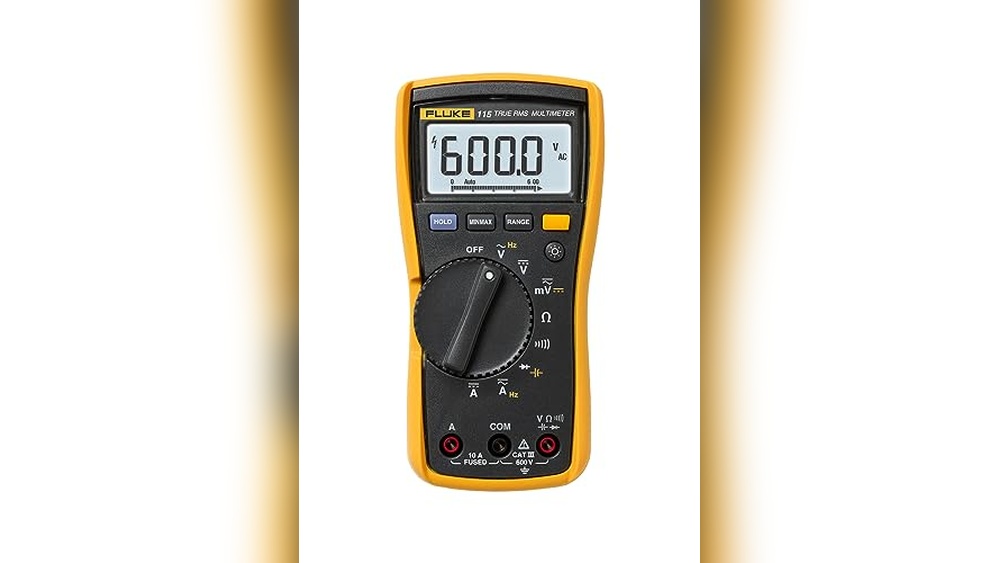
- Choose Fluke 115 True-RMS Multimeter if you need accurate voltage and current readings with True-rms capability.
- Pick Fluke 15B+ Basic Electrical Multimeter when you require higher voltage measurement up to 1000V.
- Opt for Fluke 115 if you work often in low-light conditions thanks to its bright LED backlight.
- Select Fluke 15B+ when budget is a consideration but basic AC/DC measurement functions remain a priority.
- Go with Fluke 115 if you want to track signal fluctuations using min/max/average recording.
Practical Use Of These Fluke Multimeters
The Fluke 115 True-RMS Multimeter fits well for field technicians who need reliable readings in various environments. Its compact size and backlight make it easy to use in cramped or dimly lit spaces. I found it convenient for measuring frequency and capacitance alongside standard voltage and current.
The Fluke 15B+ Basic Electrical Multimeter is straightforward and solid for general electrical troubleshooting. It handles higher voltage ranges well and covers essentials like diode testing and continuity. It suits those who primarily test residential and commercial electrical systems without needing advanced features.
Fluke 115 True-rms Multimeter At A Glance

Where the Fluke 115 Excels
- True-rms measurements for more accurate AC voltage and current readings.
- Min/Max/Average recording to capture signal fluctuations.
- Large LED backlight suited for work in poor lighting.
- Compact design that fits well in a technician’s toolkit.
Where the Fluke 115 Has Limits
- Voltage range limited to 600V, which may be low for some applications.
- Heavier and slightly bulkier than some basic models.
Fluke 15b+ Electrical Multimeter At A Glance

Where the Fluke 15B+ Works Well
- Measures AC/DC voltage up to 1000V for broader applications.
- Includes diode testing along with resistance and continuity.
- Safety rated for CAT III 600V environments.
- Slim and lightweight design for easy handling.
Where the Fluke 15B+ Faces Challenges
- No True-rms measurement, which can affect accuracy on non-linear loads.
- Lacks frequency measurement and min/max recording features.
How These Multimeters Compare In Everyday Electrical Work
I compared both multimeters by using them for common electrical tasks such as checking household voltage, testing continuity, and measuring current. The Fluke 115’s True-rms capability and backlight made it easier to handle irregular signals and low-light conditions. The Fluke 15B+ performed well for higher voltage checks and basic diagnostics but lacked some advanced features.Which Multimeter Offers More Measurement Functions?
| Aspect | Fluke 115 True-RMS Multimeter | Fluke 15B+ Electrical Multimeter |
|---|---|---|
| Voltage Range | Up to 600V AC/DC | Up to 1000V AC/DC |
| True-rms Measurement | Yes | No |
| Frequency Measurement | Yes | No |
| Diode Test | No | Yes |
| Min/Max/Average Recording | Yes | No |
Ratings: Fluke 115 – 8/10 | Fluke 15B+ – 7/10
Edge: The Fluke 115 suits users needing more measurement features and accuracy, while the 15B+ is better for basic high-voltage tasks.
How Do They Handle Safety and Durability?
| Aspect | Fluke 115 True-RMS Multimeter | Fluke 15B+ Electrical Multimeter |
|---|---|---|
| Safety Rating | CAT III 600V | CAT III 600V |
| Build Quality | Rugged with holster included | Sturdy but lighter |
| Weight | 1.32 Pounds | 1.01 Pounds |
Ratings: Fluke 115 – 8/10 | Fluke 15B+ – 8/10
Edge: Both provide reliable safety for common electrical environments, with the 115 feeling a bit more robust.
Which Is Easier to Use in the Field?
| Aspect | Fluke 115 True-RMS Multimeter | Fluke 15B+ Electrical Multimeter |
|---|---|---|
| Display Visibility | Large LED backlight | No backlight |
| Size | Compact but heavier | Slimmer and lighter |
| Ease of Handling | Good grip with holster | Simple interface |
| Portability | Moderate | High |
Ratings: Fluke 115 – 7/10 | Fluke 15B+ – 8/10
Edge: The 15B+ is easier to carry and handle, while the 115 offers better visibility in darker areas.
What About Price and Value?
| Aspect | Fluke 115 True-RMS Multimeter | Fluke 15B+ Electrical Multimeter |
|---|---|---|
| Current Price | $197.99 | $104.90 |
| Discount | 29% | 23% |
| Included Accessories | Battery, holster, test leads | Standard test leads |
Ratings: Fluke 115 – 7/10 | Fluke 15B+ – 8/10
Edge: The 15B+ offers strong value for basic testing, while the 115 commands a higher price for extra features.
Long-term Use And Reliability Considerations
Both multimeters have a straightforward learning curve, but the Fluke 115’s additional features require some familiarization. Once accustomed, it provides consistent and trustworthy readings that help build confidence in diagnostics. The 15B+ is simpler to operate, making it suitable for users who prefer basic functions without extensive training.
In terms of trust and peace of mind, both units come from a reputable brand and offer solid durability. The 115’s True-rms capability adds reliability for complex signals, while the 15B+ remains a dependable tool for routine electrical checks. Either choice delivers steady performance with proper care.
Making The Right Multimeter Choice For Your Work
The Fluke 115 True-RMS Multimeter is ideal for those who need accurate readings on complex electrical signals and value features like frequency measurement and min/max recording. It suits technicians working in varied environments, especially where precise diagnostics matter.
The Fluke 15B+ Electrical Multimeter fits users who require basic, reliable measurements at a higher voltage range without extra functions. It is a practical choice for electricians and hobbyists focused on straightforward electrical troubleshooting.
Both tools are solid, but your choice depends on whether you prioritize advanced features or simple, high-voltage testing capability.
Common Questions About Fluke 115 Vs 15b+ Multimeters
Does the Fluke 15B+ have True-rms measurement?
No, the Fluke 15B+ does not offer True-rms measurement. This can affect accuracy on non-linear loads compared to the Fluke 115.
Which multimeter has a better display for low light?
The Fluke 115 includes a large white LED backlight, making it easier to read in poorly lit areas. The 15B+ lacks a backlight.
Can both multimeters measure current up to 10A?
Yes, both the Fluke 115 and 15B+ can measure AC/DC current up to 10 amps safely.
Is the voltage range higher on the Fluke 115 or 15B+?
The Fluke 15B+ measures voltage up to 1000V, while the Fluke 115 measures up to 600V.
Which model is better for automotive or fieldwork?
The Fluke 115 is more suited for fieldwork due to its compact size, True-rms readings, and backlight. The 15B+ is better for general electrical applications.
Do both multimeters include test leads?
The Fluke 115 comes with 4mm PVC-insulated test leads and a holster. The 15B+ typically includes standard test leads but no holster.
Are both multimeters safety rated for residential use?
Yes, both have a CAT III 600V safety rating, suitable for most residential and commercial electrical systems.

I’m Asif Ur Rahman Adib, an Electrical Engineer and lecturer. My journey began in the lab, watching students struggle with instruments they used every day without fully understanding them. Over time, I’ve combined teaching, research, and hands-on experience to help others grasp electrical concepts clearly, safely, and practically—whether it’s understanding a circuit or mastering a multimeter.