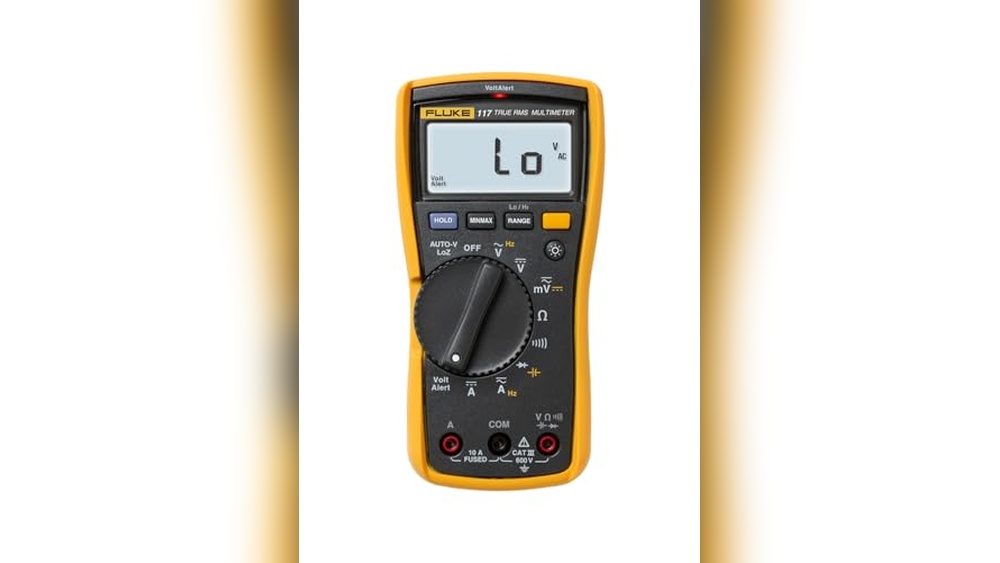
The Fluke 117 and Fluke 175 are both digital multimeters designed for electrical measurements. They offer features suited for different troubleshooting and testing needs. The choice depends on the type of work and the specific functions you require.
The core difference lies in the feature set and intended use: the Fluke 117 is tailored for electricians needing quick voltage detection with minimal false readings, while the Fluke 175 offers broader measurement capabilities for more detailed diagnostics.
After reading, you will be able to decide which multimeter fits your daily tasks better based on practical use and features.
Choosing Between Two Reliable Digital Multimeters
- Choose the Fluke 117 if you need non-contact voltage detection and low impedance mode to avoid ghost voltage.
- Pick the Fluke 175 when you want more extensive measurement options like manual and automatic ranging with record functions.
- Go for the Fluke 117 if you prefer a compact device with a bright LED backlight for dark environments.
- Consider the Fluke 175 for troubleshooting that demands true RMS accuracy and enhanced productivity features.
- Select the Fluke 175 if safety ratings for higher voltage categories are important for your work.
Multimeter Use In Everyday Electrical Work
The Fluke 117 fits well in daily use where quick checks for voltage presence and basic measurements are common. Its VoltAlert technology is helpful for non-contact AC voltage detection, saving time. The large backlight makes it easy to read in dim places.
Using the Fluke 175 in daily tasks means having access to a wider range of functions, including capacitance and frequency measurements. I found its manual and auto-ranging features useful when troubleshooting complex electrical systems that require precise readings.
At A Glance: Fluke 117 Digital Multimeter

Where the Fluke 117 Excels
- Non-contact voltage detection with VoltAlert technology
- Low impedance mode to reduce false readings
- Auto AC/DC voltage selection simplifies use
- Bright white LED backlight for visibility in low light
Where the Fluke 117 Shows Limits
- Limited measurement range compared to more advanced models
- Fewer advanced functions like data hold or recording
- Smaller display size might be less comfortable for detailed work
At A Glance: Fluke 175 Esfp True Rms Multimeter

Where the Fluke 175 Fits Best
- Advanced troubleshooting with true RMS AC current and voltage
- Manual and automatic ranging for flexibility
- Includes Min/Max-average recording for monitoring changes
- Safety rated for higher voltage categories (CAT III 1000 V, CAT IV 600 V)
- Lifetime warranty provides long-term peace of mind
Where the Fluke 175 Faces Challenges
- Larger and bulkier size may reduce portability
- Higher price point compared to simpler multimeters
- More complex interface might require longer learning time
Practical Comparison Of Fluke 117 And Fluke 175 For Electrical Tasks
Both multimeters have been used in daily electrical and electronic troubleshooting. The comparison covers usability, measurement types, accuracy in real conditions, and how they handle common scenarios. The goal was to see how each fits specific user needs and workflow.
Measurement Capabilities and Accuracy
Which device provides the measurements needed for typical electrical work? Are the readings stable and reliable?
| Aspect | Fluke 117 | Fluke 175 |
|---|---|---|
| Voltage and Current | True RMS voltage, basic current measurements | True RMS AC current and voltage with more range |
| Additional Measurements | Frequency, capacitance, resistance, continuity | Includes diode, capacitance, frequency, and advanced recording |
| Auto-ranging | Automatic AC/DC selection | Manual and automatic ranging available |
| Low Impedance Mode | Yes, helps avoid ghost voltage | No specific low impedance mode |
| Display | Backlit LCD | Larger display with hold and recording functions |
Ratings: Fluke 117 – 7/10 | Fluke 175 – 8/10
Edge: Fluke 117 suits quick voltage checks, while Fluke 175 is better for detailed diagnostics.
Ease of Use and Portability
How comfortable are the devices for daily carry and quick operation? Is the interface straightforward?
| Aspect | Fluke 117 | Fluke 175 |
|---|---|---|
| Size and Weight | Compact and lightweight | Larger and heavier |
| Interface | Simple dial and button layout | More buttons and modes to navigate |
| Backlight | Bright white LED | Standard backlight |
| Portability | Fits easily in pockets | Bulkier, better for toolbox use |
Ratings: Fluke 117 – 8/10 | Fluke 175 – 6/10
Edge: Fluke 117 is more convenient for fieldwork requiring portability.
Safety and Durability
What safety ratings do the multimeters have? Are they reliable under typical working conditions?
| Aspect | Fluke 117 | Fluke 175 |
|---|---|---|
| Safety Rating | Not specified for high category voltages | CAT III 1000 V, CAT IV 600 V rated |
| Build Quality | Solid, durable for field use | Robust with additional protection |
| Warranty | Standard warranty | Lifetime warranty |
Ratings: Fluke 117 – 7/10 | Fluke 175 – 9/10
Edge: Fluke 175 offers higher safety assurance and longer warranty coverage.
Functionality for Specialized Tasks
Are there features that make one multimeter better suited for specific electrical tasks?
| Aspect | Fluke 117 | Fluke 175 |
|---|---|---|
| Non-contact Voltage Detection | Yes, VoltAlert included | No |
| Data Recording | No recording features | Min/Max-average recording available |
| Capacitance Measurement | Basic capacitance measurement | More precise capacitance with range options |
| Continuity and Diode Testing | Continuity included, diode basic | Enhanced diode and continuity testing |
Ratings: Fluke 117 – 7/10 | Fluke 175 – 8/10
Edge: Fluke 117 is convenient for quick voltage checks, while Fluke 175 suits detailed diagnostics better.
Long-term Use And Reliability In Electrical Work
The Fluke 117 has a gentle learning curve, making it easy to use consistently over time. It offers reliable results that build trust for routine electrical tasks. Its simplicity provides peace of mind during fast-paced work environments.
The Fluke 175 requires more time to master due to its broader feature set. However, once familiar, it delivers consistent accuracy and dependable performance. Its robust build and warranty contribute to long-term confidence for professional users.
Deciding Which Fluke Multimeter Suits Your Needs
The Fluke 117 is suitable for electricians and technicians who prioritize quick voltage detection and basic measurements. It is practical for those who work in varied lighting conditions and require a compact, easy-to-use tool.
The Fluke 175 is better suited for professionals needing a comprehensive multimeter with advanced measurement capabilities. It fits users who perform detailed troubleshooting and appreciate features like recording and higher safety ratings.
Both devices serve well in their intended roles, making the choice depend on your daily tasks and measurement needs.
Common Questions About Fluke 117 Vs 175 Multimeters
Can the Fluke 117 detect voltage without contact?
Yes, the Fluke 117 has VoltAlert technology for non-contact AC voltage detection. This feature helps quickly identify live wires without direct contact.
Does the Fluke 175 offer data recording functions?
Yes, the Fluke 175 supports Min/Max-average recording. This allows monitoring of changing signals over time, useful for detailed diagnostics.
Which multimeter is more portable for fieldwork?
The Fluke 117 is more compact and lighter, making it easier to carry around. The Fluke 175 is bulkier and better suited for toolbox use.
Are both devices safe for high-voltage measurements?
The Fluke 175 has higher safety ratings (CAT III 1000 V, CAT IV 600 V). The Fluke 117 does not specify such high category ratings, so caution is advised.
Is there a big difference in price between the two multimeters?
Yes, the Fluke 117 is more affordable, while the Fluke 175 has a higher price reflecting its advanced features and safety ratings.
Which multimeter is easier to use for beginners?
The Fluke 117 is simpler and has fewer functions, making it easier for beginners to operate. The Fluke 175 offers more features but requires more time to learn.
Do both multimeters measure capacitance and frequency?
Yes, both measure capacitance and frequency. However, the Fluke 175 provides more precise readings with additional measurement options.

I’m Asif Ur Rahman Adib, an Electrical Engineer and lecturer. My journey began in the lab, watching students struggle with instruments they used every day without fully understanding them. Over time, I’ve combined teaching, research, and hands-on experience to help others grasp electrical concepts clearly, safely, and practically—whether it’s understanding a circuit or mastering a multimeter.