How To Choose Between Fluke Insulation Multimeters
- Pick Fluke 1577 Multimeter if you need robust insulation resistance testing up to 600 megaohms.
- Choose Fluke 1587 FC when you want app integration for memory storage and trend graphing.
- Go with Fluke 1577 for straightforward measurements on motors, generators, and switch gear.
- Prefer Fluke 1587 FC if you value temperature compensation for accurate historical comparisons.
- Fluke 1577 Multimeter makes more sense for those requiring live circuit detection for safety.
- Fluke 1587 FC is the safer bet for tech-savvy users who want mobile app connectivity.
Is Fluke 1577 Multimeter Reliable For Insulation Testing?
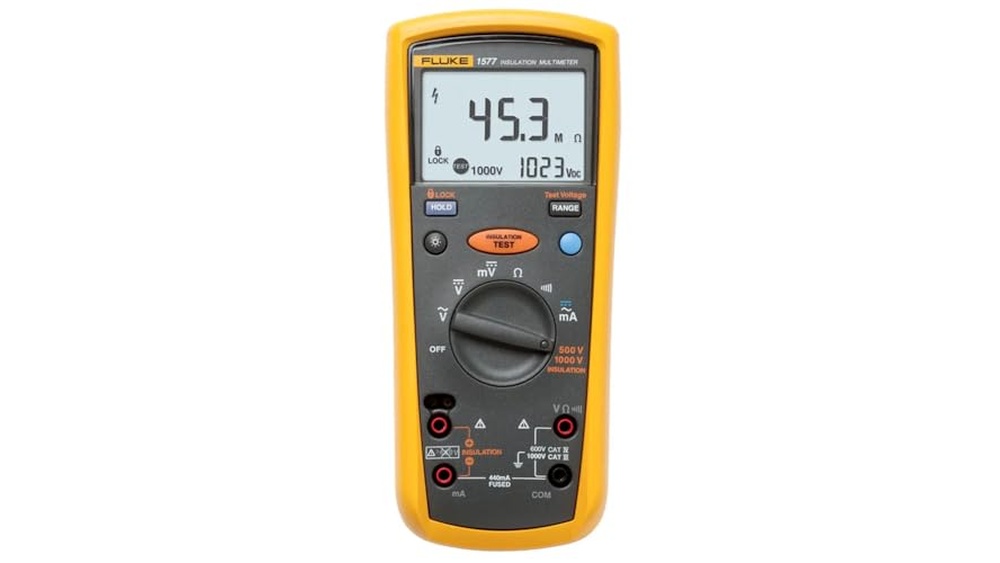
Yes, the Fluke 1577 Multimeter offers dependable insulation resistance measurements with manual and auto ranging up to 600 megaohms. It also provides true RMS readings, which help with accurate voltage and current measurement on various load types. Safety features like live circuit detection add a layer of protection during use.
Using the Fluke 1577 daily feels solid and straightforward. The bright LCD and durable yellow casing stand out on job sites. It handles insulation checks on motors and cables well without extra fuss. I appreciate its clear display and safety certifications, which give confidence when working on high-voltage equipment.

What Fluke 1577 Multimeter Does Best for Insulation Testing
- Measures insulation resistance from 0.1 to 600 megaohms
- True RMS readings for accurate voltage and current measurement
- Live circuit detection for user safety
- Manual and auto ranging for versatile testing
- Certified safety standards for industrial use
What to Know Before Buying Fluke 1577 Multimeter
- Heavier and bulkier compared to newer models
- No app connectivity or memory storage feature
- Limited to insulation test voltages of 550V and 1000V
- Yellow casing may show dirt more easily
Practical Thoughts on Fluke 1577 Multimeter Use
This model suits technicians who prioritize straightforward, reliable insulation resistance testing without extra tech features. It removes the stress of inaccurate readings thanks to its true RMS function and safety protections. Beginners will find it easy to operate, though experienced users might miss app integration. In my experience, its durability and clear feedback make it dependable on site. A practical tip is to regularly check the live circuit detection before testing. The peace of mind from solid safety certifications is valuable when working on complex electrical equipment.
Does Fluke 1587 Fc Multimeter Enhance Insulation Testing Efficiency?
It depends on your needs. The Fluke 1587 FC integrates with a mobile app for memory storage and trend graphing, which can improve workflow by eliminating manual record-keeping. Features like PI/DAR testing and temperature compensation add depth to insulation analysis. It’s designed for users who want more data-driven insights from their measurements.
Using the 1587 FC feels more connected and modern thanks to the app features. It’s lighter and smaller, making it easier to carry around. The white casing looks clean and professional, and the device tracks historical data well. I find the app helpful for comparing results over time, especially in preventive maintenance tasks.

What Fluke 1587 FC Multimeter Excels at in Modern Testing
- PI/DAR measurement with Trend It graphs for faster diagnostics
- Memory storage and data transfer via Fluke Connect App
- Temperature compensation for accurate baseline comparisons
- Compact and lightweight design for portability
- Suitable for preventive maintenance and detailed analysis
What to Keep in Mind Before Choosing Fluke 1587 FC
- Requires smartphone for full app functionality
- Higher initial cost but with advanced features
- Less robust than heavier models under rough handling
- White color may show wear over time
Personal View on Fluke 1587 FC Multimeter
This multimeter fits users who want more tech integration and historical data tracking to improve maintenance tasks. It takes away the hassle of manual logging and supports better decision-making through trends. Beginners may need some time to get used to app features, while experienced users will appreciate the depth. In my experience, the device’s portability and app connectivity enhance daily workflow. A tip is to keep your smartphone updated for smooth app performance. This model offers peace of mind by combining traditional testing with modern data tools.
Key Questions To Determine Your Ideal Insulation Multimeter
Do you need a device that stores test data digitally for easy tracking? How important is live circuit detection for your safety on site? Will you benefit from temperature compensation in your insulation tests? Is portability and device weight a concern for your daily tasks? Do you prefer a simple device or one with app-based diagnostics? How much are you willing to invest in extra features for efficiency?
Practical Comparison Of Fluke 1577 And 1587 Insulation Multimeters
The comparison focuses on how each model performs in typical electrical testing environments. We looked at data handling, safety features, portability, and measurement capabilities. Both devices serve insulation testing well but target slightly different user preferences. The choice depends on whether you want traditional reliability or modern connectivity.
Which Multimeter Offers Better Data Management?
The 1587 FC supports memory storage and trend graphing via a mobile app, while the 1577 lacks this feature.
| Metric | Fluke 1577 Multimeter | Fluke 1587 FC Multimeter |
|---|---|---|
| Data Storage | No built-in storage | Stores data via app |
| Trend Graphs | None | Included with app |
| App Integration | None | Fluke Connect App |
| Manual Logging | Required | Not required |
Ratings: Fluke 1577 – 5/10 | Fluke 1587 FC – 9/10
So what? If you want seamless data management and historical tracking, the 1587 FC is preferable.
How Do Safety Features Compare Between These Models?
Both have solid safety certifications, but the 1577 offers live circuit detection to prevent testing on energized circuits.
| Decision point | Fluke 1577 Multimeter | Fluke 1587 FC Multimeter |
|---|---|---|
| Live Circuit Detection | Yes | No |
| Safety Ratings | Multiple industry standards | Multiple industry standards |
| Category Ratings | III 1000V, IV 600V | Standard industrial ratings |
| Ingress Protection | IP40 | Not specified |
Ratings: Fluke 1577 – 9/10 | Fluke 1587 FC – 7/10
So what? For users prioritizing safety in live environments, the 1577 provides extra peace of mind.
Which Model Is Easier to Carry and Handle?
The 1587 FC is lighter and more compact, making it more convenient for mobile work.
| Use case | Fluke 1577 Multimeter | Fluke 1587 FC Multimeter |
|---|---|---|
| Weight | 2.2 pounds | 0.66 pounds |
| Dimensions (HxWxL) | 4.13x18x14.17 inches | 3.94×17.5×12.3 inches |
| Portability | Less portable | Highly portable |
| Field Use Comfort | Bulkier | Compact |
Ratings: Fluke 1577 – 6/10 | Fluke 1587 FC – 9/10
So what? For technicians on the move, the 1587 FC offers better comfort and ease of handling.
Which Provides More Comprehensive Insulation Testing Features?
The 1587 FC adds PI/DAR testing and temperature compensation, while the 1577 focuses on essential insulation resistance.
| Metric | Fluke 1577 Multimeter | Fluke 1587 FC Multimeter |
|---|---|---|
| PI/DAR Testing | No | Yes |
| Temperature Compensation | No | Yes, via app |
| Insulation Voltage Range | 550V and 1000V | Standard |
| Measurement Range | 0.1 to 600 megaohms | Similar range |
Ratings: Fluke 1577 – 7/10 | Fluke 1587 FC – 9/10
So what? For more detailed insulation analysis, the 1587 FC offers enhanced capabilities.
Final Thoughts On Choosing Between These Insulation Multimeters
If you need a rugged, straightforward insulation tester with safety features like live circuit detection, the Fluke 1577 is a solid choice. It suits those working in industrial settings who want reliability without extra tech complexity.
Those who prefer modern features, such as app connectivity, memory storage, and advanced insulation analysis, will benefit more from the Fluke 1587 FC. It fits technicians focused on preventive maintenance and data-driven decisions.
When in doubt, consider whether digital data handling or in-field safety is more critical for your work. Both models offer dependable insulation testing, so either choice will serve well with the right priorities.
Faqs About Fluke 1577 Vs 1587 Insulation Multimeters
Can I use the Fluke 1577 without a smartphone or app?
Yes, the Fluke 1577 operates fully without any app or smartphone. It provides manual readings and does not support digital data storage.
Does the Fluke 1587 FC require constant app connection to work?
No, the 1587 FC functions as a standalone multimeter. However, connecting to the app unlocks features like data storage and trend analysis.
Which model is better for beginners in insulation testing?
The Fluke 1577 is simpler and more straightforward, making it easier for beginners. The 1587 FC offers more advanced features but may have a learning curve.
Is live circuit detection important for insulation testing?
Live circuit detection helps prevent testing on energized circuits, enhancing safety. The Fluke 1577 includes this feature, while the 1587 FC does not.
How does temperature compensation improve insulation testing?
Temperature compensation adjusts readings based on ambient temperature, leading to more accurate and comparable results over time. The 1587 FC offers this via its app.
Are both models suitable for testing motors and cables?
Yes, both multimeters measure insulation resistance on motors, generators, and cables effectively. Choice depends on additional features and user preferences.
What should I consider about device weight and size?
The Fluke 1587 FC is lighter and more compact, which is helpful for mobile work. The 1577 is bulkier but may feel more rugged in hand.

I’m Asif Ur Rahman Adib, an Electrical Engineer and lecturer. My journey began in the lab, watching students struggle with instruments they used every day without fully understanding them. Over time, I’ve combined teaching, research, and hands-on experience to help others grasp electrical concepts clearly, safely, and practically—whether it’s understanding a circuit or mastering a multimeter.