How To Choose Between Two Popular Infrared Thermometers
- Pick Fluke 59 Max if you want a compact and lightweight device for general use.
- Choose Fluke 62 Max when you need a wider temperature range for industrial tasks.
- Go with Fluke 59 Max for straightforward measurements with clear LCD display.
- Prefer Fluke 62 Max if you want added durability and a higher IP54 rating.
- Fluke 59 Max makes more sense for casual or HVAC maintenance work.
- Fluke 62 Max is the safer bet for precise readings in tougher environments.
Is The Fluke 59 Max Suitable For Everyday Temperature Checks?
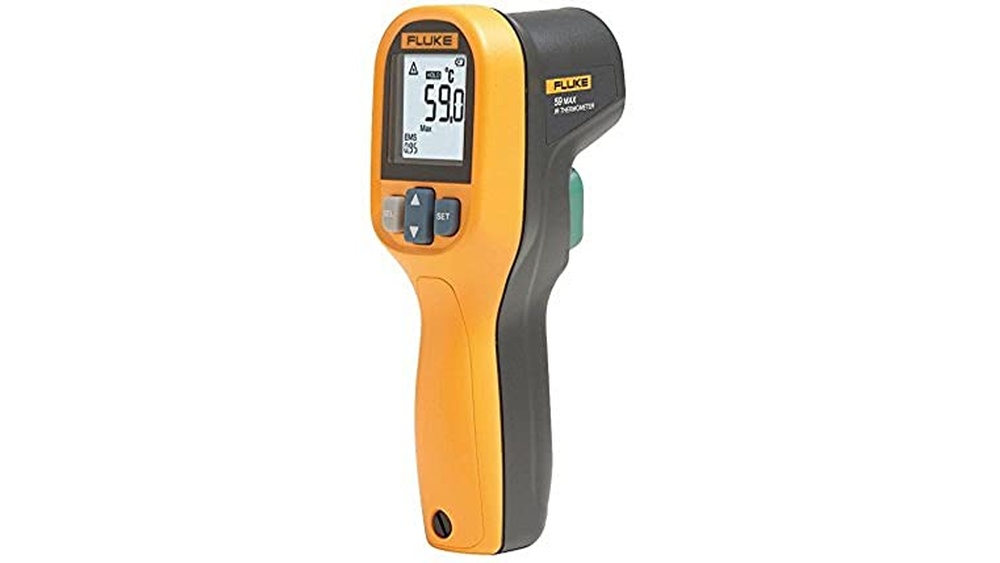
Yes, the Fluke 59 Max works well for everyday temperature readings. It has precise laser technology and an easy-to-read backlit display that suits quick checks. The small and lightweight design means it fits easily in a toolbox or pocket. It’s rated IP40, providing basic protection from dust and light moisture. In daily use, I found the Fluke 59 Max comfortable to handle and quick to respond. Its clear display helped avoid second-guessing readings in different lighting conditions. It fits well in my hand and didn’t feel bulky during regular use. The laser targeting is precise enough for general tasks like checking HVAC systems or cooking surfaces.
What the Fluke 59 Max Does Best for Practical Use
- Accurate laser targeting for precise spot temperature measurement
- Large backlit LCD for easy reading in dim environments
- Compact and lightweight, ideal for carrying around
- Basic IP40 rating protects against dust and light moisture
- Simple interface suited for quick temperature checks
What to Keep in Mind Before Choosing Fluke 59 Max
- Not rated for harsh industrial environments
- Limited temperature range compared to industrial models
- Lower IP protection means less resistance to water and dust
Everyday Convenience Meets Simple Reliability
This model suits homeowners or technicians who want a handy tool for routine checks. It removes stress by providing straightforward, accurate readings without complicated settings. Beginners will find it easy to use, while experienced users appreciate its portability. In my experience, keeping it in the toolbox makes spot checks effortless. A practical tip is to clean the lens regularly for consistent accuracy. Owning this thermometer means peace of mind knowing temperatures are measured reliably.Does The Fluke 62 Max Work Better For Industrial Applications?
It depends on your needs. The Fluke 62 Max is designed for industrial use with a wider temperature range and higher IP54 protection. It includes features like minimum, maximum, average temperature display, and laser sighting for precise targeting. However, it is not suitable for human temperature measurement. I have noticed the 62 Max feels more robust and suited for tougher conditions. It’s heavier and larger but offers more detailed temperature data. The increased distance-to-spot ratio helps when measuring hard-to-reach surfaces. Its red color and durable build make it easy to spot on busy job sites.
How the Fluke 62 Max Excels in Industrial Thermometry
- Wide temperature range from -22 to 932°F for versatile use
- Higher IP54 rating for better dust and water resistance
- Laser sighting with 10:1 distance-to-spot ratio for precision
- Displays min, max, difference, and average temperatures
- Includes a 3-year warranty for added assurance
Important Considerations Before Picking Fluke 62 Max
- Not intended for measuring human body temperature
- Larger and heavier than simpler models, may be less portable
- More advanced features may require familiarization
Built for Tough Conditions with Detailed Readings
This thermometer is ideal for professionals working in electrical, mechanical, or HVAC environments. It removes guesswork by providing comprehensive temperature data and better durability. Beginners can use it but might need time to explore all functions. In my experience, the sturdy build reduces worry about damage. A practical tip is to use the laser targeting carefully to get exact spot readings. This tool offers peace of mind when working in demanding industrial settings.Key Questions To Decide Between These Infrared Thermometers
Do you need a thermometer for simple spot checks or detailed temperature analysis? Is durability and dust/water resistance important for your environment? Will you be measuring very high or low temperatures regularly? Do you require extra features like min/max temperature display? How important is the size and weight for your daily carry? Are you aware that neither model is suitable for human body temperature measurement?Side-by-side Look At Practical Differences In Infrared Thermometers
Testing both in typical settings revealed differences in durability, temperature range, and features. The Fluke 59 Max is easier to carry and use casually. The Fluke 62 Max offers a broader range and additional readings but is bulkier. Each model suits distinct user needs depending on task complexity and environment.Which Thermometer Offers More Accurate Temperature Targeting?
Both use laser targeting, but the 62 Max has a 10:1 distance-to-spot ratio versus 8:1 on the 59 Max. This means the 62 Max can measure smaller spots from farther away.| Metric | Fluke 59 Max | Fluke 62 Max |
|---|---|---|
| Distance-to-Spot Ratio | 8:1 | 10:1 |
| Laser Targeting | Single laser | Single laser |
| Measurement Precision | Good for general use | Better for pinpoint accuracy |
| Suitable Distance | Closer ranges | Longer distances |
How Do Temperature Ranges Compare for Different Tasks?
The 62 Max covers a much wider temperature range, fitting industrial needs. The 59 Max is fine for typical household or light commercial checks.| Decision point | Fluke 59 Max | Fluke 62 Max |
|---|---|---|
| Temperature Range | Limited range, good for general tasks | -22°F to 932°F industrial range |
| Use Case | HVAC, cooking, home maintenance | Electrical, mechanical, automotive |
| Temperature Accuracy | Standard accuracy | Higher accuracy within range |
What About Durability and Protection Ratings?
The 62 Max has a higher IP54 rating, resisting dust and water better than the 59 Max’s IP40.| Use case | Fluke 59 Max | Fluke 62 Max |
|---|---|---|
| IP Rating | IP40 – basic protection | IP54 – dust and water resistant |
| Ideal Environment | Dry, indoor use | Industrial, harsher conditions |
| Durability | Light use | Heavy-duty use |
How Do Size and Portability Affect Daily Use?
The 59 Max is smaller and lighter, which makes it easier to handle for quick checks.| Metric | Fluke 59 Max | Fluke 62 Max |
|---|---|---|
| Weight | 0.485 pounds | 0.562 pounds |
| Dimensions (H x W x L) | 1.7 x 7.0 x 10.1 inches | 3.0 x 7.75 x 9.5 inches |
| Portability | Compact and pocket-friendly | Larger and heavier |
What Extra Features Could Influence Your Choice?
The 62 Max displays min, max, difference, and average temperatures, while the 59 Max offers basic readings.| Feature | Fluke 59 Max | Fluke 62 Max |
|---|---|---|
| Min/Max/Average Readings | No | Yes |
| Warranty Length | Standard | 3 Years |
| Intended Use | General purpose | Industrial only |
Final Thoughts On Choosing Your Infrared Thermometer
The Fluke 59 Max fits those who want a straightforward, portable thermometer for routine spot checks. It suits homeowners and light tradespeople who value simplicity and convenience. The Fluke 62 Max works best for professionals needing a robust tool with wider temperature range and detailed features. It is designed for industrial applications where durability matters. If portability and ease of use are priorities, lean toward the 59 Max. For comprehensive readings and tougher environments, the 62 Max is the better match. Both serve their purposes well, depending on daily demands.Common Questions About Fluke 59 Max Vs 62 Max Infrared Thermometers
Can I use either model to check human body temperature?
No, both models are designed for surface temperature measurement only. The Fluke 62 Max specifically states it is not for human temperature use.
What is the difference in distance-to-spot ratio?
The Fluke 62 Max has a 10:1 ratio, allowing more precise targeting from farther away. The 59 Max has an 8:1 ratio, better suited to closer measurements.
How durable are these thermometers in dusty or wet conditions?
The 62 Max has a higher IP54 rating for better dust and water resistance. The 59 Max has IP40, providing less protection, so it’s best used in cleaner environments.
Will the extra features on the 62 Max complicate use for beginners?
Some additional functions like min/max readings may require learning. However, basic temperature measurement is straightforward on both models.
Is the size difference noticeable in daily use?
Yes, the 59 Max is smaller and lighter, making it easier to carry around. The 62 Max is bulkier but offers more features and durability.
Do these models come with warranties?
The Fluke 62 Max includes a 3-year warranty, which is reassuring for industrial users. The 59 Max has a standard warranty typical for consumer models.
How important is cleaning the lens for accuracy?
Keeping the lens clean on either model is important to maintain accurate readings. Dust or smudges can affect temperature measurement precision.

I’m Asif Ur Rahman Adib, an Electrical Engineer and lecturer. My journey began in the lab, watching students struggle with instruments they used every day without fully understanding them. Over time, I’ve combined teaching, research, and hands-on experience to help others grasp electrical concepts clearly, safely, and practically—whether it’s understanding a circuit or mastering a multimeter.