How To Choose Between Fluke 787b And 789 For Process Testing
- Pick Fluke 787B for a larger dual display and precise loop calibration needs.
- Choose Fluke 789 when you want longer battery life and backlit clear LCD.
- Go with Fluke 787B for a compact multimeter designed to meet high voltage safety.
- Prefer Fluke 789 if you require overload protection across volts, ohms, and current.
- Fluke 787B makes more sense for users needing a 20 mA dc current source feature.
- Fluke 789 is the safer bet for extended measurement hours and sourcing 4-20 mA signals.
Is The Fluke 787b Processmeter Suitable For Precise Loop Calibration?
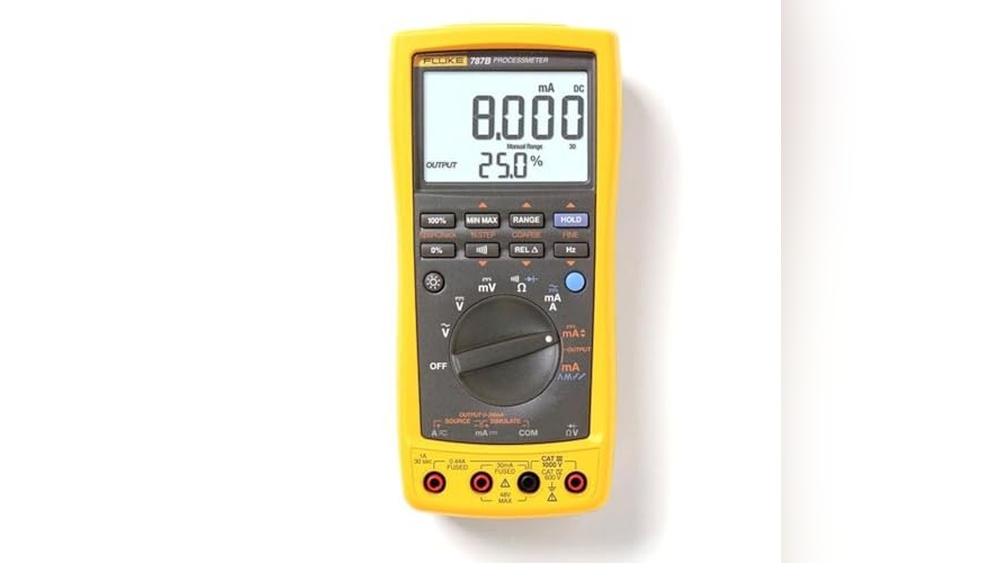
Yes, the Fluke 787B ProcessMeter is designed with precision current source and loop calibrator features. It provides a 20 mA DC current source and a true-RMS digital multimeter that meets 1000 volt IEC 1010 CAT III standards. The display is 100% larger than its predecessor, which helps in reading measurements easily. This model focuses on accuracy and safety in multimeter functions. In daily use, I found the 787B comfortable to handle with its compact size and clear dual display. The black color and robust build add to its professional feel. Its loop simulator works well for quick tests, and the safety rating reassures me during high-voltage tasks. The larger screen makes it easy to monitor two measurements at once without confusion.
What the Fluke 787B Excels at in Process Metering
- 20 mA DC current source and loop calibrator/simulator function
- True-RMS digital multimeter with precision at 1000 V and 440 mA
- Large dual display for simultaneous measurements
- Meets 1000 volt IEC 1010 CAT III safety standards
- Compact and lightweight design for field use
Considerations Before Choosing the Fluke 787B
- Battery life details are less emphasized compared to other models
- Display size larger but may increase device footprint slightly
- Limited to 20 mA current source range, not higher
Practical Thoughts on Using the Fluke 787B
The 787B suits technicians who prioritize accurate loop calibration and safety in electrical environments. It removes the stress of guessing readings with its clear, large dual display. Beginners can handle it well, but experienced users will appreciate its precise current sourcing. In my experience, keeping the battery fresh ensures uninterrupted fieldwork. It provides peace of mind by combining safety and functionality in one tool.
Does The Fluke 789 Processmeter Offer Longer Battery Life For Field Work?
It depends on your usage, but the Fluke 789 generally provides longer battery life for measurements and sourcing. It can run about 50 hours measuring and 12 hours sourcing 12 mA on a single 9-volt alkaline battery. The clear LCD display with backlight improves visibility in low-light conditions. It also offers overload protection that safeguards the device during heavy use. Using the 789 in daily tasks, I noticed the backlit screen makes reading easier in dim workspaces. The current measurement range up to 30 mA DC covers a wider scope than some competitors. Its dimensions are larger in width but still manageable for field portability. The built-in 24 V loop supply adds convenience for loop testing without extra equipment.
Key Strengths of the Fluke 789 in Process Measurement
- Long battery life for extended measurement sessions
- Built-in 24 V loop supply for convenient testing
- Clear LCD display with backlight for low-light use
- Overload protection for volts, ohms, frequency, and mA
- Current measurement range from 0 to 30 mA DC
What to Keep in Mind When Considering the Fluke 789
- Wider device dimensions may affect portability
- Heavier weight compared to some compact models
- Backlight adds power consumption, watch battery levels
Hands-On Impressions of the Fluke 789
The 789 fits well for users needing longer runtime and comprehensive loop functions. It reduces worry over battery life during long field jobs. Beginners might find the overload protection reassuring, while experienced technicians benefit from versatile measurement ranges. I suggest keeping spare batteries handy for uninterrupted work. In my experience, this meter balances durability and clarity well for process tasks.
Important Questions To Decide Between Fluke 787b And 789
Which device offers the best display for reading multiple measurements at once? How much current sourcing do I need for my loop calibrations? Is battery life a critical factor for my typical workday? Do I require built-in loop supply voltage or just basic sourcing? How important is overload protection for my field environment? What size and weight suit my portability preferences?Comparing Fluke 787b And 789 In Practical Process Meter Use
Both meters are reliable for process measurements but differ in features like display size, battery life, and current range. The 787B emphasizes precise loop calibration with a larger dual display. The 789 focuses on extended runtime and overload protection with a backlit LCD. User preference depends largely on specific testing needs and work conditions.Which Meter Has the Best Display for Field Readings?
The 787B offers a 100% larger dual display than its predecessor, aiding simultaneous readings. The 789 uses a clear LCD with backlight for visibility in low light. Choose based on whether you prioritize screen size or backlight functionality.| Metric | Fluke 787B ProcessMeter | Fluke 789 ProcessMeter |
|---|---|---|
| Display Type | Large dual display | Clear LCD with backlight |
| Display Size | 100% larger dual display | Standard LCD |
| Visibility in Dark | No backlight | Backlight available |
So what? If visibility in low light is key, 789 is preferable; for bigger displays, 787B leads.
How Do Battery Life and Usage Time Compare?
The 789 runs about 50 hours measuring and 12 hours sourcing on a single 9V battery. The 787B’s battery life is less emphasized but generally shorter. For extended fieldwork, battery life can affect workflow significantly.| Decision point | Fluke 787B ProcessMeter | Fluke 789 ProcessMeter |
|---|---|---|
| Typical Measurement Runtime | Not specified | About 50 hours |
| Sourcing Runtime (12 mA) | Not specified | About 12 hours |
| Battery Type | Standard batteries | 9-volt alkaline |
So what? Choose 789 if long runtime without battery changes is important.
What About Current Sourcing and Loop Calibration Features?
The 787B supports a 20 mA DC current source for loop calibration. The 789 offers a wider current range (0 to 30 mA DC) and built-in 24 V loop supply. This affects the type of loops and signals you can test.| Use case | Fluke 787B ProcessMeter | Fluke 789 ProcessMeter |
|---|---|---|
| Current Source Range | 20 mA DC | 0 to 30 mA DC |
| Loop Supply Voltage | No built-in 24 V supply | Includes built-in 24 V loop supply |
| Loop Calibration Use | Good for basic loop calibration | Better for advanced loop testing |
So what? For wider current sourcing and loop supply, 789 is more versatile.
How Do Safety and Overload Protections Differ?
The 787B meets 1000 volt IEC 1010 CAT III safety standards. The 789 offers 1000V overload protection on volts, ohms, frequency, and 150V on mA, backed by a fuse. This may impact durability and user safety.| Metric | Fluke 787B ProcessMeter | Fluke 789 ProcessMeter |
|---|---|---|
| Safety Standard | IEC 1010 CAT III 1000 V | 1000V overload protection with fuse |
| Overload Protection | Standard | On volts, ohms, frequency, and mA |
| Fuse Backup | Not specified | 440 mA 1000V fuse included |
So what? For added overload protection and fuse backup, 789 has an edge.
Choosing The Right Fluke Processmeter For Your Needs
The Fluke 787B suits professionals who want a precise loop calibrator with a larger, dual display. It fits those prioritizing safety standards and clear simultaneous readings in a compact form. The Fluke 789 is ideal for users needing longer battery life, overload protection, and a built-in loop supply. It works well for extended fieldwork and those requiring versatile current sourcing ranges. If you need long runtime and extensive overload protection, go with the 789; otherwise, choose the 787B for display size and calibration precision. Both are solid choices depending on your process testing priorities.Common Questions About Fluke 787b Vs 789 Processmeters
Can I use the Fluke 787B for all loop calibration tasks?
The Fluke 787B covers many loop calibration needs with its 20 mA DC current source. However, it lacks the built-in 24 V loop supply found in the 789. For basic to intermediate loops, it is sufficient.
How long does the battery last on each model during field use?
The Fluke 789 provides about 50 hours measuring and 12 hours sourcing on one 9V battery. The 787B’s battery life isn’t clearly specified but is generally shorter. For long jobs, the 789 is preferable.
Is the larger display on the 787B a real benefit?
Yes, the 787B’s dual display is 100% larger than its predecessor, making it easier to read two values simultaneously. This can reduce errors and improve efficiency on site.
Does the Fluke 789 offer better overload protection?
Indeed, the 789 has overload protection on volts, ohms, frequency, and current, supported by a fuse. This adds durability and safety in demanding environments.
Which model is better for beginners?
Both models are user-friendly, but the 787B’s simpler display and focus on loop calibration suit beginners. The 789 is more versatile but may have a steeper learning curve.
Can the Fluke 789 handle higher current measurements?
Yes, the 789 measures currents up to 30 mA DC, compared to the 787B’s 20 mA limit. This makes it better for certain loop testing scenarios.
Are there size and weight differences to consider?
The 787B is slightly more compact and lighter. The 789 is wider and heavier but still portable. Consider how much space and weight you can handle in your daily work.

I’m Asif Ur Rahman Adib, an Electrical Engineer and lecturer. My journey began in the lab, watching students struggle with instruments they used every day without fully understanding them. Over time, I’ve combined teaching, research, and hands-on experience to help others grasp electrical concepts clearly, safely, and practically—whether it’s understanding a circuit or mastering a multimeter.