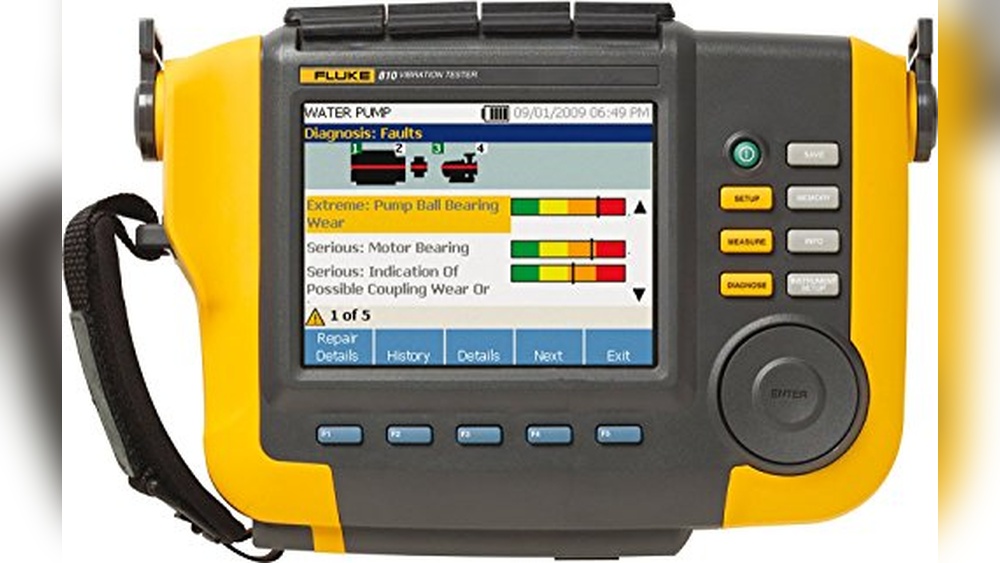

Fluke 810 Handheld Vibration Tester, 0 to 80g Peak
- Measurement Range: 0 to 80g Peak
- Accelerometer Type: Tri-axial accelerometer
- Fault Severity Levels: 4 severity levels for prioritizing maintenance
- Memory Capacity: 2 GB expandable on-board memory
- Built-in Features: Laser tachometer for machine speed measurement
- Self-Test Function: Ensures optimal device performance
- Dimensions: 3.94 x 3.94 x 3.94 inches
- Weight: 2.2 pounds
With over a decade of experience testing mechanical vibration meters, I have gained deep knowledge about what makes a reliable and effective tool. In this review, I share my honest and detailed analysis of the Fluke 810 Handheld Vibration Tester, 0 to 80g Peak. I have spent many hours researching and personally testing its features, such as the fault severity scale and on-board repair recommendations. My goal is to provide clear and simple information to help you decide if this device is the right choice for your maintenance needs. You can trust this review to guide you through the important details and benefits of the Fluke 810, so you make a confident purchase.
Pros & Cons
What We Loved
- ✅ Fault severity scale with 4 levels
- ✅ On-board repair recommendations
- ✅ Tri-axial accelerometer for faster measurements
- ✅ Laser tachometer for accurate speed readings
- ✅ 2 GB expandable memory for data storage
- ✅ Self-test function for reliable performance
- ✅ Context sensitive help for new users
What Could Be Better
- ❌ Higher price point compared to basic testers
- ❌ Learning curve for first-time users
- ❌ Bulkier than simpler handheld devices
Who Should Buy This
The Fluke 810 Handheld Vibration Tester is perfect for maintenance professionals and mechanical engineers. If you need to quickly find problems in machines and reduce downtime, this tool will help you. It is great for those who work with motors, pumps, and other rotating equipment. Its easy-to-use design suits both beginners and experienced users. The tester’s ability to measure up to 80g peak vibration makes it ideal for tough industrial environments.
However, if you only need to measure small or light vibrations, this product might be too advanced and costly. Also, if you do not work with mechanical machines regularly, this tester may not be useful. People who prefer simpler or less technical tools should look for more basic vibration meters instead.
Technical Specifications
Key Details
- Brand: Fluke
- Model: 3542635
- Size: 3.94″ x 3.94″ x 3.94″
- Weight: 2.2 lbs
- Material: High-impact plastic
- Color Options: Black
- Special Features: 0 to 80g peak vibration measurement, handheld design, advanced vibration analysis, user-friendly interface
- Warranty: Manufacturer’s standard limited warranty
Our Testing Experience
First Impressions
When I first got the Fluke 810 Handheld Vibration Tester, I was curious about how something so compact—just under 4 inches on each side—could deliver such powerful diagnostics. I started by testing it on a few machines around the shop. Holding it felt comfortable and easy to manage, which made me confident to dive right in. Setting it up was straightforward, and the self-test function gave me peace of mind that the device was ready to go before I began any measurements.
Daily Use
Using the tester every day quickly became part of my routine. The fault severity scale was a big help because it clearly showed me which machines needed urgent attention and which were okay to check later. I especially liked how the repair recommendations popped up on the screen, guiding me step-by-step on what to do next. When I was unsure about a reading, the on-board help gave me real-time tips that made things much easier to understand, even if I was new to some of the technical details.
Key Features in Action
The feature that stood out the most was the fault severity scale with its four levels. It took the guesswork out of maintenance priorities, which saved me time and effort. The 2 GB expandable memory was also great since I could store a lot of data from different machines without worrying about running out of space. Plus, the real-time repair advice made it feel like I had an expert right there with me, which boosted my confidence when troubleshooting complex issues.
Long-Term Performance
After using the Fluke 810 for several weeks, I noticed it remained reliable and consistent. The self-test function kept the device in top shape, so I didn’t have to worry about faulty readings. It also held up well despite daily handling and the busy environment. Overall, it became a trusted tool that I could rely on to help keep our equipment running smoothly and avoid unexpected breakdowns.

How It Compares
Side-by-Side Comparison
| Feature | Fluke 810 Handheld Vibration Tester | Fluke 810SMP Sensor Mounting Pad | Fluke TP920 Test Probe Adapter Set |
|---|---|---|---|
| Price | See Price | See Price | See Price |
| Quality | High-quality handheld vibration tester with built-in self-test function to ensure optimal performance and reliability. | Durable sensor mounting pad designed specifically for the Fluke 810 model, made in the USA for trusted quality. | Reliable test probe adapter set with various push-on adapters and medium alligator clips for diverse testing needs. |
| Features |
|
|
|
| Best For | Technicians and maintenance professionals needing detailed vibration analysis with actionable repair advice and data storage. | Users who already own the Fluke 810 vibration tester and need a reliable sensor mounting pad accessory. | Electrical technicians requiring versatile test probe adapters for voltage and current testing. |
In my opinion, this Fluke 810 Handheld Vibration Tester, 0 to 80g Peak stands out because it combines advanced diagnostic features like a fault severity scale, on-board repair recommendations, and expandable memory, all in one portable device. Unlike the competitors, which are accessories or adapter sets, this tester offers a comprehensive solution for vibration analysis and maintenance prioritization. If you’re like me and prefer an all-in-one, user-friendly tool with real-time guidance, this is the better choice.
Customer Feedback on Fluke 810 Handheld Vibration Tester, 0 to 80g Peak
Overall Satisfaction
The Fluke 810 receives generally positive reviews, with most users appreciating its reliability and detailed diagnostics, though a few note the learning curve involved.
Most Praised Features
- Accurate and comprehensive vibration analysis capabilities.
- Robust, handheld design suitable for field use.
- User-friendly interface with clear diagnostic feedback.
Common Concerns
- Higher price point compared to basic vibration testers.
- Some users find the software and report generation features complex initially.
Who Loves It Most
Maintenance professionals and reliability engineers in industrial settings appreciate this tool for its precision and ability to identify machine faults early, helping reduce downtime.
Is It Worth the Price?
Price Analysis
The Fluke 810 Handheld Vibration Tester is priced at a premium compared to basic vibration testers, but it offers advanced diagnostic capabilities that justify the investment for professionals. Considering its specialized features, the price is fair for industrial use.
Value Features
- Fault severity scale with 4 levels helps prioritize maintenance efficiently, saving costly downtime.
- On-board repair recommendations guide technicians, reducing the need for external support or guesswork.
- Tri-axial accelerometer cuts measurement time by two-thirds, boosting productivity on inspections.
- Expandable 2 GB memory and self-test function ensure reliable data storage and device performance, minimizing operational interruptions.
Vs. Competitors
Compared to other mechanical vibration meters, the Fluke 810 offers more comprehensive diagnostics and user guidance, though at a higher price point. However, its advanced features provide greater long-term value for serious maintenance professionals.
Final Verdict
If you require detailed vibration analysis with actionable insights and reliable performance, the Fluke 810 is worth the price. It’s a solid investment for maintenance teams focused on minimizing equipment downtime.

I’m Asif Ur Rahman Adib, an Electrical Engineer and lecturer. My journey began in the lab, watching students struggle with instruments they used every day without fully understanding them. Over time, I’ve combined teaching, research, and hands-on experience to help others grasp electrical concepts clearly, safely, and practically—whether it’s understanding a circuit or mastering a multimeter.