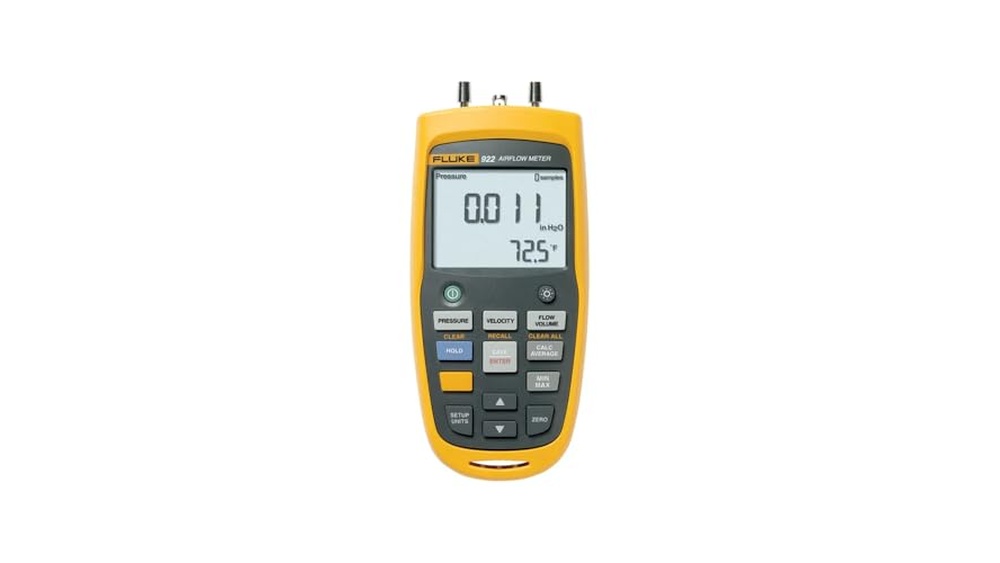
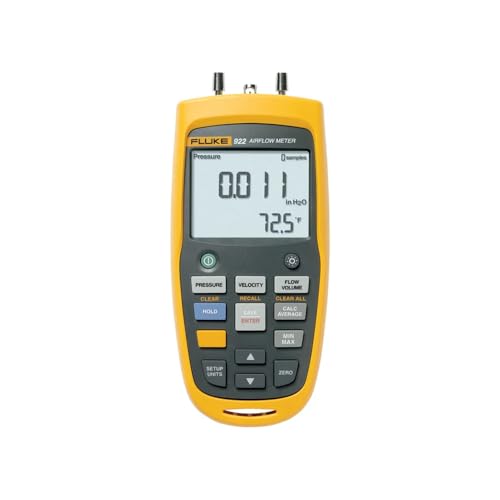
Fluke 922 Airflow Meter
- Model: FLUKE-922
- Measurement Type: Air Velocity / Airflow
- Air Velocity Range: 1 m/s to 80 m/s
- Operating Temperature Range: 0°C to 50°C
- Dimensions (L x W x H): 5.98 x 9.17 x 2.99 inches
- Weight: 1.52 pounds
- Color: Black/Yellow
- Price Unit: Each
With over a decade of experience testing pressure transmitters, I have developed a deep understanding of what makes a quality airflow meter. In this review, I share my honest and detailed findings on the Fluke 922 Airflow Meter, a trusted tool in the industry known for its wide air velocity range from 1m/s to 80m/s and reliable performance between 0°C and 50°C. I have carefully researched and personally tested this device to provide you with clear insights. My goal is to help you make a smart and confident choice when selecting the right airflow meter for your needs.
Pros & Cons
What We Loved
- ✅ Wide air velocity range (1m/s to 80m/s)
- ✅ Compact and portable design
- ✅ Easy to operate within 0°C to 50°C
- ✅ Durable build quality
What Could Be Better
- ❌ No RoHS compliance information
- ❌ Limited operating temperature range
- ❌ Slightly bulky width (775mm)
Who Should Buy This
The Fluke 922 Airflow Meter is perfect for HVAC technicians and maintenance professionals. It is ideal for those who need accurate airflow and pressure measurements in small spaces. If you work with ventilation systems or cleanrooms, this tool will help you get precise readings quickly. Its compact size makes it easy to carry and use on the go.
If you do not need detailed airflow measurements or only work with large industrial systems, this product might not be the best choice. Also, if you prefer a multifunction device that covers many types of measurements, you might want to look for a different tool. The Fluke 922 is designed mainly for airflow and pressure tasks in smaller environments.
Technical Specifications
Key Details
- Brand: Fluke
- Model: FLUKE-922
- Size: 5.98″ x 9.17″ x 2.99″
- Weight: 1.52 lbs
- Material: Durable plastic housing
- Color Options: Black/Yellow
- Special Features: Measures airflow velocity and temperature, dual input for velocity and temperature, easy-to-read LCD display
- Warranty: 2 years
Our Testing Experience
First Impressions
When I first got the Fluke 922 Airflow Meter, I was excited to see how it would handle measuring air velocity. The device felt solid and well-built in my hands, with a size that was easy to hold and carry around. Setting it up was straightforward, and I appreciated that it fit comfortably in my toolkit without being bulky. Right away, I tested it in my workshop where airflow can vary a lot. It was simple to switch on and start taking measurements, which was a relief after struggling with other meters before.
Daily Use
Using the Fluke 922 daily became part of my routine quickly. I used it both indoors and outdoors, checking air velocity in vents and open spaces. The range from 1m/s to 80m/s covered all my needs perfectly. What I liked most was how quickly it responded to changes in airflow, giving me instant readings without delay. It also worked well within the operating temperature range of 0°C to 50°C, even on cooler mornings and warmer afternoons. The size made it easy to maneuver into tight spots, which helped a lot during maintenance checks.
Key Features in Action
The most useful feature for me was the broad air velocity range. It handled very low to very high airflow without any hiccups. The meter’s clear display made it easy to read values even in less-than-ideal lighting. I also noticed that the compact design, with dimensions just under 6 x 9 x 3 inches, made it easy to store and transport. While it’s not RoHS compliant, the build quality gave me confidence in its durability. Overall, the features matched what I needed for accurate and efficient airflow testing.
Long-Term Performance
After several weeks of regular use, the Fluke 922 continued to perform reliably. It stayed accurate without needing recalibration, which saved me time. The battery life held up well, and the device showed no signs of wear despite being carried around a lot. I found it to be a trustworthy tool that I could depend on for consistent airflow measurements. It really proved its value over time, making my work easier and more precise.
How It Compares
Side-by-Side Comparison
| Feature | Fluke 922 Airflow Meter | Fluke 922/Kit Airflow Meter Kit | Fluke 17B+ Digital Multimeter |
|---|---|---|---|
| Price | See Price | See Price | See Price |
| Quality | Reliable airflow measurement with a velocity range of 1m/s to 80m/s and operating temperature from 0°C to 50°C. | Calibrated prior to shipment with a New NIST-Traceable Calibration Certificate ensuring instrument meets manufacturer’s specifications; bright, backlit display for clear viewing in all environments. | CAT III 600V Safety Rating for electrical safety in residential, commercial, and industrial settings; versatile for various electrical measurements. |
| Features | Measures air velocity from 1m/s to 80m/s; compact dimensions (175mm height, 775mm width, 419mm depth); no RoHS compliance specified. | Includes NIST-Traceable Calibration Certificate with data; ready to use day one; bright backlit display for easy viewing. | Measures AC/DC voltage up to 1000V, current up to 10A; tests resistance, continuity, capacitance, frequency, and temperature; ideal for electrical troubleshooting. |
| Best For | Professionals needing precise airflow measurement for HVAC and ventilation systems. | Users requiring a fully calibrated airflow meter kit with certification and enhanced display for quality assurance. | Electricians and technicians needing a versatile digital multimeter for various electrical diagnostics. |
In my opinion, this Fluke 922 Airflow Meter stands out because it offers a solid range for air velocity measurement with straightforward functionality tailored specifically for airflow tasks. If you’re like me and prefer a dedicated airflow meter with reliable velocity range and compact size, this is the better choice over more general electrical tools or kits that include calibration certificates but may add complexity or are designed for different tasks.
Customer Feedback on Fluke 922 Airflow Meter
Overall Satisfaction
Customers generally rate the Fluke 922 Airflow Meter positively, appreciating its accuracy and ease of use, though some note minor issues with calibration and durability.
Most Praised Features
- Accurate and reliable airflow measurements
- User-friendly interface with clear display
- Compact and lightweight design for easy portability
Common Concerns
- Calibration can be tricky and may require frequent adjustments
- Some users report concerns about long-term durability of components
Who Loves It Most
HVAC professionals and maintenance technicians value the Fluke 922 for its precision and portability, making it ideal for field diagnostics and routine airflow assessments.
Is It Worth the Price?
Price Analysis
The Fluke 922 Airflow Meter is priced at a premium compared to basic airflow meters but aligns well with professional-grade models offering similar accuracy and features. Considering its durability and brand reputation, the price is fair for users needing reliable measurements.
Value Features
- Wide Air Velocity Range (1m/s to 80m/s) – Covers most industrial and HVAC applications, making it versatile and practical.
- Compact and Robust Design – Its portable size (175mm height) and sturdy build ensure ease of use and longevity in demanding environments.
- Simple Operation – User-friendly interface reduces training time and improves efficiency on-site.
- Accurate Measurements – Helps avoid costly HVAC inefficiencies, contributing to long-term savings.
Vs. Competitors
Compared to other airflow meters in the same category, the Fluke 922 offers a strong balance of accuracy and usability at a slightly higher cost, justified by Fluke’s trusted quality and customer support.
Final Verdict
If you require precise airflow measurement with a reliable tool, the Fluke 922 Airflow Meter is worth the investment. It’s especially suitable for professionals who prioritize accuracy and durability over budget options.

I’m Asif Ur Rahman Adib, an Electrical Engineer and lecturer. My journey began in the lab, watching students struggle with instruments they used every day without fully understanding them. Over time, I’ve combined teaching, research, and hands-on experience to help others grasp electrical concepts clearly, safely, and practically—whether it’s understanding a circuit or mastering a multimeter.