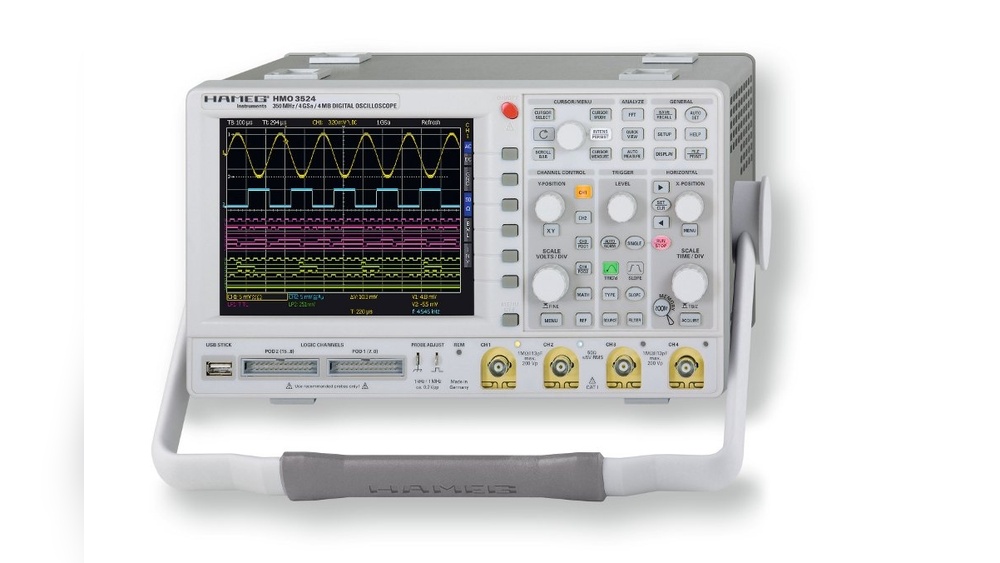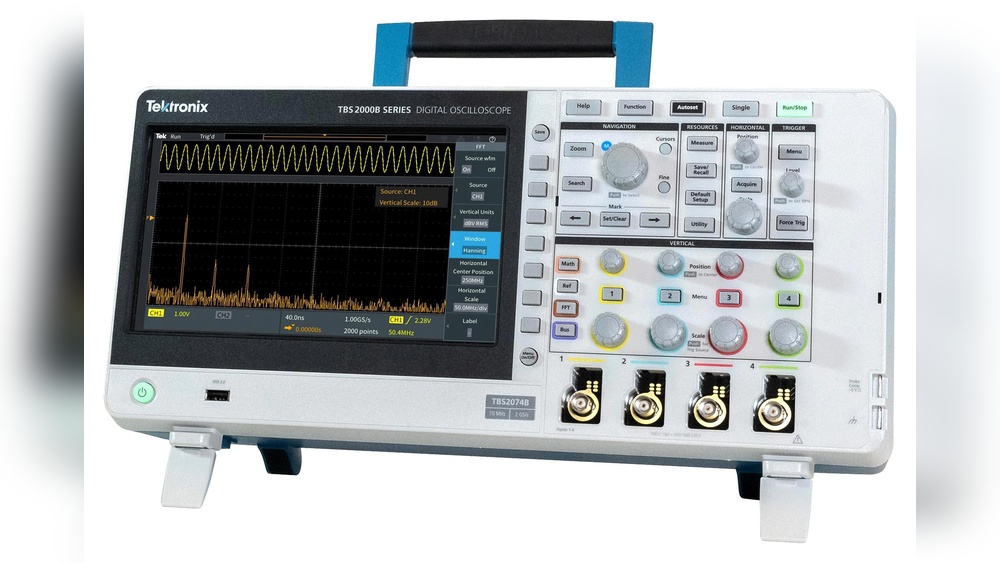
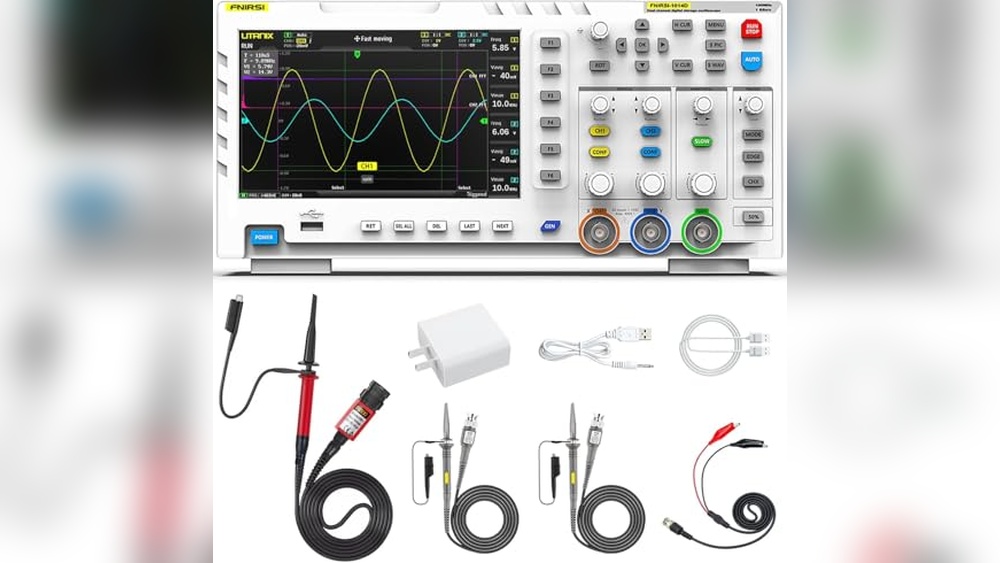
When comparing the Fnirsi 1014D and the Hantek Dso2D10, both oscilloscopes offer solid performance for electronics enthusiasts and professionals. Each device provides dual-channel capability with a 100MHz bandwidth and a 1GSa/s sampling rate. However, they differ in signal generation and memory features.
The core difference lies in the Fnirsi 1014D’s built-in DDS signal generator and user-friendly cursor measurements versus the Hantek Dso2D10’s deeper memory and broader trigger functions.
After reading, you will understand which oscilloscope better fits your everyday lab and repair needs.
Quick Points To Consider Before Choosing Your Oscilloscope
- Choose the Fnirsi 1014D if you want an integrated signal generator for testing various waveforms.
- Pick the Hantek Dso2D10 when longer memory depth and advanced triggering options are important.
- If you prefer a compact device with easy auto-triggering, the Fnirsi 1014D suits your work better.
- Opt for the Hantek Dso2D10 if you need protocol decoding and built-in waveform generator features.
- The Fnirsi 1014D is a good choice for quick amplitude and frequency measurements with its cursor functions.
How These Oscilloscopes Fit Into Daily Tasks
Using the Fnirsi 1014D daily, I found it straightforward to capture and analyze signals quickly. The built-in signal generator helps when I need to test circuits without extra equipment. Its screen and simple auto-triggering keep the workflow smooth.
The Hantek Dso2D10 works well for more detailed signal analysis and protocol decoding. Its memory depth lets me review longer waveforms, which is handy during complex troubleshooting. The separate control knobs make adjustments feel precise and intuitive.
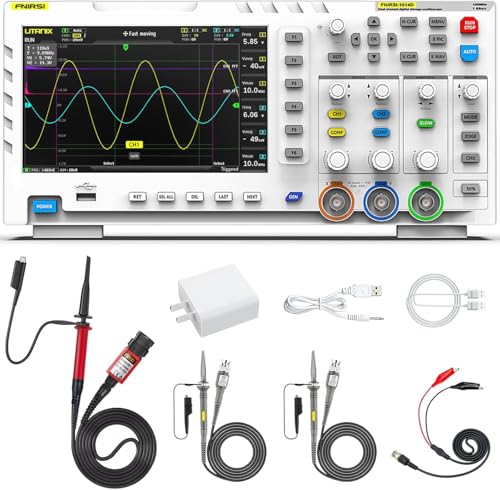
Fnirsi 1014d Oscilloscope Overview
Where Fnirsi 1014D Fits Best
- Ideal for users needing a built-in signal generator for waveform testing.
- Good for quickly measuring peak-to-peak voltage and frequency with cursors.
- Useful in environments where simple auto-triggering saves setup time.
- Compact design suits small workbenches or portable use.
Where Fnirsi 1014D Shows Limitations
- Storage capacity is limited compared to some competitors.
- Lacks advanced protocol decoding features.
- Screen resolution and size are modest for detailed waveform analysis.
Hantek Dso2d10 Oscilloscope Overview

Where Hantek Dso2D10 Excels
- Supports extensive triggering options for complex signal capture.
- Includes protocol decoding for UART, SPI, CAN, and other buses.
- Offers deeper memory for reviewing longer waveform sequences.
- Equipped with a hardware frequency indicator and digital voltmeters.
Where Hantek Dso2D10 Faces Challenges
- Larger and heavier, which may limit portability.
- Interface and controls can feel overwhelming for beginners.
- Waveform generator frequency capped at 25MHz, lower than some expect.
Comparing Fnirsi 1014d Vs Hantek Dso2d10 In Everyday Use
In daily practice, I compared how each oscilloscope handles signal generation, measurement ease, and advanced features. The focus was on workflow efficiency, trigger flexibility, and overall usability in lab and repair settings. Both devices have strengths depending on the task.
Which device is easier to operate for quick measurements?
The Fnirsi 1014D offers a one-button auto trigger and straightforward cursor functions, making quick measurements less cumbersome. The Hantek Dso2D10 requires some setup but provides more detailed control.
| Aspect | Fnirsi 1014D | Hantek Dso2D10 |
|---|---|---|
| Auto-trigger ease | One-button auto | Multiple trigger modes, needs adjustment |
| Cursor measurement | Simple and direct | Available but less intuitive |
| Control interface | Minimalistic | More knobs and buttons |
| Learning curve | Gentle for beginners | Steeper for new users |
Ratings: Fnirsi 1014D – 7/10 | Hantek Dso2D10 – 8/10
Edge: The Fnirsi 1014D suits those needing quick, straightforward measurements, while the Hantek Dso2D10 fits users seeking detailed control.
How do the signal generation capabilities compare?
Fnirsi 1014D’s DDS signal generator supports multiple waveforms and custom signals, useful for testing. Hantek offers an arbitrary waveform generator but with a lower max frequency.
| Aspect | Fnirsi 1014D | Hantek Dso2D10 |
|---|---|---|
| Signal types | 14 built-in + custom chopping signals | Standard waveforms only |
| Max output voltage | 2.5 VPP chopping output | Varies, max 25MHz frequency |
| Waveform customization | Supports up to 1000 custom signals | Limited customization |
Ratings: Fnirsi 1014D – 8/10 | Hantek Dso2D10 – 6/10
Edge: Fnirsi 1014D is better suited for users who rely on a versatile built-in signal generator.
Which oscilloscope offers better memory and data handling?
The Hantek Dso2D10 provides 8M memory depth, allowing longer waveform capture. Fnirsi 1014D has 1GB storage but less memory depth, focusing more on immediate waveform display.
| Aspect | Fnirsi 1014D | Hantek Dso2D10 |
|---|---|---|
| Memory depth | Not specified in detail | 8M samples |
| Storage capacity | 1GB built-in | Not specified |
| Data review | Basic waveform viewing | Supports waveform review and statistics |
Ratings: Fnirsi 1014D – 6/10 | Hantek Dso2D10 – 8/10
Edge: Hantek Dso2D10 is preferable if memory depth and waveform review are priorities.
How do they handle advanced triggering and protocol decoding?
Hantek Dso2D10 supports various trigger types and protocol decoding, helpful for complex signal analysis. Fnirsi 1014D has simpler trigger modes without protocol decoding features.
| Aspect | Fnirsi 1014D | Hantek Dso2D10 |
|---|---|---|
| Trigger types | Single, normal, automatic | Edge, pulse, video, slope, window, pattern, and more |
| Protocol decoding | None | Supports UART, SPI, CAN, LIN, I2C |
| Trigger complexity | Basic | Advanced and versatile |
Ratings: Fnirsi 1014D – 5/10 | Hantek Dso2D10 – 9/10
Edge: The Hantek Dso2D10 is better for users needing detailed triggering and protocol analysis.
What are the size and portability differences?
The Fnirsi 1014D is more compact and lighter, making it easier to move around. The Hantek Dso2D10 is larger with a heavier build, designed more for desktop use.
| Aspect | Fnirsi 1014D | Hantek Dso2D10 |
|---|---|---|
| Dimensions (HxWxL) | 5.51 x 2.76 x 9.84 inches | 5.9 x 12.6 x 4.3 inches |
| Weight | 3.46 pounds | 4.2 pounds |
| Portability | Compact and portable | Bulkier, better for fixed setups |
Ratings: Fnirsi 1014D – 8/10 | Hantek Dso2D10 – 6/10
Edge: Fnirsi 1014D suits those needing a lighter, more portable oscilloscope.
Long-term Use And Experience With These Oscilloscopes
Both oscilloscopes have a learning curve but differ in complexity. The Fnirsi 1014D offers a more straightforward experience, which is easier to master and trust for routine measurements. Its consistent operation gives peace of mind in daily troubleshooting.
The Hantek Dso2D10 requires more time to fully understand all its advanced features and triggers. Once learned, it provides reliability and deeper insight into complex signals. Users who invest time will appreciate its broader functionality over the long term.
Choosing Between Fnirsi 1014d And Hantek Dso2d10 For Your Needs
Choose the Fnirsi 1014D if you want a compact, easy-to-use oscilloscope with a built-in signal generator and quick measurement tools. It fits well for users focused on straightforward waveform testing and portability.
The Hantek Dso2D10 is better for users who need advanced triggering, protocol decoding, and longer waveform memory. It suits environments where detailed analysis and versatility are important despite a steeper learning curve.
Both devices serve distinct needs, allowing you to pick based on your workflow and technical requirements.
Common Questions About Fnirsi 1014d Vs Hantek Dso2d10
Does the Fnirsi 1014D include a signal generator?
Yes, it has a built-in DDS signal generator supporting multiple waveform types and customizable signals, which is useful for testing circuits without external devices.
Can the Hantek Dso2D10 decode communication protocols?
Yes, it supports protocol decoding for UART, SPI, CAN, LIN, and I2C, which helps analyze digital communication signals in detail.
Which oscilloscope is easier to use for beginners?
The Fnirsi 1014D has a simpler interface and automatic triggering, making it more beginner-friendly. The Hantek Dso2D10 offers advanced features that may require more time to learn.
Is there a big difference in portability between the two?
Yes, the Fnirsi 1014D is lighter and more compact, suitable for portable use. The Hantek Dso2D10 is larger and heavier, better suited for stationary lab setups.
How do their memory and storage compare?
The Hantek Dso2D10 has a deeper memory depth for capturing longer waveforms, while the Fnirsi 1014D offers built-in storage but less memory depth.
Which oscilloscope offers more trigger options?
The Hantek Dso2D10 has a wider variety of trigger types, including edge, pulse, video, and pattern triggers. The Fnirsi 1014D supports more basic trigger modes.
Are both suitable for hobbyists and professionals?
Yes, both oscilloscopes serve hobbyists and professionals but cater to different priorities. Fnirsi 1014D focuses on ease and signal generation, while Hantek Dso2D10 targets advanced analysis and protocol decoding.

I’m Asif Ur Rahman Adib, an Electrical Engineer and lecturer. My journey began in the lab, watching students struggle with instruments they used every day without fully understanding them. Over time, I’ve combined teaching, research, and hands-on experience to help others grasp electrical concepts clearly, safely, and practically—whether it’s understanding a circuit or mastering a multimeter.