Choosing the right oscilloscope can feel overwhelming, especially when you’re torn between popular options like Hantek and Picoscope. You want a tool that’s reliable, easy to use, and fits your budget.
But how do you decide which one truly matches your needs? You’ll discover the key differences, strengths, and weaknesses of both Hantek and Picoscope. By the end, you’ll have the clear insight you need to make a confident choice—saving you time, money, and frustration.
Keep reading to find out which oscilloscope is the perfect fit for your projects.
Credit: www.mechanicmindset.com
Brand Backgrounds
Understanding the backgrounds of Hantek and Picoscope helps to see their strengths. Both brands offer reliable tools for electronics testing. Each has a unique history that shapes its products and reputation.
Hantek History
Hantek started in 1998. It began as a small company in China. The brand focused on affordable test tools. Hantek quickly grew by offering budget-friendly digital oscilloscopes. Their products suit hobbyists and small workshops well. Over time, Hantek improved their designs and features. Today, they provide a wide range of instruments. Their goal stays clear: delivering value at lower prices.
Picoscope Legacy
Picoscope belongs to Pico Technology, founded in 1991. This British company began with PC-based oscilloscopes. Their devices connect directly to a computer. Picoscope became known for high precision and advanced software. Professionals often choose Picoscope for detailed analysis. The brand focuses on innovation and quality. It supports many industries, including automotive and research. Picoscope products usually cost more but offer deeper insights.
Credit: www.mechanicmindset.com
Design And Build
The design and build of an oscilloscope affect how easy and comfortable it is to use. Hantek and Picoscope offer different styles and features. These differences impact your experience, especially during long work sessions or field tasks.
Portability And Size
Hantek models are usually compact and lightweight. They fit well in small bags or toolkits. This makes them a good choice for users who travel or move between sites. Picoscope devices tend to be slightly larger but still portable. They often require a laptop connection, which adds to the overall setup size. Both brands focus on easy transport, but Hantek scores higher for pure portability.
Durability And Materials
Hantek uses sturdy plastic casings that handle daily wear well. The buttons and knobs feel solid and responsive. Picoscope devices often have a more modern look with metal parts. This gives them a premium feel and improved durability. Both brands provide reliable builds, but Picoscope offers a bit more protection for tough environments.
Technical Specifications
Technical specifications define the core abilities of oscilloscopes like Hantek and Picoscope. These specs help users decide which device fits their needs best. They cover key points like bandwidth, sampling rate, channels, inputs, resolution, and accuracy.
Bandwidth And Sampling Rate
Bandwidth shows the highest frequency the scope can measure. Hantek models often have bandwidths ranging from 50MHz to 200MHz. Picoscope devices usually offer higher bandwidths, reaching up to 500MHz or more.
Sampling rate is how fast the scope captures data points. Hantek oscilloscopes typically sample at 1GSa/s to 2GSa/s. Picoscope models can reach sampling rates of up to 5GSa/s, allowing better detail on fast signals.
Channels And Inputs
Channels are the number of signals the scope can read at once. Hantek usually provides 2 to 4 channels. Picoscope offers 4 or more channels in many models.
Inputs include probe types and voltage limits. Both brands support standard probes, but Picoscope often has more flexible input options. Voltage ranges vary, but both can handle common testing needs safely.
Resolution And Accuracy
Resolution means how finely the scope can measure signal changes. Hantek scopes mostly use 8-bit resolution. Picoscope devices often feature 12-bit or higher resolution, giving clearer views of small signals.
Accuracy defines how close the measurements are to true values. Picoscope tends to provide higher accuracy with advanced calibration. Hantek delivers reliable accuracy suitable for general use.
Software Features
Software features play a key role in choosing between Hantek and Picoscope. They affect how easily users can work with the device and interpret data. Each brand offers distinct tools and interfaces that suit different needs.
Software can make complex tasks simple or add frustration. Understanding what each offers helps users pick the right tool for their projects.
User Interface
Hantek software has a clear and straightforward interface. It displays waveforms and controls with simple menus. This design helps beginners start fast without much training.
Picoscope’s interface is more advanced. It has customizable views and detailed controls. Experts find it useful for deep data analysis and complex tasks.
Analysis Tools
Hantek provides basic analysis tools like measurements and cursors. These cover most common testing needs. The tools are easy to access and use.
Picoscope offers a wide range of analysis tools. It includes advanced math functions and automated measurements. This suits users who need precise and detailed data insights.
Compatibility
Hantek software works on Windows and some Android devices. It supports basic file formats for easy data export. This makes sharing simple for most users.
Picoscope supports Windows, macOS, and Linux. It offers more file format options and integration with other software. This flexibility helps professionals in varied environments.
Performance In Testing
Performance in testing is a key factor when choosing between Hantek and Picoscope. Both tools offer unique strengths that impact your work. Understanding their performance helps pick the right device for your needs.
Signal Capture Quality
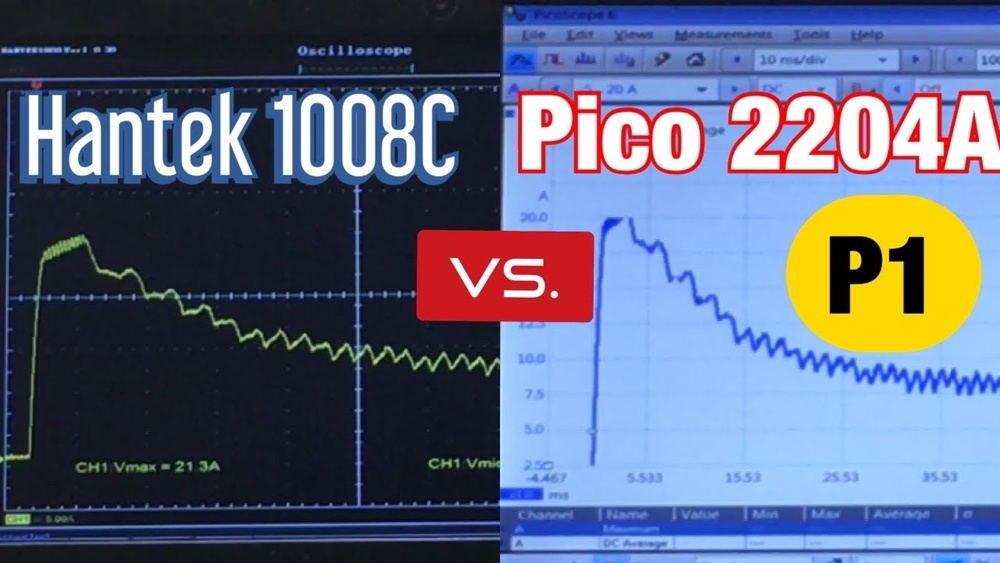
Hantek provides clear and stable signal capture for most basic tasks. It handles standard waveforms well and shows details clearly. Picoscope excels with higher resolution and deeper memory. It captures complex signals with better accuracy and less noise. Picoscope’s advanced technology offers more precise data for detailed analysis.
Latency And Responsiveness
Hantek devices respond quickly during simple tests. They provide real-time feedback with minimal delay. Picoscope offers faster data processing and smoother display updates. This improves the user experience in fast-paced testing. For tasks requiring instant response, Picoscope has a slight edge.
Versatility In Applications
Hantek suits well for general electronics and education. It supports common measurements and basic troubleshooting. Picoscope fits a wider range of applications, including automotive and industrial use. It supports multiple protocols and advanced features. This makes Picoscope more flexible for varied testing jobs.
Pricing And Value
Choosing between Hantek and Picoscope often depends on price and value. Both brands offer digital oscilloscopes, but their costs and what you get vary. Understanding these differences helps you make the best choice for your needs and budget.
Cost Comparison
Hantek oscilloscopes usually cost less than Picoscope models. You can find Hantek devices at a budget-friendly price. Picoscope products tend to be more expensive. The higher price often reflects advanced features and better build quality. For basic tasks, Hantek offers good value. For complex work, Picoscope may justify the cost with extra capabilities.
Warranty And Support
Hantek provides standard warranty periods, often one year. Support is available but may vary by seller. Picoscope offers longer warranties, sometimes up to three years. Their customer service is well-known for being responsive. Choosing Picoscope can mean better long-term support. This can add value beyond the initial purchase price.
User Experience
User experience plays a big role in choosing between Hantek and Picoscope. It affects how easily users can start and how smoothly they work with the device daily. Both devices offer different experiences based on setup, learning, and user opinions.
Ease Of Setup
Hantek devices are usually simple to set up. Most users can start testing in minutes. The hardware connects easily to a PC via USB. The software installation is straightforward with clear instructions. Picoscope setup is also user-friendly but may take a bit longer. It offers advanced options that require some initial adjustments. Both devices support Windows, but Picoscope has better Mac support.
Learning Curve
Hantek’s interface is basic and easy for beginners. It uses simple menus and buttons. Learning to use it takes less time. Picoscope has a more complex interface with many features. This can confuse new users at first. But it offers detailed settings for advanced users. Tutorials and guides help speed up learning for both devices.
Customer Feedback
Many Hantek users praise its value and ease of use. They find it reliable for basic tasks. Some mention limited advanced features. Picoscope users highlight its powerful tools and accuracy. They appreciate the detailed software but note the steeper learning curve. Overall, customers recommend Hantek for beginners and Picoscope for professionals.

Credit: www.youtube.com
Best Use Cases
Choosing between Hantek and Picoscope depends on what you need. Each tool fits different tasks better. Understanding their best use cases helps pick the right one.
Hobbyist And Diy Projects
Hantek suits beginners and hobbyists well. It offers simple features and good performance. Ideal for small electronics and home experiments. Its affordability makes it easy to own. Users can test circuits and learn basics quickly.
Professional Engineering
Picoscope fits engineers who need advanced tools. It provides high accuracy and detailed analysis. Useful for complex designs and research. Features like deep memory and high speed help. It supports precise troubleshooting and development tasks.
Automotive Diagnostics
Both tools work for car repairs but differ in strength. Hantek is great for basic engine checks and signals. Picoscope handles complex vehicle systems and waveforms. It helps find hidden electrical problems easily. Professionals prefer it for detailed auto diagnostics.
Frequently Asked Questions
What Are The Main Differences Between Hantek And Picoscope?
Hantek offers affordable, basic oscilloscopes suitable for beginners. Picoscope provides advanced features, higher resolution, and better software for professionals. Picoscope devices often support more channels and higher bandwidth, making them ideal for complex diagnostics and research applications.
Which Oscilloscope Brand Is Best For Beginners?
Hantek is generally better for beginners due to its lower price and simple interface. It covers basic testing needs effectively. Picoscope, while more powerful, has a steeper learning curve and is suited for experienced users requiring advanced analysis.
How Does Software Quality Compare: Hantek Vs Picoscope?
Picoscope software is highly regarded for its user-friendly design and extensive features. It supports detailed waveform analysis and data logging. Hantek’s software is functional but less sophisticated, offering fewer tools and limited customization compared to Picoscope.
Are Hantek Oscilloscopes Reliable For Automotive Diagnostics?
Yes, Hantek oscilloscopes are reliable for automotive diagnostics. They provide essential functions at a budget-friendly price. However, Picoscope offers more precision and specialized automotive software, which benefits professional mechanics and detailed vehicle troubleshooting.
Conclusion
Choosing between Hantek and Picoscope depends on your needs and budget. Hantek offers good features at a lower price. Picoscope provides advanced options for serious users. Both tools have clear screens and easy controls. Think about what fits your work best.
Either way, you get a reliable oscilloscope for testing. Simple or advanced, both serve well in electronics tasks. The final choice is yours.

I’m Asif Ur Rahman Adib, an Electrical Engineer and lecturer. My journey began in the lab, watching students struggle with instruments they used every day without fully understanding them. Over time, I’ve combined teaching, research, and hands-on experience to help others grasp electrical concepts clearly, safely, and practically—whether it’s understanding a circuit or mastering a multimeter.