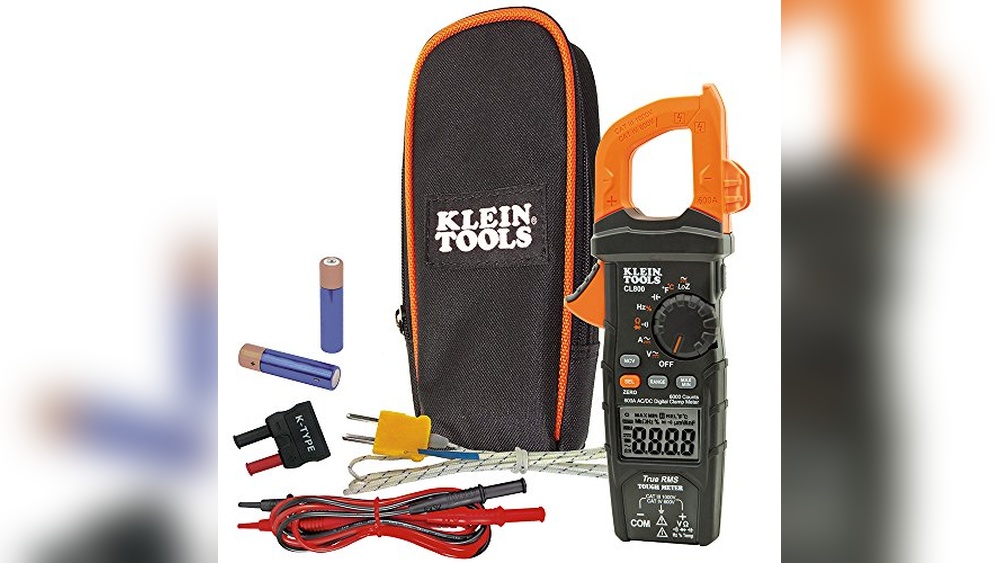
Choosing between the Klein Tools CL800 Digital Clamp Meter and the Fluke 325 True-RMS Clamp Meter means looking at versatile electrical testers designed for daily use. Both meters measure AC/DC voltage and current along with additional features like frequency and capacitance. They suit professionals who work with electrical systems and need reliable readings.
The core difference is that the Klein CL800 offers a broader range of measurements and added features like low impedance mode and integrated worklight.
After reading, you will understand which meter fits your daily tasks and preferences better.
Quick Guide To Choosing Your Clamp Meter
- Choose Klein CL800 if you need temperature measurement and low impedance mode for troubleshooting ghost voltages.
- Pick Fluke 325 when you want a clamp meter with a simpler interface and strong safety ratings for CAT IV installations up to 300 V.
- Select Klein CL800 if a backlit display and hands-free operation with magnetic hanger is important for your work.
- Opt for Fluke 325 if you prefer a lightweight meter with a large jaw opening for measuring current without disconnecting wires.
- Go with Klein CL800 when you require more detailed measurements like capacitance, frequency, and duty cycle in one device.
How These Clamp Meters Perform Daily
The Klein CL800 is versatile for daily electrical troubleshooting. Its ability to measure temperature alongside current and voltage makes it useful in HVAC and electrical maintenance. The backlit display helps in dim environments, and features like the worklight and test lead holder add convenience during longer tasks.
Using the Fluke 325 feels straightforward with its clear display and audible continuity sensor. I found it reliable for quick checks on circuits and current measurements up to 400 amps. Its safety ratings give confidence when working in more demanding environments, while its jaw size fits most conductors without hassle.
Overview Of The Klein Cl800 Digital Clamp Meter
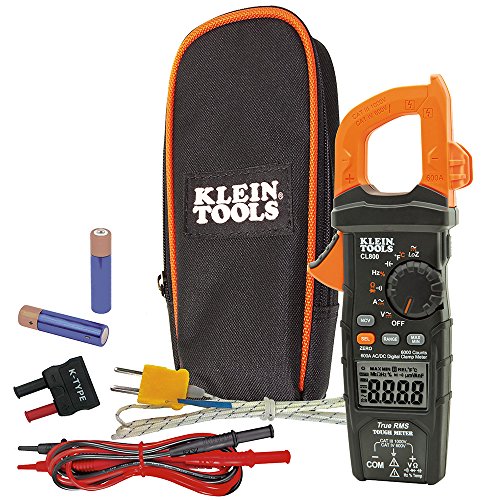
Where Klein CL800 Excels
- Measures AC/DC current, voltage, temperature, frequency, and capacitance
- Includes low impedance mode to detect stray voltages
- Backlit display for use in low-light conditions
- Integrated worklight and magnetic hanger for hands-free operation
- True RMS technology for accurate readings
Limitations of Klein CL800
- Heavier and slightly bulkier compared to some competitors
- More complex features may require a learning curve for beginners
- Higher price point without simplified interface
Overview Of The Fluke 325 True-rms Clamp Meter

Where Fluke 325 Fits Well
- Measures AC current up to 400 amps and DC/AC voltage up to 600 V
- True RMS sensing provides accurate readings on various load types
- Audible continuity sensor aids quick circuit checks
- Jaw opening supports measuring current without disconnecting conductors
- Strong safety ratings for CAT IV 300 V and CAT III 600 V work environments
Where Fluke 325 Falls Short
- Does not measure temperature or capacitance
- Display lacks backlight for low-light use
- Fewer convenience features like worklight or magnetic hanger
Practical Comparison Of Klein Cl800 And Fluke 325 In Field Use
Both meters were tested on typical electrical maintenance tasks involving current, voltage, and continuity checks. I compared ease of use, feature set, and adaptability to different work conditions. The Klein CL800 showed its strength in more detailed diagnostics, while the Fluke 325 impressed with simplicity and safety.
Measurement Capabilities
Which meter covers more testing scenarios? The Klein CL800 includes temperature, capacitance, and low impedance mode, while the Fluke 325 focuses on current, voltage, and resistance.
| Aspect | Klein CL800 | Fluke 325 |
|---|---|---|
| AC/DC Current | Yes | Yes |
| Temperature Measurement | Yes | No |
| Capacitance | Yes | No |
| Low Impedance Mode | Yes | No |
| Frequency Measurement | Yes | Yes |
Ratings: Klein CL800 – 8/10 | Fluke 325 – 7/10
Edge: Klein CL800 suits users needing a wider range of tests, while Fluke 325 is better for straightforward electrical measurements.
Usability and Convenience
How easy are these meters to operate during daily work? Klein CL800 offers additional features like a backlit display and worklight, while Fluke 325 is simpler and lighter.
| Aspect | Klein CL800 | Fluke 325 |
|---|---|---|
| Backlit Display | Yes | No |
| Worklight | Integrated | No |
| Weight | 0.78 lbs | 0.65 lbs |
| Magnetic Hanger | Optional | No |
Ratings: Klein CL800 – 7/10 | Fluke 325 – 8/10
Edge: Fluke 325 is easier to handle for quick jobs; Klein CL800 excels in low-light or extended work sessions.
Safety and Build
Safety ratings and durability are important for electrical work. Fluke 325 has higher category ratings, while Klein CL800 offers a robust build with additional features.
| Aspect | Klein CL800 | Fluke 325 |
|---|---|---|
| Safety Category | Up to 1000 V CAT III | CAT IV 300 V, CAT III 600 V |
| Jaw Size | Standard | 30 mm opening |
| Durability | Robust | Robust |
Ratings: Klein CL800 – 7/10 | Fluke 325 – 8/10
Edge: Fluke 325 is preferable for high safety environments; Klein CL800 suits general industrial use.
Long-term Use And Reliability Of These Clamp Meters
Both meters have a learning curve, but the Klein CL800 requires more time to master due to its expanded feature set. Once familiar, it offers consistent readings and additional tools for deeper diagnostics. Users gain trust in its multi-function capabilities over time.
The Fluke 325 is straightforward, making it easier to adopt quickly for routine checks. Its consistent performance and recognized brand quality provide peace of mind for daily electrical tasks. It suits those who prioritize reliability over advanced features.
Choosing Between Klein Cl800 And Fluke 325 For Your Work
Pick the Klein CL800 if you need a versatile clamp meter that covers temperature, low impedance testing, and capacitance. It is ideal for professionals who require a broad range of functions and work in varied lighting conditions.
The Fluke 325 is a solid choice for users looking for a simple, reliable clamp meter with strong safety ratings. It fits well in environments where quick, accurate current and voltage readings are needed without extra features.
Both meters are dependable tools, and your choice depends on the scope of your electrical tasks and preference for features.
Common Questions About Klein Cl800 Vs Fluke 325 Clamp Meters
Can both meters measure temperature?
Only the Klein CL800 measures temperature using a thermocouple input. The Fluke 325 does not have temperature measurement capability.
Which meter is better for detecting stray voltages?
The Klein CL800 includes a low impedance mode specifically designed to identify ghost or stray voltages. The Fluke 325 lacks this feature.
Are both meters safe for industrial electrical work?
Fluke 325 has higher safety category ratings (CAT IV 300 V and CAT III 600 V), making it suitable for tougher environments. Klein CL800 is rated up to 1000 V CAT III, which is also robust but for slightly different scenarios.
Is one meter easier to use than the other?
The Fluke 325 has a simpler interface and fewer features, making it easier for quick testing. The Klein CL800 has more functions, so it may require more time to learn.
Do both meters have backlit displays for low-light work?
The Klein CL800 features a backlit LCD for better visibility in dim conditions. The Fluke 325 does not have a backlit display.
Can I use these meters hands-free?
The Klein CL800 offers an optional magnetic hanger for hands-free operation, which can be useful on site. The Fluke 325 does not have this feature.
Which meter has a larger jaw opening?
The Fluke 325 has a jaw opening that fits conductors up to 30 mm without disconnecting wires. The Klein CL800 has a standard clamp size suitable for most applications.

I’m Asif Ur Rahman Adib, an Electrical Engineer and lecturer. My journey began in the lab, watching students struggle with instruments they used every day without fully understanding them. Over time, I’ve combined teaching, research, and hands-on experience to help others grasp electrical concepts clearly, safely, and practically—whether it’s understanding a circuit or mastering a multimeter.