Finding The Right Multimeter For Aviation Work
If you’ve ever needed to test electrical systems on aircraft, you know how crucial accuracy and reliability are. Whether you’re troubleshooting avionics or checking battery health, the right multimeter can make a big difference. But with many options available, it’s easy to feel overwhelmed.
Choosing a Fluke multimeter for aviation involves balancing safety features, measurement capabilities, and ease of use. Some models offer advanced functions but come at a higher price, while others focus on essential measurements with simpler designs. Understanding these trade-offs without getting lost in technical details can be challenging.
This guide will help you focus on what matters most for aviation tasks. It will clarify common pitfalls and offer a clear way to think about your needs before diving into specific models.
What Matters Most In An Aviation Multimeter
Aviation electrical work demands tools that are safe, precise, and versatile. Key considerations include the ability to measure both AC and DC voltages, current ranges suitable for aircraft systems, and safety ratings that protect you during use. Portability and ease of reading measurements also play a role, especially in cramped or low-light environments.
It’s easy to get distracted by extra features that might not be necessary for typical aviation checks. Focusing on core functions and dependable performance can help you avoid overspending on features you won’t use.
Common Mistakes When Choosing
Many buyers look only at price or brand reputation without matching features to their actual needs. Some choose models that are too basic for aviation tasks, missing out on crucial safety or accuracy aspects. Others pick overly complex devices that add confusion and cost.
Another common error is ignoring the importance of clear displays and easy-to-use controls, which can slow down work or lead to mistakes. Considering your typical work environment and measurement needs upfront can prevent these issues.
With this understanding, you’ll be ready to explore a selection of Fluke multimeters that suit different aviation requirements and budgets.
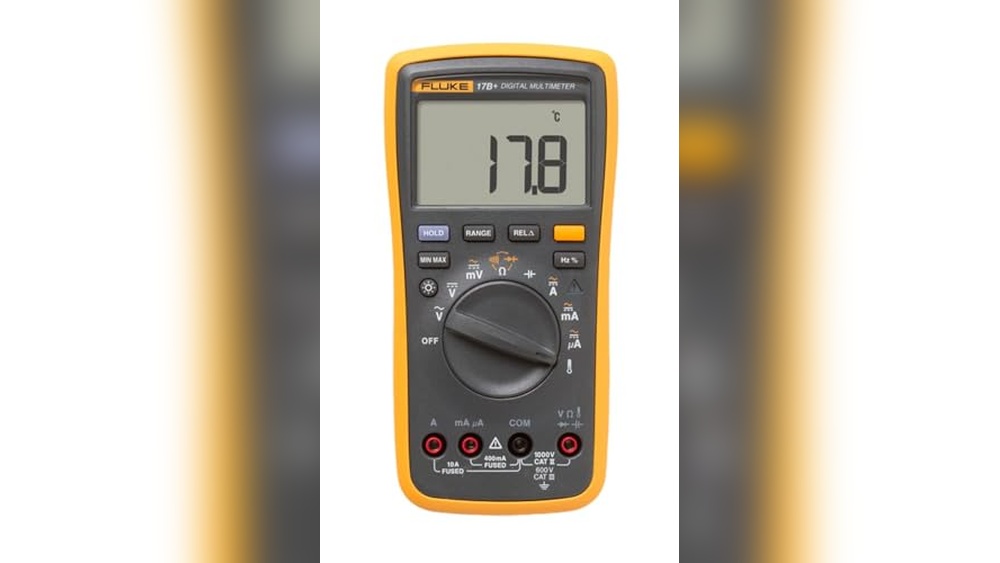
Fluke 17b+ Digital Multimeter
The Fluke 17B+ is the Best Fluke Multimeter for Aviation, offering reliable measurements for critical electrical testing in aircraft systems.

The Fluke 17B+ is a versatile digital multimeter designed for electrical applications including aviation maintenance. It provides accurate AC/DC voltage readings up to 1000V and current measurements up to 10A, helping troubleshoot and maintain aircraft electrical systems safely. Its temperature measurement with a type K thermocouple adds an extra layer of diagnostic capability.
Using this multimeter in aviation work feels reliable and straightforward, thanks to its CAT III 600V safety rating and clear display. The variety of measurement functions, including resistance and diode tests, allow technicians to quickly diagnose issues without guesswork or delays.
Key Benefits for Aviation Technicians
- High safety rating (CAT III 600V) for secure use in aircraft electrical systems
- Accurate voltage and current measurements up to 1000V and 10A
- Multiple essential test functions like resistance, continuity, and diode testing
- Temperature measurement capability with included thermocouple for heating/cooling diagnostics
- Compact and portable size suitable for field and hangar environments
- Reliable brand known for precision in electrical testing tools
- Clear display and intuitive operation reduce troubleshooting time
Considerations Before Buying
- Not designed for extremely high-voltage or specialized aerospace testing beyond 1000V
- Lacks wireless or advanced connectivity features found in some newer models
- Limited to basic temperature range up to 400°C with type K thermocouple
Who This Serves Best
This multimeter is ideal for aviation technicians who need a reliable, safe, and straightforward tool for routine electrical diagnostics on aircraft systems. It removes uncertainty by providing precise readings and multiple test functions in one compact device.
To get the best results, regularly calibrate the meter and use the included thermocouple for temperature checks on heating and cooling components. This approach ensures fewer surprises during maintenance and enhances safety in your work.
Its solid build and trusted brand reputation make it a dependable choice for professionals who value accuracy and ease without unnecessary complexity.
| Best for | Why |
|---|---|
| Routine aircraft electrical testing | Provides accurate voltage, current, and resistance readings essential for troubleshooting |
| Heating and cooling system checks | Includes temperature measurement with type K thermocouple for monitoring system performance |
| Field and hangar use | Compact size and CAT III safety rating ensure safe and portable operation |
| Diode and continuity diagnostics | Helps quickly identify component failures saving repair time |
Fluke 117 Digital Multimeter
The Fluke 117 stands out as the Best Fluke Multimeter for Aviation by offering precise, non-contact AC voltage detection tailored for aviation professionals.

The Fluke 117 Digital Multimeter is designed to measure voltage, resistance, continuity, frequency, and capacitance with ease. Its VoltAlert technology allows for safe, non-contact detection of AC voltage, minimizing the risk of accidental shocks during inspections.
Using this multimeter in aviation settings feels reliable and straightforward. The large white LED backlight ensures clear readings even in dimly lit aircraft environments, helping professionals work confidently without second-guessing results.
Key Benefits for Aviation Testing
- Non-contact AC voltage detection improves safety during inspections.
- AutoVolt selection simplifies switching between AC and DC voltage measurements.
- Low input impedance reduces false readings caused by ghost voltage.
- True RMS measurement ensures accuracy on complex electrical loads.
- Compact size and lightweight design enhance portability and ease of use.
- Long battery life supports extended use without frequent replacements.
- Bright LED backlight aids visibility in low-light aircraft cabins.
Considerations Before Buying
- Designed primarily for standard aviation electrical tasks, not specialized avionics diagnostics.
- Backlight usage reduces battery life compared to typical operation.
- Limited to a resolution of 0.1 mV in DC millivolts range, which may not suit ultra-fine measurements.
Why This Fits Aviation Professionals
This multimeter is ideal for aviation technicians who require a reliable tool that balances safety and precision during routine electrical checks. It removes the guesswork from voltage detection with its non-contact feature, reducing stress and potential errors.
To get the most from the Fluke 117, use the low impedance mode when testing circuits prone to ghost voltage for more consistent readings. This approach ensures fewer surprises and a safer working environment. Its straightforward design suits those who value clear, dependable results over complex features.
| Best for | Why |
|---|---|
| Routine aircraft electrical maintenance | Non-contact voltage detection and accurate readings simplify safety checks. |
| Testing power systems in low-light conditions | Large LED backlight improves visibility inside aircraft compartments. |
| Technicians needing quick AC/DC voltage switching | AutoVolt feature automatically selects the correct voltage type. |
| Users requiring reliable true RMS measurements | Ensures accuracy on non-linear electrical loads common in aviation systems. |
Fluke 15b+ Digital Multimeter
The Fluke 15B+ is a reliable choice as the Best Fluke Multimeter for Aviation, offering precise measurements essential for aviation electrical troubleshooting.

The Fluke 15B+ Digital Multimeter is designed for electrical applications, capable of measuring AC/DC voltage and current up to 1000V and 10A, along with resistance, continuity, diode, and capacitance. This makes it suitable for accurately diagnosing electrical issues in aviation systems where precision is critical.
Using this multimeter provides confidence and ease when working with complex electrical components. Its safety rating and wide measurement range help reduce guesswork and ensure consistent, reliable readings during inspections or repairs.
Key Benefits for Aviation Electrical Testing
- High safety rating (CAT III 600V) suitable for aviation environments
- Accurate AC/DC voltage measurement up to 1000V
- AC/DC current measurement up to 10A for thorough diagnostics
- Multiple functions including resistance, continuity, diode, and capacitance
- Compact size and lightweight for easy handling during inspections
- Clear digital display for quick reading interpretation
- Durable design from a trusted brand in electrical test equipment
Considerations Before Buying
- Limited to 10A current measurement, not suitable for very high current testing
- No advanced features like data logging or wireless connectivity
- Basic display without graphical interface or backlight
Who This Suits in Aviation Work
This multimeter is ideal for aviation technicians who need a dependable tool for routine electrical testing and troubleshooting without extra complexity. It removes the stress of uncertain readings by providing safety and accuracy, essential for maintaining aircraft electrical systems.
To get the best results, ensure you use the input terminals correctly for current measurements and regularly calibrate the device. This approach delivers peace of mind through reliable diagnostics and fewer unexpected electrical issues.
| Best for | Why |
|---|---|
| Routine aviation electrical diagnostics | Accurate voltage and current readings for common aviation components |
| Safety-conscious technicians | CAT III 600V rating provides protection during residential and commercial level tasks |
| Compact toolkits | Lightweight and portable size fits easily in aviation technician tool bags |
| Electrical troubleshooting beginners | Simple interface and essential functions ease learning and quick diagnosis |
Fluke 117/323 Multimeter Combo
The Fluke 117/323 Multimeter Combo stands out as the Best Fluke Multimeter for Aviation by providing precise AC/DC voltage and current measurements essential for aviation electrical work.

The Fluke 117/323 Multimeter Combo Kit combines a multimeter and clamp meter designed for residential and commercial electricians. It accurately measures AC and DC voltage as well as AC current up to 400 A, which is valuable for aviation maintenance and troubleshooting electrical systems. Its true RMS capability ensures precise readings even on complex, non-linear loads.
Using this combo kit feels reliable and straightforward, giving you confidence when working with sensitive aviation electronics. The low input impedance on the multimeter helps avoid false readings caused by ghost voltage, saving time and reducing guesswork during inspections or repairs.
Advantages for Aviation Electrical Tasks
- True RMS readings provide accuracy on non-linear electrical signals common in aviation systems.
- Measures both AC and DC voltage and current, covering a wide range of aviation electrical needs.
- Low input impedance reduces false readings from ghost voltage, enhancing measurement reliability.
- Clamp meter handles up to 400 A AC current, suitable for high-load circuits.
- Includes essential accessories like test leads, TPAK, and a carrying case for portability.
- Compact and lightweight design aids ease of use during field inspections.
Considerations for Specific Use Cases
- The kit focuses on electrical measurements; it does not include advanced aviation-specific diagnostic features.
- Clamp meter measures AC amps only, with DC amps measured by the multimeter itself.
- Relatively large width (30.48 inches) may require careful storage or transport planning.
When This Makes Sense
This Fluke combo kit suits aviation technicians who need reliable, accurate electrical measurements without extra complexity. It removes guesswork by providing true RMS values and reduces false readings, which is critical for safety and compliance. To get the most out of it, regularly calibrate your meters and use the low input impedance feature to avoid ghost voltage interference.
Its portability and comprehensive measurement range make it a solid choice for both hangar and fieldwork. If you value consistent, dependable readings and a well-rounded toolset, this kit delivers peace of mind with every test.
| Best for | Why |
|---|---|
| Aviation electricians | Accurate AC/DC voltage and current measurements tailored for aviation systems |
| Field maintenance | Portable kit with carrying case and TPAK for easy transport and use on site |
| Non-linear load diagnostics | True RMS capability ensures precise readings on complex electrical signals |
| Electrical troubleshooting | Low input impedance reduces false readings caused by ghost voltage |
Understanding Your Needs Before Choosing A Digital Multimeter
Identify what you will primarily use the multimeter for, such as residential wiring, automotive diagnostics, or commercial electrical work. Consider the range of measurements you need, including voltage, current, resistance, and special features like temperature measurement or non-contact voltage detection.
Think about the environments where the tool will be used. Safety ratings like CAT III 600V are important if you work in industrial or commercial settings. Also, consider if you require features such as low impedance mode to avoid false readings or true RMS for accuracy on non-linear loads.
Key Features To Compare
Measurement Capabilities
Look for multimeters that cover the measurements you need: AC/DC voltage and current, resistance, continuity, capacitance, frequency, and diode testing. Some models include temperature measurement or clamp meters for higher current ranges.
Safety and Durability
Check the safety category rating to match your work environment. Higher ratings like CAT III 600V ensure safer use on electrical panels and equipment.
User Convenience
Features like non-contact voltage detection, auto-ranging, backlit displays, and low input impedance can make usage easier and reduce errors.
Common Considerations And Potential Confusion
Many buyers struggle with understanding safety ratings and measurement ranges. Ensure the multimeter’s voltage and current limits exceed your expected usage to avoid damage.
Non-contact voltage detection is useful but should not replace standard measurements. True RMS is important for accuracy when measuring complex signals, especially in commercial environments.
Weight and size might matter if you need a portable device for fieldwork. Prime availability and reputable sellers can influence buying decisions.
Tips For Effective Use And Maintenance
Always verify the multimeter is rated for the environment and measurements you intend to perform. Use the appropriate probes and test leads supplied or recommended by the manufacturer.
Regularly check the battery and replace it as needed to ensure accurate readings. Store the device in a protective case to avoid damage, especially if it includes sensitive temperature probes or clamp meters.
Familiarize yourself with the device’s functions before use, including how to switch between measurement modes and interpret readings.
Frequently Asked Questions
What does CAT III 600V safety rating mean?
It indicates the multimeter can safely measure circuits connected to the distribution level, such as fixed installations and equipment in commercial buildings up to 600 volts.
Why is True RMS important?
True RMS provides accurate readings for non-linear loads where standard averaging meters might give incorrect values.
Can I use a multimeter with non-contact voltage detection for all measurements?
No, non-contact detection is only for identifying live voltage presence. For detailed measurements, you still need contact probes and standard measurement functions.
How do I avoid false readings due to ghost voltage?
Using a multimeter with low input impedance helps prevent false or ghost voltage readings in electrical systems.
Is temperature measurement a common feature in digital multimeters?
Not all multimeters include temperature measurement, but some models offer it with a type K thermocouple for monitoring heating and cooling systems.
Final Thoughts
Selecting the right digital multimeter depends on understanding your specific measurement needs and work environment. Focus on essential features that align with your applications and safety requirements. Taking the time to compare key functionalities and usability factors will help you choose a reliable tool that serves you well over time.

I’m Asif Ur Rahman Adib, an Electrical Engineer and lecturer. My journey began in the lab, watching students struggle with instruments they used every day without fully understanding them. Over time, I’ve combined teaching, research, and hands-on experience to help others grasp electrical concepts clearly, safely, and practically—whether it’s understanding a circuit or mastering a multimeter.