Finding The Right Fluke Multimeter For Mechanics
If you’ve ever needed to measure electrical values while working on vehicles or machinery, you know how important a reliable multimeter is. Mechanics often face situations where precise readings can make the difference between a quick fix and hours of troubleshooting.
Choosing the best Fluke multimeter for mechanics can be tricky. There are many models, each with different features, accuracy levels, and price points. Some focus on automotive-specific functions, while others lean toward general electrical testing. Balancing cost with the right functionality often leads to confusion.
This guide aims to help you understand what matters most when selecting a Fluke multimeter for mechanical work. It will clarify key considerations and help you find a tool that fits your needs without overcomplicating the choice.
What Matters Most In A Multimeter For Mechanics?
Mechanics need multimeters that offer accurate voltage, current, and resistance measurements. Automotive troubleshooting often requires features like pulse width and duty cycle measurement, as well as safe testing around sensitive vehicle electronics. At the same time, ease of use and durability are essential since the tool will likely be used in busy, sometimes harsh environments.
Price can vary widely. Some multimeters cover basic tasks well at a lower cost, while others include advanced functions suited for hybrid vehicles and professional diagnostics. Understanding what functions you’ll actually use can save money and prevent overwhelm.
Common Missteps When Choosing
A frequent mistake is focusing too much on specs without considering practical use. For example, a multimeter with many features might be appealing but could be more complex than needed. Conversely, a cheaper model might lack critical safety ratings or measurement accuracy.
Another pitfall is overlooking the importance of safety ratings and input impedance, which protect both the user and sensitive vehicle electronics. These factors often get less attention but are crucial for reliable and safe operation.
How To Approach Your Choice
Think about the types of vehicles and systems you’ll be working on. Are you dealing mostly with conventional engines, or do you need tools suitable for hybrids and newer technology? Consider whether you need advanced data recording or just straightforward measurements.
Also, factor in the environment where you’ll use the multimeter. Features like backlit displays and durable casing can improve your experience on the job.
Keep your main goals in mind: accuracy, safety, and ease of use. This focus will help narrow down the options effectively.
Below, you’ll find a selection of Fluke multimeters chosen to cover a range of mechanic needs. Each has been picked to help you find the right balance between features and cost, depending on your specific requirements.
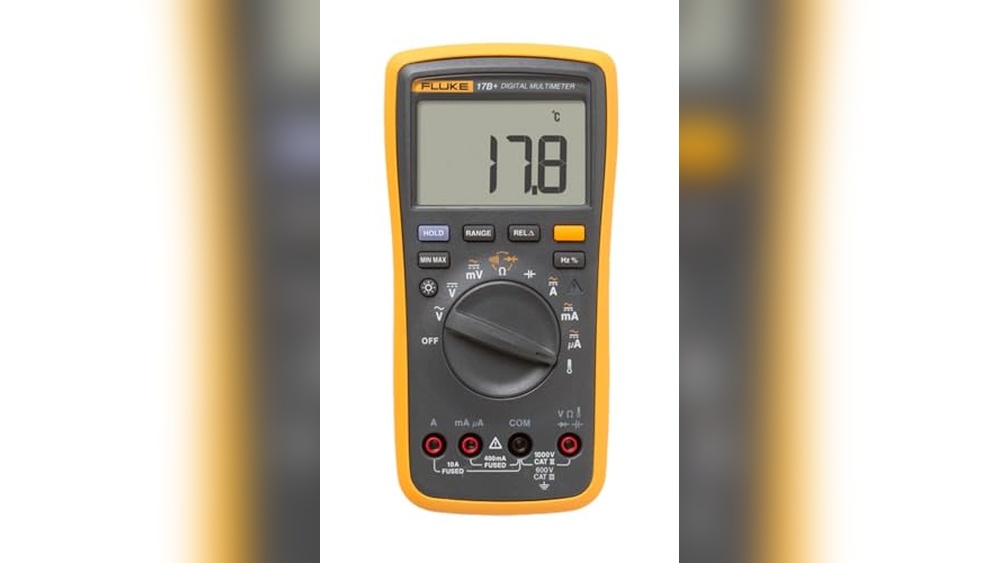
Fluke 17b+ Digital Multimeter
The best Fluke multimeter for mechanics who need reliable measurements across a wide range of electrical tests.

The Fluke 17B+ is a versatile digital multimeter designed for electrical applications, offering accurate readings for AC/DC voltage up to 1000V and current up to 10A. It covers essential functions like resistance, continuity, diode testing, and even temperature measurement with a type K thermocouple, making it a solid tool for mechanics who work on complex electrical systems.
Using this multimeter feels straightforward and dependable, providing quick diagnostics and reliable measurements that help reduce guesswork. Its safety rating and robust design give confidence when working on residential, commercial, or industrial systems, streamlining troubleshooting without adding hassle.
Key Advantages for Mechanics
- High safety rating (CAT III 600V) suitable for various electrical environments
- Wide measurement range including voltage, current, resistance, and temperature
- Includes diode and continuity tests to quickly identify faults
- Temperature measurement up to 400°C helps monitor heating/cooling systems
- Compact and lightweight design for easy handling on the job
- Accurate readings reduce errors and rework
Considerations Before Buying
- No advanced features like data logging or Bluetooth connectivity
- Display size and resolution are basic compared to some newer models
- Not designed for high-end industrial diagnostics beyond 600V CAT III
Who This Multimeter Works For
This multimeter is ideal for mechanics who need a reliable, all-in-one tool for electrical diagnostics without extra complexity. It removes the stress of uncertain readings and speeds up troubleshooting by providing consistent, clear results across multiple test types.
To get the best results, pair it with the included thermocouple for temperature checks alongside electrical tests. This adds value when working on engine or HVAC systems where temperature matters.
With its trusted brand and safety features, it offers peace of mind and fewer surprises on the job, fitting well in a practical mechanic’s toolkit.
| Best for | Why |
|---|---|
| General electrical troubleshooting | Measures voltage, current, resistance, and continuity essential for diagnosing faults |
| Temperature monitoring tasks | Supports temperature testing up to 400°C with type K thermocouple included |
| Mechanics working in residential and commercial settings | CAT III 600V safety rating ensures safe use on typical electrical systems |
| Users needing a compact, portable meter | Lightweight and ergonomically sized for easy handling on the go |
Fluke 117 Digital Multimeter
The Fluke 117 is the best Fluke multimeter for mechanics seeking reliable non-contact voltage detection and precise measurements in their work.

The Fluke 117 Digital Multimeter is designed for accurate electrical testing including resistance, continuity, frequency, and capacitance measurements. Its VoltAlert technology allows mechanics to detect AC voltage without contact, enhancing safety during diagnostics. This model also features automatic AC/DC voltage selection to simplify use and avoid manual errors.
Using this multimeter feels straightforward and efficient, especially in dimly lit or cramped spaces thanks to its large white LED backlight. The low input impedance mode reduces false readings, providing confidence in troubleshooting without second-guessing results.
Key Advantages for Mechanics
- Non-contact AC voltage detection increases safety during inspections
- AutoVolt feature automatically selects AC or DC voltage, reducing setup time
- Low input impedance prevents false readings caused by ghost voltages
- Large LED backlight enables work in poorly lit environments
- True RMS ensures accurate readings on non-linear electrical loads
- Lightweight and compact for easy handling and portability
- Long battery life supports extended use without frequent replacements
Considerations Before Buying
- Limited to standard edition size; may lack advanced features some specialists want
- Operating temperature range may restrict use in extreme environments
- No built-in Bluetooth or data logging capabilities for advanced diagnostics
Who Should Choose This Multimeter
This multimeter is ideal for mechanics who need a dependable tool for electrical troubleshooting without unnecessary complexity. It removes guesswork by offering clear readings and safety features like non-contact voltage detection, making daily tasks smoother and safer.
To get the best results, use the low impedance mode when testing circuits prone to ghost voltages to avoid misleading readings. This model offers peace of mind through reliable measurements and sturdy design.
For those who value straightforward operation and portability, the Fluke 117 fits naturally into any mechanic’s toolkit.
| Best for | Why |
|---|---|
| Mechanics working in varied lighting | Large LED backlight ensures visibility in dark engine bays |
| Quick voltage checks without contact | VoltAlert technology speeds up voltage detection safely |
| Accurate measurements on complex circuits | True RMS provides correct readings on non-linear loads |
| Users needing to avoid false readings | Low input impedance reduces ghost voltage interference |
Fluke 88v Automotive Multimeter
The Fluke 88V is the Best Fluke Multimeter for Mechanics offering precise troubleshooting on conventional and hybrid vehicles with advanced measurement features.

The Fluke 88V Automotive Multimeter is designed to diagnose electrical problems in both conventional and hybrid vehicles with accuracy and ease. It features advanced functions such as pulse width and duty cycle measurements, which are essential for mechanics working on modern automotive systems.
Using this multimeter feels reliable and efficient thanks to its large, bright display and protective input impedance that prevents damage to vehicle computer circuits. It helps mechanics save time by delivering consistent readings and clear visibility even in dimly lit environments.
Key Advantages for Automotive Use
- Specialized measurement functions tailored for automotive troubleshooting
- High 10 meg ohm input impedance protects sensitive vehicle electronics
- Bright backlight and large display ensure easy reading in all lighting
- Records Min/Max/Avg values to track electrical fluctuations
- Measures pulse width and duty cycle for advanced diagnostics
- Compact and lightweight design fits easily in mechanic toolkits
Considerations Before Buying
- Price is higher than standard multimeters, reflecting its specialized features
- May have more functions than needed for simple electrical checks
- Relatively small size might require careful handling to avoid drops
Who This Multimeter Suits Best
This multimeter is ideal for professional mechanics and serious DIYers who work on both traditional and hybrid vehicles and need reliable, detailed diagnostics. It removes guesswork and reduces the risk of damaging sensitive vehicle systems by providing accurate and safe measurements.
To get the best results, use the Min/Max/Avg recording feature to monitor fluctuating signals over time, which helps identify intermittent issues. The peace of mind from knowing your readings won’t harm vehicle electronics makes it a dependable tool in any automotive workshop.
| Best for | Why |
|---|---|
| Mechanics working on hybrid vehicles | Offers pulse width and duty cycle measurements needed for hybrid system diagnostics |
| Automotive technicians diagnosing electrical faults | High input impedance protects vehicle computers during tests |
| Workshops requiring clear visibility in varied lighting | Large display with bright backlight improves readability |
| Mobile mechanics needing portable tools | Compact size and light weight fit easily in toolkits |
Fluke 117/323 Multimeter Combo Kit
The Fluke 117/323 kit stands out as the Best Fluke Multimeter for Mechanics by combining versatile AC/DC measurement with true RMS accuracy for reliable diagnostics.

The Fluke 117/323 Multimeter Combo Kit is designed for residential and commercial electricians but fits mechanics needing precise electrical testing. It measures AC and DC voltage and current with true RMS for accuracy, helping you diagnose electrical issues confidently. The kit includes both a multimeter and a clamp meter, expanding your testing options.
Using this combo kit feels straightforward and dependable, allowing mechanics to quickly verify electrical conditions without worrying about ghost voltage or inaccurate readings. The included carrying case and test leads make it easy to take on the job, saving time and effort during daily tasks.
Key Advantages for Electrical Testing
- Measures both AC/DC voltage and current for versatile diagnostics
- True RMS functionality ensures accurate readings on complex signals
- Low input impedance on the multimeter reduces false ghost voltage readings
- Clamp meter handles up to 400 A AC current, suitable for automotive and industrial checks
- Includes test leads, TPAK mount, and carrying case for convenience
- Compact and lightweight for easy portability on the go
Considerations Before Buying
- Combo kit is designed mainly for electricians; some advanced automotive-specific features are absent
- Physical width of the kit (30.48 inches) may be bulky for tight toolboxes
- Price point is higher compared to single-function meters
Who This Suits Best
This kit works best for mechanics who regularly test electrical systems and want precise AC/DC voltage and current measurements without guesswork. It removes the stress of false readings with true RMS and low input impedance features, giving peace of mind that diagnostics are accurate and reliable.
For best results, use the clamp meter to quickly measure current without disconnecting circuits, speeding up troubleshooting. This combo is a solid choice for those valuing accuracy and ease of use over specialized automotive features.
| Best for | Why |
|---|---|
| Mechanics needing accurate voltage/current diagnostics | True RMS and low input impedance reduce false readings |
| Technicians requiring both clamp and standard multimeter functions | Combo kit includes clamp meter and multimeter for versatile testing |
| Mobile professionals needing portable, all-in-one tools | Lightweight with carrying case and test leads included |
| Users wanting reliable residential and commercial electrical testing | Designed for electricians but useful in automotive electrical troubleshooting |
Key Considerations When Choosing A Digital Multimeter
Choosing the right digital multimeter depends on the tasks you expect to perform and the environment where you will use it. Consider these factors carefully to find a tool that matches your needs:
Safety Ratings and Usage Environment
Look for multimeters with appropriate safety ratings, such as CAT III 600V, which protect you when working with residential, commercial, or industrial electrical systems. This ensures safer operation in higher energy environments.
Measurement Needs
Determine the types of measurements you require. Basic electrical work may only need AC/DC voltage and current readings, while advanced automotive or industrial diagnostics might call for pulse width, duty cycle, or temperature measurements.
Features Versus Simplicity
More features can mean better diagnostic capabilities but may also increase complexity. If you need quick, straightforward readings, a model with automatic range selection and non-contact voltage detection might be preferable.
Display and Usability
A clear, backlit display helps in low-light conditions. Consider devices with large screens and bright LED backlights if you work in dim environments.
Portability and Durability
Weight and size matter if you carry your multimeter frequently. Durable construction, good ergonomics, and included carrying cases add to usability and protection.
Common Challenges And How To Avoid Them
Misreading Voltage Types
Ensure you understand whether the multimeter automatically selects AC or DC voltage or if you need to set it manually. Automatic AC/DC selection reduces user error.
False Readings Due to Ghost Voltage
Low input impedance models help prevent false readings caused by ghost voltages. This is important when troubleshooting complex wiring.
Incorrect Probe Usage
Use the correct probes and accessories for the measurement type and current rating. Incorrect probes can damage the meter or produce inaccurate results.
Ignoring Temperature Limits
Check operating temperature ranges and avoid exposing your multimeter to environments outside those limits to ensure accuracy and device longevity.
Setup And Usage Tips
Calibration and Battery Checks
Regularly verify calibration if your work requires high accuracy. Also, check battery levels before use to avoid interruptions during measurements.
Using Non-Contact Voltage Detection
When available, use non-contact voltage detection first as a quick safety check before probing live circuits.
Utilizing Advanced Features
Familiarize yourself with features like Min/Max/Average recording and duty cycle measurements to get the most out of your multimeter.
Frequently Asked Questions
What does CAT III 600V safety rating mean?
It indicates the device is safe to use on fixed installations like distribution panels and circuit breakers up to 600 volts, offering protection against transient voltage spikes.
Why is low input impedance important?
It prevents false readings caused by ghost voltages, ensuring more reliable measurements in complex electrical systems.
Can these multimeters measure temperature?
Some models include temperature measurement capabilities using a thermocouple, which is useful for HVAC and other heating/cooling system diagnostics.
What is true RMS and why does it matter?
True RMS provides accurate readings for AC signals with irregular waveforms, which is important for troubleshooting non-linear loads.
Are these multimeters suitable for automotive diagnostics?
Certain models include features like pulse width and duty cycle measurements, making them suitable for automotive troubleshooting.
Final Thoughts On Selecting A Multimeter
Understanding your specific measurement requirements and working conditions is key to choosing the right multimeter. Safety features, measurement capabilities, and ease of use vary across models, so focus on what fits your tasks best. Taking time to familiarize yourself with the device’s functions will improve accuracy and efficiency. With the right tool, electrical testing and troubleshooting become more straightforward and reliable.

I’m Asif Ur Rahman Adib, an Electrical Engineer and lecturer. My journey began in the lab, watching students struggle with instruments they used every day without fully understanding them. Over time, I’ve combined teaching, research, and hands-on experience to help others grasp electrical concepts clearly, safely, and practically—whether it’s understanding a circuit or mastering a multimeter.