Finding The Right Multimeter For Hvac Work
If you’ve spent time working on HVAC systems, you know that accurate electrical measurements are crucial. Whether you’re diagnosing a flame sensor or checking voltage levels, having the right tool makes the job easier and safer.
Choosing the best Fluke multimeter for HVAC can be tricky. There are different models with features that overlap but also vary in focus. Some tools combine clamp meters and multimeters, while others specialize in specific measurements. Price ranges differ, and it’s not always clear which features are essential versus nice-to-have.
This article will help you understand what matters most when picking a Fluke multimeter for HVAC tasks. It focuses on practical needs and common trade-offs, so you can find the tool that fits your work style and budget.
What Matters Most In Hvac Multimeters
When selecting a multimeter for HVAC, consider the types of measurements you perform regularly. True RMS capability ensures accuracy with complex signals, while microamp measurements are key for testing flame sensors. Built-in thermometers can simplify temperature checks without extra tools.
Another factor is whether you prefer a standalone multimeter or a combo with a clamp meter. Clamp meters make current measurements safer and quicker but might add bulk. Portability, ease of use, and connectivity options like Bluetooth can also influence your choice.
Common Challenges In Choosing
It’s easy to get overwhelmed by specs and technical jargon. Buyers often focus too much on price or assume more features mean better value. However, not all features are necessary for every HVAC technician. Some may prioritize ruggedness and safety ratings, while others want a meter that works well in tight spaces or low light.
Understanding your typical tasks and work environment will guide you toward a balanced choice without overspending or missing critical functions.
Below, you’ll find a selection of Fluke multimeters suited for HVAC professionals. Each product was chosen to cover different needs and preferences, from simple multimeters to advanced clamp meter combos.
Fluke 902 Fc Hvac Clamp Meter
The best Fluke multimeter for HVAC professionals needing precise True-RMS measurements and flame rod current testing.

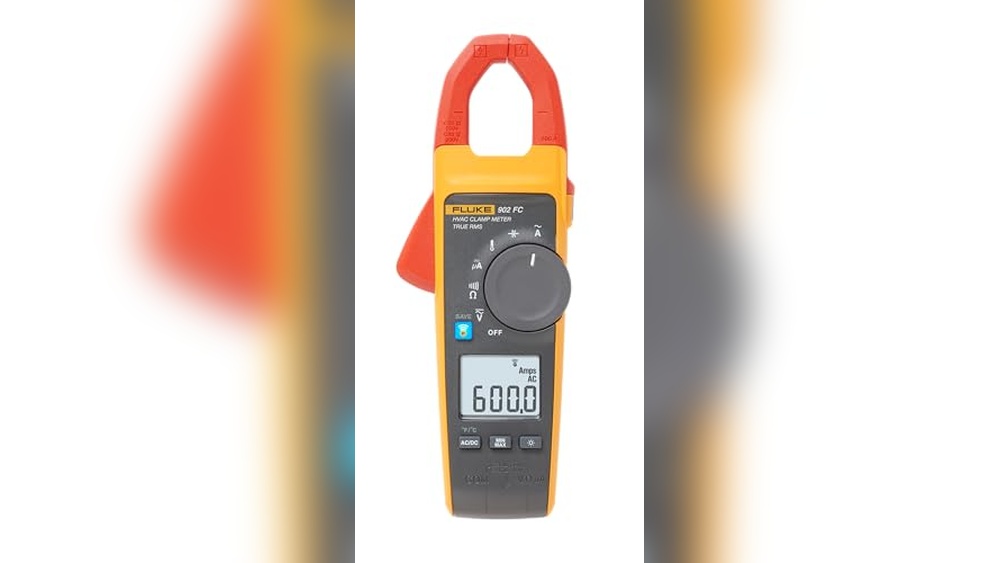
The Fluke 902 FC HVAC Clamp Meter is designed specifically for HVAC technicians who need to measure current, voltage, and temperature accurately. It supports flame rod current measurement and thermistor resistance testing, helping diagnose HVAC system issues effectively. The included Bluetooth connectivity allows you to wirelessly send data to your phone for easier reporting.
Using this clamp meter feels reliable and straightforward, with True-RMS technology ensuring accurate readings even on complex signals. Its compact size and clear display let you work confidently in tight spaces without second-guessing your measurements.
Key Advantages for HVAC Testing
- Measures very low flame rod currents for precise combustion analysis
- Extended resistance range to test thermistors up to 60 kiloohms
- Captures flue gas temperature directly for comprehensive diagnostics
- True-RMS voltage and current readings improve accuracy on non-linear loads
- Bluetooth connection via Fluke Connect app streamlines data sharing
- Compact size fits easily in HVAC technician toolkits
- Yellow color improves visibility on job sites
Considerations Before Buying
- Designed mainly for HVAC professionals, may be overkill for general electrical use
- Price is higher than basic clamp meters due to specialized features
- Limited to clamp meter functions; does not replace all types of multimeters
Where This Meter Excels
This clamp meter is best for HVAC technicians who regularly test flame rods and thermistors and need temperature measurements in one device. It removes guesswork by providing accurate True-RMS readings and specialized HVAC diagnostics in a single tool.
Using the Bluetooth feature can save time by letting you document results on your phone immediately, reducing paperwork errors. For better results, regularly calibrate the meter and use the Fluke Connect app to track trends over time.
Reliable readings and ease of use reduce stress on the job, helping you avoid surprises during system maintenance or troubleshooting. It’s a practical choice for anyone serious about HVAC electrical testing.
| Best for | Why |
|---|---|
| HVAC flame rod testing | Supports microamp DC current measurements needed for flame rod diagnostics |
| Thermistor resistance measurement | Extended resistance range up to 60 kiloohms covers common HVAC sensors |
| Flue gas temperature capture | Built-in temperature measurement helps monitor combustion efficiency |
| Wireless data management | Bluetooth connects to Fluke Connect app for easy logging and sharing |
Fluke 116/323 Hvac Combo Kit
The best Fluke multimeter for HVAC professionals, combining precise AC/DC voltage and current testing with a built-in thermometer for accurate HVAC diagnostics.

The Fluke 116/323 HVAC Combo Kit combines a digital multimeter and clamp meter designed specifically for HVAC work. It simplifies the task of measuring AC/DC voltage, AC current up to 400 A, and microamps to test flame sensors. The kit includes a temperature probe and test leads, making it a complete toolkit for HVAC technicians.
Using this combo kit feels reliable and efficient, thanks to features like low input impedance to avoid false readings and true RMS measurement for accuracy on non-linear signals. The compact design and included carrying case add convenience, helping you work confidently in various HVAC environments.
Key Advantages for HVAC Testing
- Built-in thermometer in the multimeter for direct temperature readings
- Microamps measurement capability for flame sensor testing
- Low input impedance reduces false voltage readings
- Clamp meter measures high AC current up to 400 A safely
- True RMS technology ensures accurate voltage and current readings on complex signals
- Complete kit with test leads, temperature probe, TPAK, and carrying case
Considerations Before Buying
- Limited to HVAC-specific features; may lack broader industrial testing functions
- Relatively large width dimension may affect portability in tight spaces
- Price may be higher than basic multimeters without HVAC-focused tools
Where This Tool Fits Best
This combo kit is ideal for HVAC technicians who need a reliable, all-in-one tool to measure electrical parameters and temperature on the job. It removes the guesswork of flame sensor testing and voltage accuracy, saving time and reducing troubleshooting errors.
For those working regularly on HVAC systems, the built-in thermometer and true RMS clamp meter provide consistent, trustworthy readings. A useful tip is to familiarize yourself with the low input impedance feature to avoid misdiagnosis from ghost voltages.
Overall, this kit brings peace of mind through its accuracy and comprehensive accessories, fitting well into the practical workflow of HVAC professionals.
| Best for | Why |
|---|---|
| HVAC flame sensor diagnostics | Microamps measurement is tailored for flame sensor testing |
| AC current measurement up to 400 A | True RMS clamp meter handles high current loads safely |
| Temperature readings during HVAC system checks | Built-in thermometer in the multimeter eliminates need for separate tools |
| Field technicians needing portability | Includes carrying case and test leads for organized transport |
Fluke 116 Hvac Multimeter
The Fluke 116 HVAC Multimeter stands out as the best Fluke multimeter for HVAC professionals needing precise temperature and flame sensor testing.

The Fluke 116 HVAC Multimeter is a digital multimeter designed specifically for HVAC professionals, helping to simplify electrical and temperature measurements in HVAC systems. It includes a built-in thermometer that measures temperatures from -40°C to 400°C, making it convenient for diagnosing heating and cooling issues.
Using this multimeter feels reliable and efficient, especially with its large white LED backlight that aids work in dark or confined spaces. Its low input impedance reduces false readings from ghost voltage, giving you confidence in your measurements every time.
Key Benefits for HVAC Testing
- Temperature measurement integrated, eliminating the need for a separate thermometer.
- Microamps testing to check flame sensors accurately.
- Low input impedance helps avoid misleading ghost voltage readings.
- Bright LED backlight ensures visibility in poorly lit areas.
- Compact and lightweight design for easy portability on the job.
- Trusted Fluke brand with strong reliability in professional settings.
Considerations Before Buying
- Designed specifically for HVAC; may lack some functions desired by general electricians.
- Price is higher than basic multimeters, reflecting specialized features.
- Limited color options, only available in yellow.
Who Should Choose This
This multimeter is ideal for HVAC technicians who want an all-in-one tool to measure electrical values and temperature without switching devices. It removes guesswork by providing accurate flame sensor microamp readings and temperature checks, helping reduce troubleshooting time.
For best results, use it regularly with proper probe handling to avoid false signals, leveraging its low input impedance. This ensures safer, more reliable diagnostics and fewer surprises on the job.
Its combination of features and trusted build makes it a dependable companion for any HVAC professional’s toolkit.
| Best for | Why |
|---|---|
| HVAC professionals diagnosing heating and cooling systems | Built-in thermometer and flame sensor microamps test suit HVAC troubleshooting. |
| Work in low-light or confined spaces | Large white LED backlight improves visibility during measurements. |
| Technicians needing accurate voltage readings | Low input impedance reduces false readings from ghost voltage. |
| Field workers requiring a portable tool | Compact size and lightweight design make it easy to carry and use on site. |
Fluke 17b+ Digital Multimeter
The best Fluke multimeter for HVAC professionals offering reliable electrical measurements with essential safety features.

The Fluke 17B+ Digital Multimeter is designed for electrical applications, measuring AC/DC voltage up to 1000V, current up to 10A, resistance, continuity, and temperature. This tool helps HVAC technicians and electricians diagnose and troubleshoot electrical systems safely and efficiently.
Using this multimeter feels straightforward and dependable. Its CAT III 600V safety rating ensures confidence when working on various residential and commercial systems. The included temperature measurement feature adds versatility without complicating the testing process.
Key Advantages for HVAC and Electrical Work
- High safety rating (CAT III 600V) protects users in typical HVAC and electrical environments.
- Measures AC/DC voltage up to 1000V and current up to 10A for diverse tasks.
- Essential functions like resistance, continuity, capacitance, and diode testing support quick troubleshooting.
- Temperature measurement with a type K thermocouple simplifies heating and cooling system checks.
- Compact and lightweight design improves portability on job sites.
- Bright yellow color makes it easy to spot in toolkits.
Considerations Before Buying
- Does not include advanced features like data logging or Bluetooth connectivity.
- Limited to current measurements up to 10A, which may not cover some heavy-duty applications.
- No backlight on the display, which might affect visibility in low-light conditions.
Who This Multimeter Works For
This multimeter is ideal for HVAC technicians and electricians who need a reliable, all-in-one tool to measure voltage, current, resistance, and temperature with confidence. It removes the guesswork when diagnosing electrical issues, helping reduce downtime and repair errors.
To get the best results, use the temperature feature regularly during HVAC maintenance to detect system inefficiencies early. The solid safety rating means fewer worries about electrical hazards, offering peace of mind on every job.
| Best for | Why |
|---|---|
| HVAC system diagnostics | Includes temperature measurement and essential electrical tests |
| Residential and commercial electrical work | CAT III 600V safety rating ensures protection in common settings |
| Field technicians needing portability | Compact size and lightweight design for easy transport |
| Basic electrical troubleshooting | Essential functions like diode and continuity testing speed up repairs |
Understanding Your Needs For Hvac And Electrical Testing
Before selecting a clamp meter or multimeter, consider the specific tasks you will perform most often. HVAC professionals typically require tools that handle microamp measurements for flame sensors and temperature readings, while general electricians may prioritize higher voltage ranges and additional functions like diode and continuity tests.
Think about whether you need a combo kit for versatility or a single-purpose device for focused tasks. Also, evaluate the importance of wireless connectivity and data logging features for your workflow.
Key Factors To Consider When Choosing A Clamp Meter Or Multimeter
Accuracy and Measurement Types
True RMS measurement is essential for accurate readings on non-linear signals, common in HVAC systems. Verify the meter supports the voltage, current, and resistance ranges required by your applications.
Additional Features
Features like built-in thermometers, microamp measurements, and low input impedance can prevent false readings and add convenience. Consider whether these features align with your typical work scenarios.
Durability and Safety Ratings
Look for meters with appropriate safety ratings (e.g., CAT III 600V) to ensure protection when working in residential and commercial environments. Durable construction supports longer tool life under demanding conditions.
Common Buyer Concerns And How To Address Them
Is Wireless Connectivity Necessary?
Bluetooth and wireless features can streamline data collection and sharing but may add complexity. If you value hands-free operation or remote monitoring, these features are beneficial; otherwise, a traditional meter might suffice.
How Important is the Size and Weight?
Compact and lightweight meters improve portability and ease of use during extended tasks. However, larger meters may offer bigger displays and extra features. Balance portability with functionality based on your work environment.
What About Battery Life and Power Source?
Check the expected battery life and type of batteries used. Long-lasting batteries reduce downtime, especially in fieldwork, but ensure the battery type is convenient for you to replace or recharge.
Tips For Proper Use And Maintenance
Keep your meter clean and store it in a protective case to extend its lifespan. Regularly check the leads and connectors for wear or damage. Calibrate your meter according to manufacturer guidelines to maintain accuracy.
Use the meter within its specified ranges to avoid damage. Always follow safety instructions when working with live circuits.
Frequently Asked Questions
What is the advantage of True RMS meters over standard meters?
True RMS meters provide accurate readings on non-linear loads and distorted waveforms, which are common in modern electrical systems, ensuring reliability in your measurements.
Can I use an HVAC multimeter for general electrical work?
Yes, HVAC multimeters often include features useful for general electrical testing, but ensure the meter meets the voltage and current ranges required for your tasks.
How do microamp measurements help in HVAC applications?
Microamp measurements are crucial for testing flame sensors, allowing technicians to verify proper flame detection and safety system operation.
Are combo kits better than individual meters?
Combo kits offer versatility by combining features of clamp meters and multimeters, which can be convenient. However, if you have specific needs, a specialized meter might be more efficient.
What safety features should I look for in a multimeter?
Look for safety ratings like CAT III or higher, proper insulation, and overload protection to ensure safe operation in various electrical environments.
Final Thoughts On Choosing The Right Meter
Selecting the right clamp meter or multimeter depends on understanding your primary use cases and balancing features with ease of use. Consider accuracy, safety, and additional functionalities that match your work environment. Taking time to evaluate these factors will help you find a tool that supports reliable and efficient measurements without unnecessary complexity.

I’m Asif Ur Rahman Adib, an Electrical Engineer and lecturer. My journey began in the lab, watching students struggle with instruments they used every day without fully understanding them. Over time, I’ve combined teaching, research, and hands-on experience to help others grasp electrical concepts clearly, safely, and practically—whether it’s understanding a circuit or mastering a multimeter.