Finding The Right Handheld Multimeter Can Be Tricky
Maybe you’ve needed to check a battery or troubleshoot a home electrical issue. A handheld multimeter seems like the perfect tool, but picking the right one isn’t always straightforward. There are many options with different features, sizes, and price points.
Some multimeters focus on simple measurements, while others offer more advanced capabilities. Balancing ease of use, accuracy, and safety can feel overwhelming. Sometimes a higher price doesn’t always mean better value for your specific needs.
This guide will help you understand what matters most when choosing a handheld multimeter. It aims to clear up common confusions and help you find a tool that fits your tasks and budget without unnecessary extras.
Who Needs A Handheld Multimeter?
Handheld multimeters are useful for a wide range of people. Homeowners who want to test outlets, batteries, or appliances will appreciate basic functions. Hobbyists and car enthusiasts often need more detailed measurements. Professionals might look for durability and advanced features for daily use.
Knowing what you want to measure most often can help narrow down the choices.
What To Keep In Mind When Choosing
Think about the main tasks you need to perform. Do you require simple voltage checks, or do you also need to measure current, resistance, or temperature? Consider how often you’ll use the device and in what environment. Size, weight, and display readability can impact convenience.
Safety ratings and the type of measurements supported are important, especially for more demanding electrical work. Also, some models offer extra protections or alerts that prevent mistakes during testing.
Common Pitfalls To Avoid
One common mistake is buying a multimeter that’s too complex or too basic for your needs. Overpaying for features you won’t use can be frustrating. Another is overlooking safety features or user-friendly design elements that make regular use easier and safer.
Also, pay attention to how the device signals correct test lead placement and how clear the readings are under different lighting conditions.
Below, you’ll find a selection of handheld multimeters chosen to cover a range of typical requirements and budgets. Each has been picked to help you make an informed choice based on what matters most for your situation.
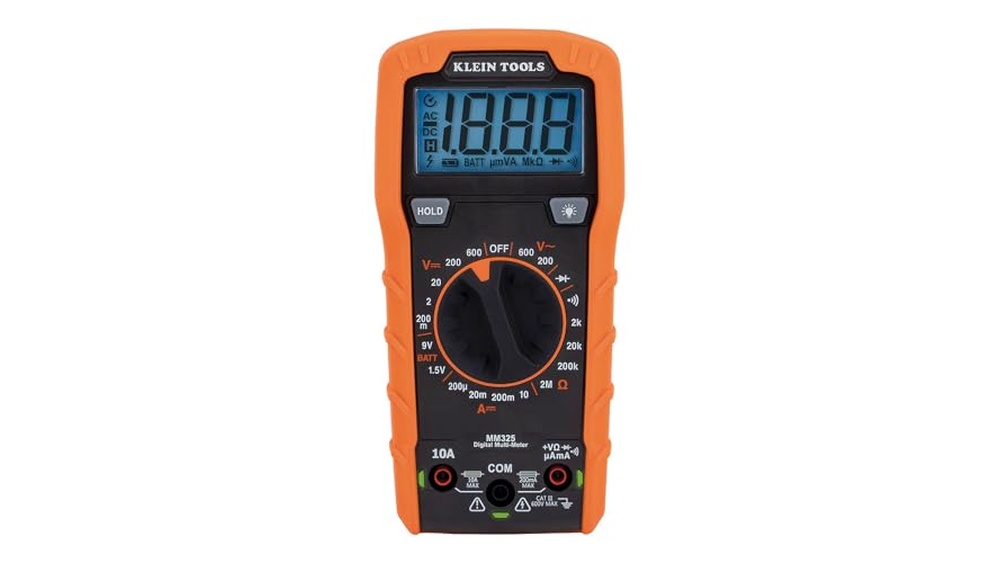
Klein Tools Mm325 Multimeter
The Klein Tools MM325 is a reliable choice for the Best Handheld Multimeter with versatile measurement features for both professionals and DIYers.

The Klein Tools MM325 Multimeter is a compact device designed to measure AC/DC voltage up to 600V, DC current, resistance, and test batteries and diodes. It helps solve common electrical troubleshooting needs with clear and manual-ranging readings, making it suitable for various electrical tasks. The backlit LCD ensures you can work comfortably even in low-light environments.
Using this multimeter feels straightforward and dependable thanks to the lead-alert feature that confirms proper test lead placement for safer, more accurate measurements. Its compact size and convenient features like test lead holders and a kickstand make it practical for hands-free use and easy storage during projects.
Key Advantages for Electrical Testing
- Measures multiple parameters including voltage, current, resistance, continuity, diode, and battery tests
- Lead-alert LEDs improve measurement accuracy and user safety
- Backlit display enhances readability in dim conditions
- Includes practical features such as test lead holders and a kickstand for convenience
- Compact size and light weight for easy handling and transport
- Compatible with optional magnetic hanger for hands-free operation
Considerations Before Buying
- Manual-ranging may require more user input compared to auto-ranging multimeters
- Limited to 600V AC/DC voltage and 10A DC current max, which may not suit high-power applications
- No wireless connectivity or advanced digital logging features
Who This Multimeter Works For
This multimeter is ideal for electricians, technicians, and DIY enthusiasts who need a reliable, versatile handheld device for everyday electrical measurements. It removes guesswork with lead-alert safety indicators and clear, manual-ranging readings, reducing errors and improving confidence on the job.
For best results, ensure test leads are correctly placed to benefit from the lead-alert feature fully. Its practical design minimizes hassle during measurements and offers peace of mind through dependable accuracy and safety features. I find it a sensible tool when working in varied lighting and tight spaces.
| Best for | Why |
|---|---|
| Home electrical troubleshooting | Measures common household voltages and tests battery health with ease |
| Professional electricians | Lead-alert protection enhances safety during on-site testing |
| DIY electronics projects | Versatile functions cover voltage, current, resistance, and diode tests |
| Low-light work environments | Backlit LCD provides clear readings when lighting is poor |
Astroai Digital Multimeter Am33d
This Best Handheld Multimeter offers reliable measurements for electrical troubleshooting with versatile functions ideal for both home and automotive use.

The AstroAI Digital Multimeter AM33D is a handheld device designed to measure voltage, current, resistance, continuity, and diode functionality. It helps users solve common electrical problems around the house, in vehicles, and with electronics by providing accurate readings in a compact form.
Using this multimeter feels straightforward thanks to its backlit LCD screen and clear display. It offers consistent measurements with minimal setup, making it practical for anyone needing quick and reliable electrical diagnostics without fuss.
Key Advantages for Electrical Testing
- Measures AC/DC voltage, DC current, resistance, continuity, and diode accurately
- Backlit LCD display improves visibility in low-light conditions
- Double fuse protection reduces risk of damage from overload
- Includes data hold and auto shutoff for convenience and battery saving
- Silicone cover enhances durability and user safety
- Lightweight and compact for easy portability
- Comes with batteries, test leads, and user manual for immediate use
Considerations Before Buying
- Cannot measure all AC current and AC voltage below 100mV
- Requires careful placement of test lead plugs and rotary switch for accurate readings
- Sampling speed is moderate at about twice per second, which may not suit very fast measurements
When This Fits Your Needs
This multimeter is best suited for homeowners and hobbyists who need a reliable tool for electrical troubleshooting without overly complex features. It removes guesswork by providing clear readings and basic safety protections, making it easier to check outlets, batteries, and automotive circuits.
To get the best results, ensure test leads are fully inserted and the rotary switch is correctly set according to the measurement type. This care helps avoid errors and extends the tool’s usability. Its durable design also offers peace of mind for safe handling during routine checks.
| Best for | Why |
|---|---|
| Home electrical troubleshooting | Accurately tests outlets, fuses, and household wiring |
| Automotive circuit diagnostics | Measures vehicle battery and charging system parameters |
| Electronics hobbyists | Offers essential measurements for small electronics projects |
| Users needing safe, portable testing | Includes protective silicone cover and double fuse safety |
Fluke 107 Handheld Digital Multimeter
The Fluke 107 stands out as the Best Handheld Multimeter for measuring AC/DC voltage and current with reliable safety features.

The Fluke 107 is a handheld digital multimeter designed for measuring AC and DC voltage, current, resistance, and capacitance. It also offers diode testing and frequency measurements, making it suitable for a range of electrical troubleshooting tasks. Its CAT III 600 V safety rating ensures protection while working on industrial or residential circuits.
Using this multimeter feels straightforward and efficient thanks to its backlit display and data hold function, which help you take accurate readings even in low-light conditions. Its compact size and light weight make it easy to carry and handle, providing confidence and speed during daily use.
Key Advantages for Electrical Testing
- Measures both AC/DC voltage and current with ease
- Includes resistance, capacitance, diode, frequency, and duty cycle tests
- Backlit display enhances visibility in dim environments
- Data hold feature keeps readings stable for better accuracy
- CAT III 600 V safety rating for reliable protection
- Compact and lightweight for easy portability
- Trusted Fluke brand ensures quality and durability
Considerations Before Buying
- Does not measure temperature or advanced parameters like true RMS
- Limited to a basic range of measurements suitable for general use
- Screen size is small, which may affect readability for some users
When This Makes Sense
This multimeter fits best for electricians, technicians, and hobbyists who need a reliable, straightforward tool for basic electrical measurements. It removes the stress of inaccurate readings and potential safety hazards with its solid safety rating and dependable features. For better results, ensure you use the data hold function when measuring unstable signals to capture steady readings.
Its lightweight build and clear display give peace of mind during extended use, minimizing surprises in troubleshooting. If you value simplicity combined with essential testing functions, this device is a strong choice for your toolkit.
| Best for | Why |
|---|---|
| Basic electrical troubleshooting | Measures common parameters needed for quick checks |
| Field technicians | Compact and lightweight for easy portability on site |
| Safety-conscious users | CAT III 600 V rating protects against high-voltage hazards |
| Users needing clear visibility | Backlit display aids in low-light working conditions |
Fluke 17b+ Digital Multimeter
The Fluke 17B+ stands out as the Best Handheld Multimeter for those needing accurate electrical measurements with reliable safety features.

The Fluke 17B+ is a handheld digital multimeter designed for electrical troubleshooting and testing. It measures AC/DC voltage up to 1000V, current up to 10A, resistance, continuity, capacitance, diode functionality, frequency, and temperature. Its CAT III 600V safety rating ensures protection while working on common electrical systems.
Using this multimeter provides confidence through accurate readings and versatile functions. The included temperature measurement capability with a type K thermocouple helps monitor heating and cooling systems easily, making it a dependable tool for professionals and serious DIYers alike.
Key Benefits for Electrical Testing
- High safety rating (CAT III 600V) for secure use in various settings
- Wide measurement range including voltage, current, resistance, and temperature
- Quick diode testing to identify faulty components efficiently
- Capacitance and frequency measurements for advanced troubleshooting
- Compact and lightweight design enhances portability on job sites
- Clear digital display for easy reading of results
Considerations Before Buying
- Does not include Bluetooth or app connectivity for data logging
- May require familiarity with multimeter functions for full use
- Temperature measurement limited to 400°C with included thermocouple
When This Is the Right Tool
The Fluke 17B+ is ideal for electricians and technicians who need a reliable, safe, and versatile handheld multimeter without extra smart features. It removes guesswork by offering precise readings across multiple electrical parameters, helping reduce troubleshooting time and potential errors.
To get the best results, ensure proper use of the thermocouple for temperature checks and familiarize yourself with the dial settings for different measurements. This approach provides peace of mind with consistent, repeatable data and a robust safety standard for everyday electrical work.
| Best for | Why |
|---|---|
| Electricians and field technicians | High safety rating and broad measurement capabilities support varied job site tasks |
| HVAC professionals | Includes temperature measurement for heating and cooling system diagnostics |
| DIY electrical troubleshooting | User-friendly interface with essential functions for home electrical repairs |
| Industrial maintenance teams | Durable design with reliable readings for regular equipment checks |
Understanding Your Needs For A Multimeter
Choosing the right multimeter depends largely on what you plan to measure and how often you will use the device. Consider whether your tasks require basic voltage and resistance checks or more advanced features like capacitance, frequency, and temperature measurements.
Frequency of Use and Application
If you are a hobbyist or occasional user, a simple model with essential functions may suffice. For professional or industrial use, a multimeter with broader measurement capabilities and higher safety ratings is advisable.
Accuracy vs. Convenience
More precise meters often come with additional features but may have a steeper learning curve. Evaluate if you need manual ranging for accuracy or if auto-ranging models better suit your convenience.
Common Concerns When Using Multimeters
Proper Test Lead Placement
Incorrect insertion of test leads is a frequent source of errors. Ensure leads are fully and correctly inserted to avoid inaccurate readings or potential damage.
Understanding Measurement Limits
Some multimeters do not measure certain parameters below specific thresholds, such as low AC voltage or current. Review the meter’s specifications carefully to confirm it meets your measurement range needs.
Safety Precautions
Look for multimeters with safety ratings appropriate to your work environment (e.g., CAT III 600 V). Features like fused inputs and lead-alert indicators enhance safety during use.
Tips For Effective Multimeter Use
Reading the Display
Use models with backlit displays for better visibility in low-light environments. Pay attention to polarity and unit indicators to interpret readings correctly.
Data Retention
Features such as data hold allow you to freeze readings, which can be helpful when taking measurements in awkward or hard-to-see positions.
Maintenance Practices
Regularly check the test leads for wear and replace batteries promptly to ensure consistent performance. Store the multimeter in a protective case to prevent damage.
Frequently Asked Questions
What is the difference between manual and auto-ranging multimeters?
Manual ranging requires you to select the measurement range, which can improve accuracy but needs more user input. Auto-ranging automatically selects the range, making it simpler for general use.
Can I use a multimeter to test car batteries?
Yes, most multimeters can test battery voltage and condition. Ensure the meter can handle the voltage range typical for automotive batteries.
How important is the safety category rating?
The safety rating indicates the environments for which the multimeter is designed. Higher ratings provide better protection against electrical hazards in industrial or high-energy environments.
Why does my multimeter show no reading sometimes?
This can result from incorrect test lead placement, a wrong function setting, or attempting to measure a parameter outside the meter’s capability. Double-check your setup and consult the manual.
Are backlit displays necessary?
Backlit displays are beneficial in dim or low-light conditions, improving readability and reducing user error.
Final Thoughts On Selecting A Multimeter
When choosing a multimeter, focus on matching the tool to your typical tasks and safety needs. Consider the balance between features, ease of use, and accuracy that fits your experience and application. Understanding common pitfalls and maintenance requirements will help you get consistent, reliable readings from your multimeter over time.

I’m Asif Ur Rahman Adib, an Electrical Engineer and lecturer. My journey began in the lab, watching students struggle with instruments they used every day without fully understanding them. Over time, I’ve combined teaching, research, and hands-on experience to help others grasp electrical concepts clearly, safely, and practically—whether it’s understanding a circuit or mastering a multimeter.