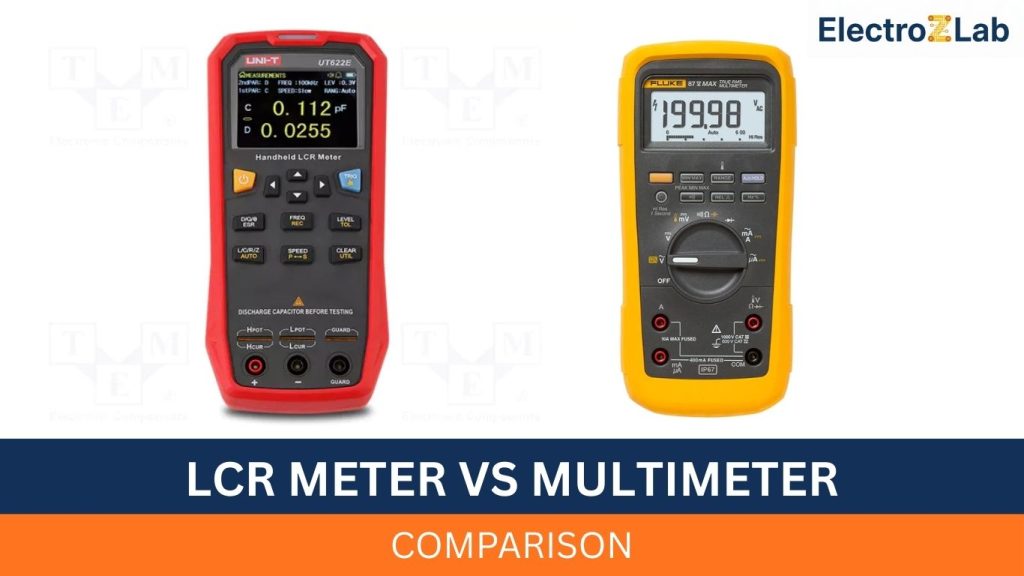
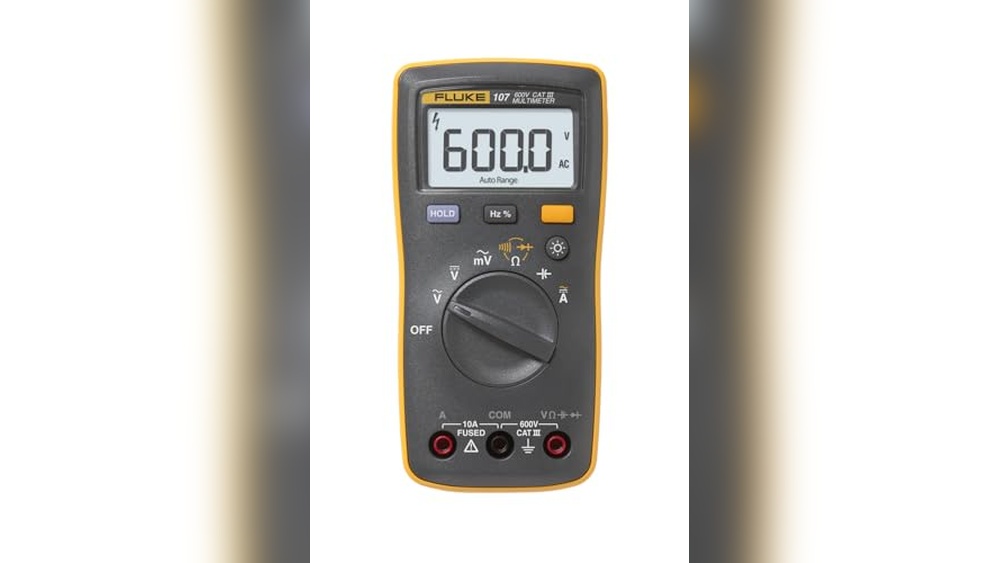
The Fluke 106 and Fluke 107 are handheld digital multimeters made for quick electrical measurements.
They mainly differ in measurement features and display options, affecting their everyday use.
Imagine needing to test voltage or current on the go, sometimes in dim lighting. You want a tool that’s easy to hold and simple to read. At times, you need to check resistance or frequency without fuss. Both models fit in a pocket but have different extras. This review will help you decide which suits your daily tasks better.
How Practical Is The Fluke 107 For Everyday Electrical Testing?
Yes, the Fluke 107 covers essential functions for most household and light professional use. It offers a handy balance between features and portability.
I found the Fluke 107 reliable for measuring AC/DC voltage, current, resistance, and capacitance. The backlit display and data hold feature make it easier to work in varying light conditions. The safety rating assures me it can handle typical electrical environments safely. It’s compact yet solid, fitting well in my hand during quick checks. The diode test and frequency measurements add useful versatility without overcomplicating the device.

Key features that matter in the Fluke 107 multimeter
- Measures AC/DC voltage, current, resistance, and capacitance
- Backlit display for working in low light
- Data hold function for easier readings
- Diode, frequency, and duty cycle testing
- CAT III 600 V safety rating
Practical advantages experienced with this model
- Compact and lightweight design fits easily in a pocket
- Clear display reduces eye strain during measurements
- Simple controls minimize setup time
- Durable build withstands daily handling
- Good safety rating provides peace of mind
Considerations when using the Fluke 107
- Limited to basic testing functions, no advanced features
- Display size might feel small for some users
- Not ideal for specialized industrial measurements
When the Fluke 107 is a sensible choice
This multimeter is best for DIYers and professionals who need reliable basic measurements. It makes life easier by providing quick results without extra complexity. Beginners will find it straightforward, while experienced users can appreciate its essential features. In my experience, using the backlit display during dim conditions is especially helpful. A practical tip is to use the data hold when working in tight spaces to avoid losing readings. This tool offers dependable performance and safety, which gives peace of mind during daily tasks.
What Makes The Fluke 106 Multimeter Suitable For Quick Measurements?
It depends on your specific needs, but the Fluke 106 focuses on straightforward voltage and resistance readings. It’s a simpler tool compared to the 107.
The Fluke 106 is designed for fast checks without extra measurement modes. I found it easy to use for basic voltage and resistance tests, especially when I didn’t need capacitance or frequency functions. Its compact size and simple interface make it convenient for quick troubleshooting. The safety rating is solid for general use, but it lacks some of the additional features found in the 107. For straightforward tasks, it gets the job done without distractions.

Features that define the Fluke 106 multimeter
- Measures AC/DC voltage, resistance, and continuity
- Simple display with clear digits
- Compact and lightweight design
- CAT III 600 V safety rating
- Basic functionality focused on essential tasks
What stands out in daily use of the Fluke 106
- Quick startup and measurement response
- Easy to carry for fieldwork or home use
- Simple controls reduce user errors
- Good for occasional electrical checks
Possible limitations of the Fluke 106
- No capacitance or frequency measurement
- Lacks backlit display for dark environments
- Fewer testing modes compared to more advanced meters
Best scenarios to use the Fluke 106 handheld multimeter
This model suits those who need straightforward voltage and resistance checks without extra features. It’s ideal for beginners or anyone wanting a no-fuss device for quick troubleshooting. After buying, you’ll find it easy to grab and use without complex settings. In my experience, its simplicity speeds up routine tests. A useful tip is to rely on its portability when moving between job sites or rooms. This meter offers basic reliability and safety for common electrical tasks.
Comparing Fluke 107 And Fluke 106 In Practical Electrical Work
I used both multimeters in various real-life tasks like checking household wiring, testing batteries, and troubleshooting electronics. I paid attention to how each handled different measurements and ease of use. The comparison focuses on features, safety, portability, and convenience. Both meters performed well for basic tasks but differ in versatility and display options. Here’s how they stack up across key aspects.
Which multimeter offers more measurement functions?
The Fluke 107 supports more measurement types, including capacitance and frequency. The Fluke 106 is limited to voltage and resistance.
| Metric | Fluke 107 | Fluke 106 |
|---|---|---|
| Voltage (AC/DC) | Yes | Yes |
| Resistance | Yes | Yes |
| Capacitance | Yes | No |
| Frequency | Yes | No |
| Diode Test | Yes | No |
Ratings: Fluke 107 offers broader functionality; Fluke 106 covers basics well.
Edge: The 107 suits users needing more testing options; the 106 fits quick, simple checks.
How do the displays compare for usability in different lighting?
The Fluke 107 includes a backlit display, aiding visibility in dim conditions. The Fluke 106 has a simple display without backlight.
| Metric | Fluke 107 | Fluke 106 |
|---|---|---|
| Backlit Display | Yes | No |
| Data Hold Feature | Yes | No |
| Display Size | Compact with clear digits | Compact with clear digits |
Ratings: Fluke 107 is better for low light and data hold; Fluke 106 keeps it basic.
Edge: 107 is preferred when working in varied lighting; 106 works fine in well-lit spaces.
Which device is easier to carry and handle daily?
Both are compact and lightweight, but the Fluke 106 is slightly simpler and more minimalistic.
| Metric | Fluke 107 | Fluke 106 |
|---|---|---|
| Weight (lbs) | 0.44 | Approx. 0.4 |
| Dimensions (inches) | 2.17 x 11.0 x 8.27 | Smaller, more compact |
| Portability | Good | Excellent |
Ratings: Both are portable; 106 is slightly more pocket-friendly.
Edge: 106 is ideal for quick grab-and-go; 107 balances size with extra features.
How do safety ratings and durability compare?
Both models hold a CAT III 600 V safety rating, suitable for most household and light industrial tasks.
| Metric | Fluke 107 | Fluke 106 |
|---|---|---|
| Safety Rating | CAT III 600 V | CAT III 600 V |
| Build Quality | Durable and sturdy | Durable and sturdy |
Ratings: Both offer strong safety and build quality.
Edge: Equal, both reliable for safe use in similar conditions.
Which model offers better value for everyday users?
The Fluke 106 is more affordable and covers essential tasks. The Fluke 107 costs more but offers added functions and features.
| Metric | Fluke 107 | Fluke 106 |
|---|---|---|
| Price | Higher | Lower |
| Measurement Variety | More | Basic |
| Display Features | Backlit, Data Hold | Simple |
Ratings: 106 is budget-friendly for simple use; 107 adds value with extra features.
Edge: Choose 106 for cost-conscious users; 107 for those wanting more versatility.
Choosing Between The Fluke 106 And Fluke 107 For Your Needs
If you need a straightforward multimeter for basic voltage and resistance checks, the Fluke 106 is a practical pick. It’s compact, easy to use, and fits well for quick jobs or occasional use. Beginners will appreciate its simplicity, and it’s light enough to carry around all day. This device makes routine electrical troubleshooting straightforward without distractions.
The Fluke 107 suits users who want a bit more from their meter. It includes capacitance, frequency, and diode testing, plus a backlit display and data hold. This makes it better for varied tasks and working in less-than-ideal lighting. Experienced users or those who regularly measure different parameters will find it more versatile. It balances portability with useful extras.
Both deliver solid safety and reliable performance, so your choice depends on how much you need beyond basic testing.
Addressing Common Questions About Fluke 106 Vs 107 Multimeters
Can the Fluke 106 measure capacitance like the Fluke 107?
No, the Fluke 106 does not support capacitance measurement. The Fluke 107 includes this feature, making it more versatile for testing capacitors and related components.
Is the backlit display on the Fluke 107 useful for all users?
Yes, the backlit display helps when working in dim or poorly lit environments. It is especially useful for professionals who often measure in tight or dark spaces. The Fluke 106 lacks this feature.
Are both multimeters safe for household electrical work?
Both have a CAT III 600 V safety rating, which is suitable for most household and light industrial electrical tasks. They provide adequate protection when used properly.
Which model is better for beginners learning electrical testing?
The Fluke 106 is simpler and easier to use for beginners focusing on basic voltage and resistance tests. The Fluke 107 offers more functions but might be slightly more complex for new users.
Can I rely on these meters for professional troubleshooting?
Both are reliable for basic troubleshooting. The Fluke 107 is better suited for professionals needing additional measurements like frequency and capacitance. The 106 works well for straightforward tasks.

I’m Asif Ur Rahman Adib, an Electrical Engineer and lecturer. My journey began in the lab, watching students struggle with instruments they used every day without fully understanding them. Over time, I’ve combined teaching, research, and hands-on experience to help others grasp electrical concepts clearly, safely, and practically—whether it’s understanding a circuit or mastering a multimeter.