How Well Does The Fluke 117 Digital Multimeter Handle Voltage Detection In Daily Tasks?
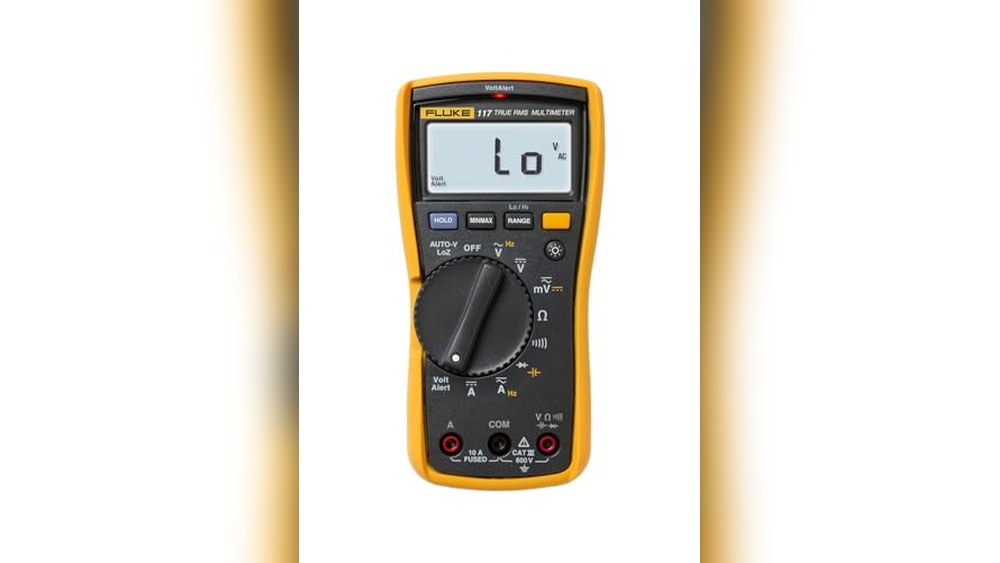
It depends on your need for quick and safe voltage checks. The Fluke 117 offers non-contact AC voltage detection and an automatic AC/DC selection, making it convenient for fast troubleshooting. This meter is handy when you want to avoid touching wires but still need to confirm voltage presence. I’ve used it in dimly lit basements and cramped breaker panels where the bright LED backlight and VoltAlert technology made a real difference. Its low input impedance reduces false readings, which is helpful when dealing with ghost voltages in complex wiring. The True RMS feature ensures accuracy on non-linear loads, which you often encounter in home electronics. Overall, it feels like a practical and reliable tool for electricians and hobbyists alike.
Key features that matter for electrical troubleshooting
- VoltAlert technology for safe non-contact voltage detection
- AutoVolt for automatic AC/DC voltage selection
- Low input impedance to prevent ghost voltage false readings
- True RMS for accurate measurements on complex loads
- Bright white LED backlight for low-light conditions
- Long battery life without backlight (about 400 hours)
What makes the Fluke 117 a practical choice
- Compact size and lightweight design for easy handling
- Clear and easy-to-read display in various lighting
- Reliable voltage detection without touching wires
- Suitable for both home and professional use
- Simple operation with automatic voltage range selection
Considerations before choosing this multimeter
- No temperature measurement capability
- Limited current measurement features compared to some models
- Not designed for very high current or voltage beyond standard residential use
Who benefits most from the Fluke 117 in everyday work?
This multimeter is best for those needing quick and safe voltage checks in residential and light commercial settings. It makes life easier by offering non-contact detection and clear readings, reducing guesswork. Beginners will find it straightforward to use thanks to AutoVolt and a clean interface, while experienced users appreciate its accuracy and low impedance mode. A practical tip is to use the backlight in dim spaces to avoid mistakes. In my experience, the Fluke 117 brings peace of mind by catching tricky ghost voltages and ensuring safe handling during electrical work.What Advantages Does The Fluke 17b+ Offer For Broader Electrical Measurements?
It depends on the range of tasks you need to cover. The Fluke 17B+ provides extensive measurement options including voltage, current, resistance, and temperature, making it versatile for many electrical applications. This multimeter is suited for those who do more than basic voltage checks. I’ve used it for temperature measurements with the included thermocouple, which is handy for HVAC work. It supports AC/DC voltage up to 1000V and current up to 10A, covering most residential and commercial jobs. The CAT III 600V safety rating offers reassurance when working in environments with higher risk. Its diode test and capacitance functions help diagnose components quickly. Overall, it feels like a reliable all-in-one tool for electricians who need to cover multiple measurement needs.
Important capabilities for electrical and temperature testing
- Measures AC/DC voltage up to 1000V
- Current measurement up to 10A
- Temperature measurement with included type K thermocouple
- Diode testing for quick component checks
- Resistance, continuity, capacitance, and frequency tests
- CAT III 600V safety rating for secure use
Strengths that make the 17B+ a versatile meter
- Wide range of measurement functions in one device
- Good safety rating for tougher electrical environments
- Includes temperature testing, useful for HVAC and appliance work
- Compact but with comfortable grip and size
- Accurate readings for multiple electrical parameters
Trade-offs to keep in mind
- No non-contact voltage detection feature
- Display backlight not included, making it harder in dark areas
- Longer and slightly heavier than some compact meters
When the Fluke 17B+ fits your electrical toolkit best
This meter is ideal for those who handle diverse electrical tasks, including current and temperature measurement. It simplifies life by combining many functions in a single device, reducing the need for multiple tools. Beginners might find it slightly more complex than simpler meters, but experienced users will value its range and safety features. A practical tip is to always use the thermocouple for accurate temperature readings rather than guesswork. In my experience, the 17B+ gives reliable data across many tests, bringing confidence during complex troubleshooting.Real-world Experience Comparing Fluke 117 Digital Multimeter And Fluke 17b+ Digital Multimeter
I tested both meters around the house and on job sites, focusing on voltage detection, current measurement, and ease of use. The Fluke 117 stood out in quick voltage checks, especially in low light. The 17B+ proved better for deeper diagnostics where temperature and current readings were needed. Both meters felt solid, but each shines in different scenarios. Here’s a closer look at how they stack up in real use.How do these meters handle voltage detection and measurement?
The Fluke 117 includes non-contact voltage detection, which makes it easier to spot live wires quickly. The 17B+ requires direct contact but offers higher voltage range and current testing.| Metric | Fluke 117 Digital Multimeter | Fluke 17B+ Digital Multimeter |
|---|---|---|
| Voltage detection | Non-contact AC voltage detection | Contact-only voltage measurement |
| Voltage range | Up to 600V | Up to 1000V |
| Current measurement | Limited or none | Up to 10A |
| Backlight | Yes, bright white LED | No backlight |
Which meter is better for temperature testing?
Temperature measurement is only available on the 17B+, useful for HVAC or appliance work. The 117 lacks this feature.| Metric | Fluke 117 Digital Multimeter | Fluke 17B+ Digital Multimeter |
|---|---|---|
| Temperature measurement | No | Yes, with type K thermocouple |
| Temperature range | N/A | Up to 400°C |
How do these meters compare in size and portability?
The Fluke 117 is more compact and lightweight, making it easier to handle in tight spaces. The 17B+ is longer and slightly heavier but still manageable.| Metric | Fluke 117 Digital Multimeter | Fluke 17B+ Digital Multimeter |
|---|---|---|
| Height | 1.82 inches | 5.91 inches |
| Width | 3.31 inches | 2.76 inches |
| Length | 6.67 inches | 8.46 inches |
| Weight | 1.21 pounds | 1.04 pounds |
What about safety and durability considerations?
The 17B+ has a CAT III 600V safety rating, making it safer for commercial environments. The 117 is designed primarily for residential and light commercial work.| Metric | Fluke 117 Digital Multimeter | Fluke 17B+ Digital Multimeter |
|---|---|---|
| Safety rating | Standard residential use | CAT III 600V |
| Durability | Good for general use | Built for tougher environments |
How user-friendly are the meters for beginners?
The Fluke 117’s automatic voltage selection and non-contact detection simplify use for beginners. The 17B+ offers more features but requires more knowledge to operate fully.| Metric | Fluke 117 Digital Multimeter | Fluke 17B+ Digital Multimeter |
|---|---|---|
| Ease of use | High, with AutoVolt and VoltAlert | Moderate, more settings to manage |
| Manual complexity | Simple interface | More functions, steeper learning curve |
Choosing Between Fluke 117 And 17b+ For Your Electrical Projects
If you need a compact, easy-to-use multimeter primarily for voltage detection and basic troubleshooting, the Fluke 117 fits well. It is great for home electricians or anyone who wants fast, reliable voltage checks with added convenience like the backlight and non-contact detection. The Fluke 17B+ is better for those who require a wider range of measurement functions, including current and temperature testing, and work in environments demanding higher safety ratings. It suits experienced users handling more complex electrical tasks and those who want one device for multiple applications. Both meters are reliable and practical, so your choice depends on the specific features you need and the types of jobs you handle most often.Common Questions About Fluke 117 Vs 17b+ For Practical Use
Does the Fluke 117 offer temperature measurement?
No, the Fluke 117 does not measure temperature. If you need temperature testing, the 17B+ includes a type K thermocouple for that purpose.
Can I use the Fluke 17B+ for non-contact voltage detection?
No, the 17B+ requires direct contact to measure voltage. Only the Fluke 117 provides non-contact AC voltage detection.
Which multimeter is safer for industrial environments?
The Fluke 17B+ has a CAT III 600V safety rating, making it more suitable for industrial or commercial settings. The 117 is designed mainly for residential and light commercial use.
Is the Fluke 117 suitable for beginners?
Yes, the Fluke 117 is beginner-friendly thanks to its automatic voltage selection and simple interface. It’s easy to use for basic electrical troubleshooting.
Which meter is better for measuring current?
The Fluke 17B+ supports current measurements up to 10A, while the 117 has limited or no current measurement capability. For current testing, the 17B+ is the better choice.

I’m Asif Ur Rahman Adib, an Electrical Engineer and lecturer. My journey began in the lab, watching students struggle with instruments they used every day without fully understanding them. Over time, I’ve combined teaching, research, and hands-on experience to help others grasp electrical concepts clearly, safely, and practically—whether it’s understanding a circuit or mastering a multimeter.