Choosing Between Two Reliable Fluke Digital Multimeters
Picking the right multimeter is about matching features to your needs. Both models handle common electrical tasks well. But small differences can affect your daily use and confidence. Consider what measurements you’ll use most. Also, think about how often you need temperature testing. These points help avoid buyer’s remorse with these trusted tools.
Who Benefits Most From Each Fluke Model
- Electricians needing temperature measurements along with voltage and current readings.
- Technicians focused on basic electrical troubleshooting without temperature features.
- DIY enthusiasts looking for accurate readings across common electrical parameters.
- Professionals working in residential, commercial, or industrial settings requiring safety compliance.
- Buyers prioritizing device portability and ease of use during daily work.
- Those who value a slightly lower price without sacrificing essential functions.
Where The Fluke 17b+ Digital Multimeter Fits Best
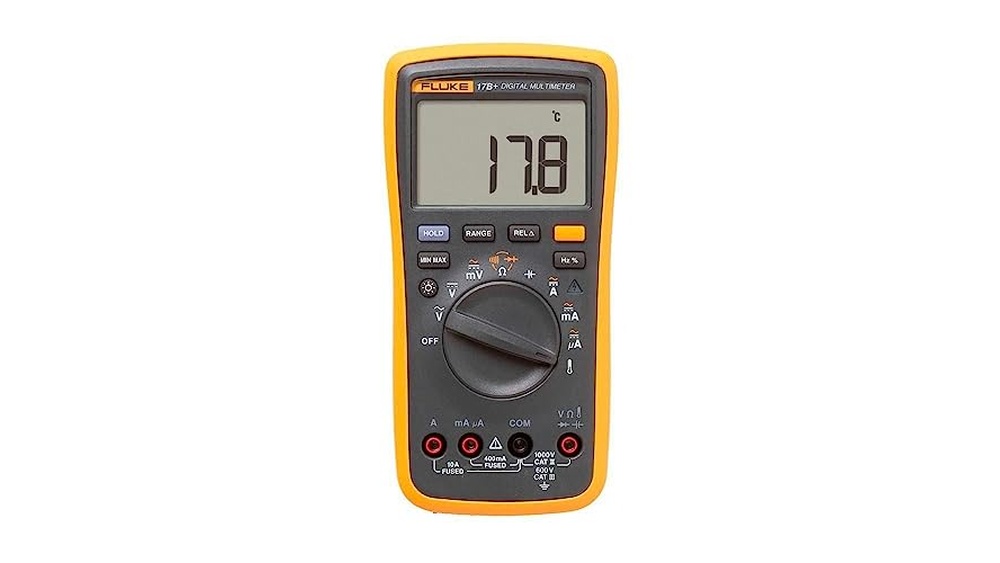
I find the Fluke 17B+ ideal when temperature measurement is part of the job. This feature adds versatility for HVAC or heating system checks. It’s also sturdy, meeting safety standards for varied environments. The extra functions don’t overcomplicate the device but help diagnose issues more completely.
The slightly higher price reflects these added capabilities. If your work often involves heating or cooling systems, the 17B+ reduces the need for another tool. It’s a practical choice for thorough electrical testing with temperature insights.
.ap-btn{ transition:transform .15s ease, filter .15s ease; } .ap-btn:hover{ transform:translateY(-1px); filter:brightness(.95); }
Strengths That Ease Your Work
- Includes temperature measurement up to 400°C with thermocouple.
- CAT III 600V safety rating suitable for various environments.
- Measures AC/DC voltage and current up to 1000V and 10A accurately.
- Multiple testing functions like resistance, continuity, diode, and capacitance.
- Compact and lightweight design for easy handling.
Considerations That May Affect Your Choice
- Higher price point compared to similar models.
- Extra features might be unnecessary if temperature testing is not needed.
When The Fluke 15b+ Digital Multimeter Is A Practical Option
I appreciate the simplicity and value of the Fluke 15B+. It covers essential electrical measurements well without temperature testing. This focus may suit users who want a straightforward multimeter for voltage, current, and resistance checks. Its slightly lower cost makes it attractive for budget-conscious buyers.
This model meets safety standards for most residential and commercial work. It balances capability and price for routine electrical troubleshooting. It’s a smart choice when temperature measurement is not part of your tasks.

Advantages That Support Reliable Use
- CAT III 600V safety rating for secure operation.
- Accurate AC/DC voltage and current measurement up to 1000V and 10A.
- Essential testing modes like resistance, continuity, diode, and capacitance.
- Clear and easy-to-read display for quick diagnostics.
- Lower price point while maintaining core functionality.
Limitations to Keep in Mind
- Lacks temperature measurement capability.
- May not suit users needing advanced diagnostic features.
Key Questions That Guide Your Choice
Do you need temperature readings as part of your regular work? If yes, the 17B+ offers this feature without extra tools. Otherwise, the 15B+ covers most electrical measurements well.
How important is price in your decision? The 15B+ provides a budget-friendly option with essential functions. The 17B+ asks for a bit more but adds versatility.
Will you use the multimeter in industrial or commercial settings? Both meet safety standards, but the 17B+ may offer slight advantages for varied environments.
Consider how often you perform troubleshooting involving diodes and capacitance. Both models handle these well, so this likely won’t sway your choice.
Comparing What Matters Between These Fluke Multimeters
Do You Require Temperature Testing?
Only one model includes this feature, impacting how broadly you can use the meter.
| Decision factor | Fluke 17B+ Digital Multimeter | Fluke 15B+ Digital Multimeter |
|---|---|---|
| Temperature measurement | Included with type K thermocouple | Not available |
| Use case flexibility | Supports HVAC and heating system checks | Limited to electrical measurements |
| Price | Higher | Lower |
| Who this matters for | Users needing heat-related diagnostics | Those focused on electrical testing only |
How Important Is Budget?
Price differences can influence your purchase decision if budget is tight.
| Decision factor | Fluke 17B+ Digital Multimeter | Fluke 15B+ Digital Multimeter |
|---|---|---|
| Current price | $124.48 | $115.26 |
| Discount | 28% | 15% |
| Value for money | More features justify price | Good core functions at lower cost |
| Who this matters for | Buyers valuing extra features | Cost-conscious buyers |
Safety and Durability Considerations
Both models meet safety standards, but minor differences may affect comfort in certain settings.
| Decision factor | Fluke 17B+ Digital Multimeter | Fluke 15B+ Digital Multimeter |
|---|---|---|
| Safety rating | CAT III 600V | CAT III 600V |
| Weight | 1.04 Pounds | 1.01 Pounds |
| Size | 5.91 x 2.76 x 8.46 inches | 5.91 x 2.76 x 8.46 inches |
| Who this matters for | Users needing ruggedness and safety | Those needing lightweight for portability |
What Could Lead To Regret After Buying
Choosing the 15B+ when you need temperature measurement means buying an additional device later. This adds cost and inconvenience. Conversely, opting for the 17B+ without using its temperature function might feel like paying for unused features.
Ignoring safety ratings or durability could lead to problems in certain environments. Both models score well here, so regret is less likely from this aspect. Still, consider your typical work conditions.
Price sensitivity is a factor. Overspending on features you won’t use can cause buyer’s remorse. Assess your real needs carefully before deciding.
Finding The Right Fit For Your Work Needs
Both Fluke multimeters offer solid performance for electrical testing. The 17B+ adds temperature measurement, making it a versatile tool for broader tasks. The 15B+ keeps things straightforward and cost-effective.
Reflect on how often you’ll need each feature and balance that with your budget. There’s no wrong choice if the tool matches your routine. Whichever you pick, these meters are trusted for accuracy and safety.
Feel confident knowing both options come from a reputable brand with proven quality.
Common Questions About Fluke 17b+ Vs 15b+ Multimeters
Does the Fluke 17B+ offer temperature measurement?
Yes, it includes temperature measurement up to 400°C with a type K thermocouple. The 15B+ does not have this feature.
Are both models safe for commercial electrical work?
Both have a CAT III 600V safety rating, suitable for residential and commercial settings. This ensures user protection during testing.
Which model is better for basic electrical troubleshooting?
The 15B+ covers essential functions like voltage, current, resistance, and continuity. It’s a practical choice if temperature readings are not needed.
Is there a big price difference between these two multimeters?
The 17B+ is slightly more expensive due to additional features. The 15B+ offers a lower price with core electrical measurement functions.
Do both devices have similar sizes and weight?
Yes, both are very close in size and weight, making them easy to handle and portable for fieldwork.
Can I use these meters for industrial applications?
Both are rated for CAT III 600V, so they are suitable for most industrial, commercial, and residential tasks.
Which multimeter is easier to use for beginners?
The 15B+ has fewer features, which may simplify use for beginners. The 17B+ adds temperature testing but remains user-friendly.

I’m Asif Ur Rahman Adib, an Electrical Engineer and lecturer. My journey began in the lab, watching students struggle with instruments they used every day without fully understanding them. Over time, I’ve combined teaching, research, and hands-on experience to help others grasp electrical concepts clearly, safely, and practically—whether it’s understanding a circuit or mastering a multimeter.