When To Choose Between Fluke 287 And Fluke 289
- Pick Fluke 287 if you want simpler data logging with clear on-screen graphing.
- Choose Fluke 289 when you need advanced trend analysis and video call sharing features.
- Go with Fluke 287 for a lighter tool that’s easier to carry around all day.
- Prefer Fluke 289 if you work with noisy signals requiring AC filtering and low pass filtering.
- Fluke 287 makes more sense for straightforward electrical measurements and moderate logging needs.
- Fluke 289 is the safer bet for detailed diagnostics and collaborative troubleshooting.
Is Fluke 287 Suitable For Everyday Electronics Logging?
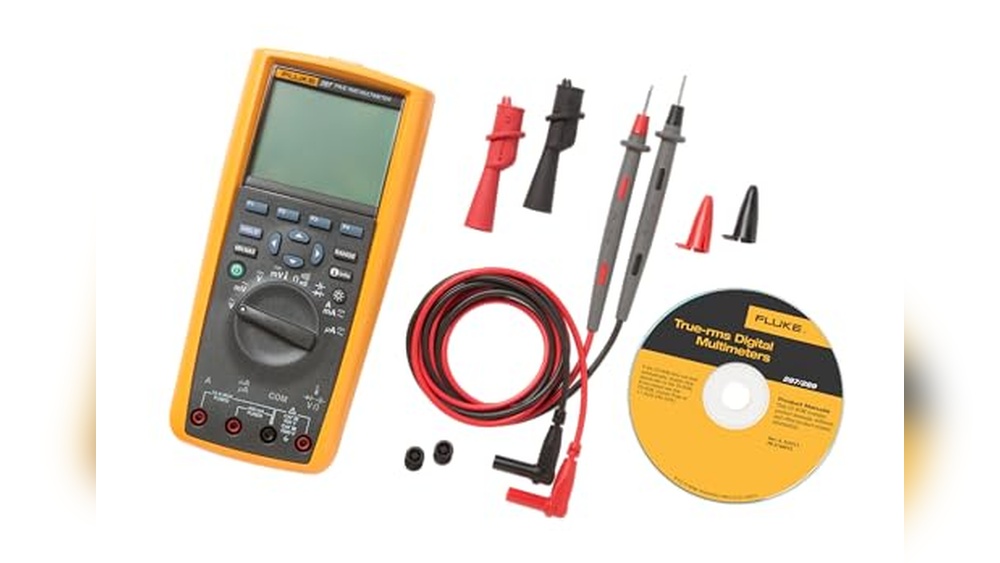
Yes, Fluke 287 offers solid logging features with both auto and manual ranging. It measures voltage, current, resistance, and more, supporting a wide range of electronics tasks. The backlit LCD shows multiple readings simultaneously, which helps catch signal issues as they happen. It’s a reliable True-RMS meter for both sinusoidal and nonsinusoidal waveforms.
In daily use, I find it compact and easy to handle, especially when moving between measurement points. The datalogging with on-screen graphing is practical for spotting anomalies without extra software. It’s lightweight, which makes it less tiring during extended fieldwork. The ability to export data to a computer adds convenience for detailed analysis later.

Core Strengths for Electronics Logging
- Measures voltage, current, resistance, frequency, and temperature accurately
- True RMS capability for both linear and nonlinear waveforms
- Datalogging with minimum, maximum, average, and on-screen graphing
- Backlit LCD displaying multiple measurements simultaneously
- Data export to computer for further analysis
- Certified for high safety standards and drop resistance
Important Considerations Before Buying
- Limited advanced filtering options compared to higher-end models
- Weight is lighter but may feel less rugged in heavy industrial environments
- Data sharing features are not integrated for team collaboration
- Capacitance range is moderate compared to some competitors
Practical Thoughts on Using Fluke 287
This model suits technicians who need reliable logging without extra complexity. It removes guesswork by showing multiple readings and graphs in real time. Beginners can use it effectively with basic training, while experienced users appreciate its clear interface. In my experience, the data export feature is handy for longer projects requiring report generation. A practical tip is to regularly update your computer software to ensure smooth data transfer. After buying this, you get peace of mind knowing your measurements are accurate and well documented.
Does Fluke 289 Offer More For Professional Troubleshooting?
It depends on your needs. Fluke 289 is designed for detailed diagnostics with features like ShareLive video calls and TrendCapture for data analysis. Its selectable AC filter and low pass filter help with noisy or complex signals. The larger display and higher counts improve readability and precision for advanced users.
I use it when working on industrial equipment or motors where signal noise is common. The ability to zoom into logged data and share results remotely saves time. Though heavier than the 287, its rugged build feels reassuring in rough conditions. These features make it well suited for experienced electricians or engineers managing complex systems.

Strengths in Advanced Electrical Diagnostics
- ShareLive video calls for remote collaboration
- TrendCapture with zoom for detailed data session analysis
- Selectable AC filter for steady readings in noisy environments
- Low Pass filter for accurate voltage and frequency measurements
- Large 50,000 count display with white backlight
- Measures up to 10 A continuous and 20 A for short bursts
- 100 mF capacitance range for larger components
What to Keep in Mind Before Purchase
- Higher weight may affect portability during long hours
- Requires additional wireless connector for ShareLive feature
- More complex menu system may need time to learn
- Price is higher reflecting advanced features
Insights from Using Fluke 289 in the Field
This meter fits well for professionals handling complex electrical systems. It takes away the stress of unclear readings by filtering noise and enabling remote diagnostics. Beginners might find the interface a bit overwhelming initially, but experienced users benefit from its detailed data tools. I recommend investing time in learning the filtering options fully. This meter offers confidence through precise measurements and team communication options. In my experience, it’s an excellent choice for those who need more than basic logging.
Key Questions To Clarify Your Multimeter Choice
Do you need remote collaboration features like live video sharing? How important is advanced filtering for noisy or complex signals in your work? Will you rely on detailed trend analysis and data zoom capabilities? Is portability and lighter weight a priority for daily use? Do you prefer simpler logging or more extensive measurement ranges? How much do you value a larger, clearer display for quick readings?
Comparing Logging Multimeters For Electronics And Electrical Testing
This comparison focuses on how each model performs in real-world testing scenarios. Usability, data handling, and filtering abilities are key factors. The differences in weight and display also impact everyday comfort and efficiency. Both meters have strong safety certifications and precise True-RMS measurement. The following points highlight practical distinctions to help decide which fits your workflow better.
How do their data logging and graphing features compare?
Fluke 287 offers solid logging with minimum, maximum, average values, and on-screen graphing. Fluke 289 adds TrendCapture with zoom, enabling deeper data analysis over sessions.
| Metric | Fluke 287 | Fluke 289 |
|---|---|---|
| Datalogging | Min, max, average, basic graphing | TrendCapture with zoom (up to 14x) |
| Data export | Yes, to computer | Yes, plus ShareLive collaboration |
| Graph detail | Single-line plot | Enhanced session analysis |
| Remote sharing | No | ShareLive video calls |
Which model handles signal noise better?
Fluke 289 has selectable AC filter and Low Pass filter for smoother readings on noisy or variable signals. Fluke 287 lacks these advanced filtering options.
| Decision point | Fluke 287 | Fluke 289 |
|---|---|---|
| Noise filtering | Basic True RMS only | Selectable AC and Low Pass filters |
| Ghost voltage elimination | No | LoZ voltage function |
| Measurement steadiness | Moderate | Improved in noisy environments |
How do their physical size and weight compare?
Fluke 287 is lighter and slightly smaller, making it easier to handle over long periods. Fluke 289 is heavier but has a larger, clearer display.
| Use case | Fluke 287 | Fluke 289 |
|---|---|---|
| Weight | 1.0 Pounds | 2.2 Pounds |
| Dimensions (H x W x L) | 3.43 x 16.0 x 11.54 inches | 3.46 x 16.0 x 11.54 inches |
| Display size | Smaller backlit LCD | Large 50,000 count 1/4 VGA |
What about measurement ranges and capacity?
Fluke 289 supports higher capacitance and current ranges, useful in industrial applications. Fluke 287 covers standard ranges suited to most electronics work.
| Metric | Fluke 287 | Fluke 289 |
|---|---|---|
| Max current | Standard (unspecified) | 10 A continuous, 20 A for 30 seconds |
| Capacitance range | Basic range | Up to 100 mF |
| Frequency measurement | Yes | Yes, with filtering |
How do their collaboration and connectivity features differ?
Fluke 289 supports ShareLive video calls via additional wireless connector, facilitating team troubleshooting. Fluke 287 lacks this remote collaboration feature.
| Decision point | Fluke 287 | Fluke 289 |
|---|---|---|
| Remote collaboration | No | ShareLive video calls (with wireless adapter) |
| Mobile app integration | No | Fluke Connect app support |
| Data sharing ease | Manual export only | Live sharing and export |
Making The Right Choice Between Fluke 287 And Fluke 289
Choose Fluke 287 if you want a reliable, lighter multimeter with solid logging and easy data export. It suits those focused on general electronics and moderate logging without extra complexity. It works well for technicians needing portability and straightforward readings.
Pick Fluke 289 if your work demands advanced filtering, detailed trend analysis, and remote collaboration. It fits experienced electricians or engineers working with noisy signals and requiring team diagnostics. The larger display and extended measurement ranges add value in complex environments.
If you balance portability with advanced features, consider how often you need remote sharing and filtering. Both meters deliver accurate True-RMS measurements, so your choice depends on workflow priorities and environment.
Common Questions About Fluke 287 Vs 289 For Electronics Logging
Can I use Fluke 287 for industrial motor diagnostics?
Fluke 287 can measure key parameters but lacks advanced filters for noisy signals common in motors. For detailed motor diagnostics, Fluke 289’s low pass filter is more suitable.
Is the ShareLive feature essential for most users?
ShareLive is helpful for teams needing remote troubleshooting but requires an extra wireless adapter. If you work mostly solo, this feature may be unnecessary.
Do both models handle temperature measurement?
Yes, both meters include temperature measurement among their functions, useful for many electronics and electrical tasks.
How steep is the learning curve for Fluke 289?
The 289 has more complex menus due to its advanced features. Beginners may need some time to master it, while experienced users will benefit from its depth.
Is data export straightforward on both models?
Both offer data export to computers, but Fluke 289 also supports app integration and live sharing, adding convenience for collaborative work.
Will the weight difference affect daily carry?
Fluke 287 is noticeably lighter, making it easier for long field sessions. Fluke 289 is heavier but offers a larger display and extra features that may justify the weight.
Are these meters safe for high-voltage testing?
Both models meet high safety standards and certifications, making them reliable for up to 1000V in certain categories. Always follow safety guidelines during testing.

I’m Asif Ur Rahman Adib, an Electrical Engineer and lecturer. My journey began in the lab, watching students struggle with instruments they used every day without fully understanding them. Over time, I’ve combined teaching, research, and hands-on experience to help others grasp electrical concepts clearly, safely, and practically—whether it’s understanding a circuit or mastering a multimeter.