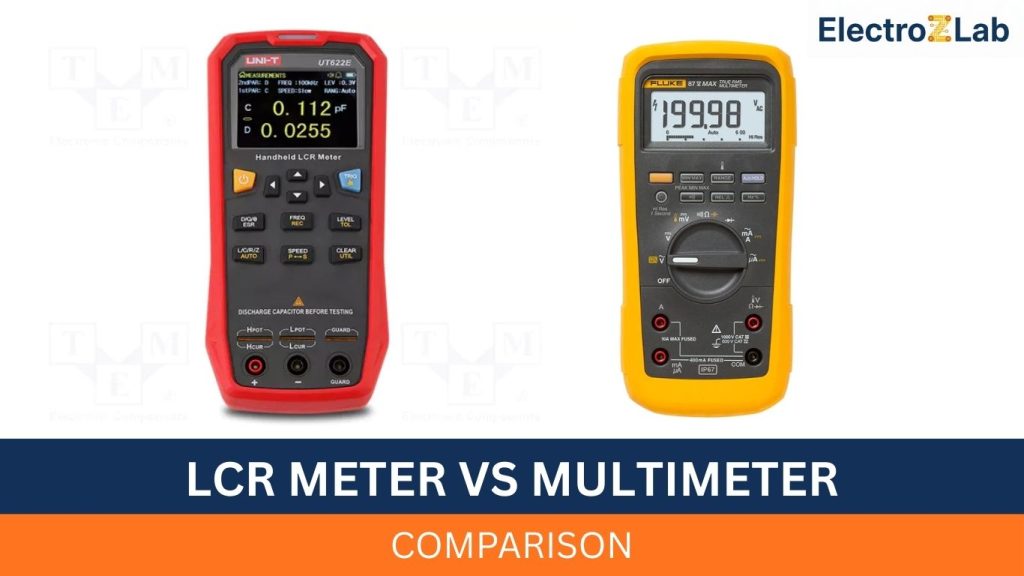

The Fluke 289 True-RMS Logging Multimeter and Fluke 87V Industrial Digital Multimeter serve different needs.
The 289 focuses on detailed data logging and analysis, while the 87V emphasizes ruggedness and quick troubleshooting.
Imagine you’re on a job site needing to capture intermittent faults or monitor trends over time. Sometimes you want detailed logs to share with your team. Other times, you need a reliable tool that handles tough environments and quick measurements. Both tools fit these scenarios but with different strengths.
This article will help you understand how the Fluke 289 and 87V compare for your daily multimeter tasks.
How Does The Fluke 289 Logging Multimeter Support Detailed Electrical Troubleshooting?
Yes, it excels in logging and data sharing during complex tasks. It lets you capture trends and anomalies that might otherwise be missed.
The Fluke 289 is designed for professionals who need to track electrical system behavior over time. I found its TrendCapture and ShareLive features useful when diagnosing intermittent issues or verifying repair quality. The large color display with zoomed graph views makes analyzing data straightforward. It also filters noise for steadier readings. While it is bulkier and pricier, the added logging capabilities can save time on complex jobs.

Key capabilities for electrical data analysis
- TrendCapture for visualizing logged data with zoom
- ShareLive video call to share results in real time
- Selectable AC filter for stable readings on noisy signals
- Low pass filter for accurate frequency and voltage
- Large 50,000 count color display with backlight
Features that aid detailed troubleshooting
- Logs data for extended periods to catch intermittent faults
- Graphical interface simplifies trend analysis
- LoZ voltage function to avoid ghost voltage errors
- Measures up to 10 A continuous, 20 A for short bursts
- Wide capacitance range for component testing
Considerations when using this multimeter
- Larger and heavier than typical handheld meters
- Requires optional wireless connector for ShareLive feature
- More expensive, reflecting advanced capabilities
Best fit for in-depth electrical system monitoring
This multimeter suits professionals who need to track electrical data trends and diagnose hard-to-catch issues. It makes life easier by reducing guesswork and providing clear data visualization. Beginners might find it complex initially, but experienced users will appreciate the depth. A practical tip is to use the TrendCapture zoom to pinpoint anomalies quickly. In my experience, this tool brings peace of mind when handling complicated systems.
What Makes The Fluke 87v Suitable For Industrial Troubleshooting Tasks?
It depends on the need for ruggedness and quick, accurate readings. The 87V is built for fast measurements and challenging environments.
This multimeter is a staple on many industrial sites due to its durable design and reliable performance. I often used it to measure voltage up to 1000 V and to capture transient events with its Peak Capture feature. The low pass filter helps with frequency readings on variable speed drives. It’s lighter and more compact than the Fluke 289, making it easier to carry around. It comes with test leads and temperature probes, which adds value for general troubleshooting.

Essential features for industrial troubleshooting
- Measures up to 1000 V AC/DC safely
- Low pass filter for frequency accuracy on variable speed drives
- Peak Capture to catch brief electrical events
- Switchable display counts for resolution flexibility
- CAT III 1000V, CAT IV 600V safety ratings
What stands out in daily use
- Compact and lighter than larger logging meters
- Includes test leads, alligator clips, and temperature probe
- Fast response time for troubleshooting
- Robust build suitable for harsh job sites
- Easy to read display with adjustable resolution
Trade-offs to keep in mind
- No advanced data logging or graphical trend analysis
- Less suited for long-term monitoring
Who benefits most from the 87V industrial meter
The 87V fits technicians needing quick, reliable readings in tough environments. It simplifies tasks with clear measurements and safety features. Beginners will find it straightforward, while experienced users value its ruggedness. A good tip is to use the Peak Capture to detect fleeting voltage spikes. In my experience, this multimeter offers confidence during fast troubleshooting jobs.
How The Fluke 289 Logging Multimeter And Fluke 87v Compare In Practical Electrical Work
I used both meters across different scenarios, from monitoring motors to diagnosing intermittent faults. The 289’s logging helped catch issues over time, while the 87V handled quick checks and harsh conditions well. Both proved reliable, but their strengths focus on different tasks.
Which meter provides better data logging and analysis?
The Fluke 289 offers detailed logging and trend capture. The 87V does not support data logging.
| Metric | Fluke 289 Logging Multimeter | Fluke 87V Industrial Multimeter |
|---|---|---|
| Data Logging | Yes, with trend capture and ShareLive | No |
| Graphical Display | Large color display with zoom | Basic numeric display |
| Wireless Sharing | Supported (with accessory) | No |
Ratings: 289 excels in data analysis; 87V lacks logging.
Edge: The 289 suits users needing detailed data review over time.
How do they differ in ruggedness and portability?
The 87V is smaller and lighter, built for tough industrial use. The 289 is bigger and heavier, more suited for bench or vehicle use.
| Metric | Fluke 289 Logging Multimeter | Fluke 87V Industrial Multimeter |
|---|---|---|
| Weight | 2.2 pounds | 1.3 pounds |
| Dimensions | 16 x 11.54 x 3.46 inches | 9.49 x 6.5 x 3.5 inches |
| Build | Standard handheld | Rugged, industrial |
Ratings: 87V is more portable and rugged.
Edge: 87V is better for fieldwork requiring mobility.
What about measurement accuracy and features for electrical systems?
Both meters have low pass filters for frequency accuracy. The 87V includes peak capture for intermittent events. The 289 offers a higher count display and advanced filtering.
| Metric | Fluke 289 Logging Multimeter | Fluke 87V Industrial Multimeter |
|---|---|---|
| Low Pass Filter | Yes | Yes |
| Peak Capture | No | Yes |
| Display Count | 50,000 | Up to 20,000 |
Ratings: 289 has advanced display; 87V has peak capture.
Edge: Choose 289 for detailed readings; 87V for transient event capture.
How do they compare on included accessories and ease of use?
The 87V comes with test leads, clips, and a temperature probe. The 289 typically requires accessories like the wireless connector separately.
| Metric | Fluke 289 Logging Multimeter | Fluke 87V Industrial Multimeter |
|---|---|---|
| Included Accessories | None standard for sharing | Test leads, clips, temp probe |
| User Interface | Complex with graphs | Simple numeric display |
Ratings: 87V has more included gear; 289 offers more features with extras.
Edge: 87V is ready out of the box for general troubleshooting.
Choosing Between The Fluke 289 And 87v For Your Electrical Work
If you need detailed logging, trend analysis, and remote sharing, the Fluke 289 is the right choice. It suits engineers and technicians working on complex systems who benefit from data visualization and long-term monitoring.
For fast, reliable measurements in tough environments, the Fluke 87V fits best. It’s ideal for electricians and maintenance professionals who require ruggedness and quick troubleshooting without extra logging features.
Both are solid meters with distinct strengths to match different job needs.
Common Questions Answered About Fluke 289 Vs 87v For Electrical Testing
Can the Fluke 87V log data like the Fluke 289?
No, the 87V does not have data logging or graphical trend capture. It focuses on quick measurements and peak event capture instead.
Is the Fluke 289 suitable for field use despite its size?
It is portable but larger and heavier than typical handheld meters. It’s better suited for bench work or vehicle use where detailed logging is needed.
Do both multimeters handle noisy electrical signals well?
Yes, both include low pass filters to improve frequency and voltage measurement accuracy on variable speed drives and noisy inputs.
What accessories come with each multimeter?
The 87V includes test leads, alligator clips, and a temperature probe. The 289 requires optional accessories for wireless sharing and doesn’t typically include these extras.
Which meter is better for beginners?
The 87V is simpler and more straightforward, making it easier for beginners. The 289 offers advanced features that may require more experience to use effectively.

I’m Asif Ur Rahman Adib, an Electrical Engineer and lecturer. My journey began in the lab, watching students struggle with instruments they used every day without fully understanding them. Over time, I’ve combined teaching, research, and hands-on experience to help others grasp electrical concepts clearly, safely, and practically—whether it’s understanding a circuit or mastering a multimeter.