Quick Guide To Choosing Your Fluke Multimeter
- Pick Fluke 3000 Fc if you want wireless connectivity and versatile measurement types.
- Choose 87V when you need advanced troubleshooting with high accuracy and filters.
- Go with Fluke 3000 Fc for easy app integration and basic to intermediate testing.
- Prefer 87V if you require precise frequency measurements on industrial equipment.
- Fluke 3000 Fc makes more sense for those valuing lightweight and portability.
- 87V is the safer bet for demanding environments needing peak capture and safety ratings.
Does The Fluke 3000 Fc Cover Everyday Testing Needs Effectively?
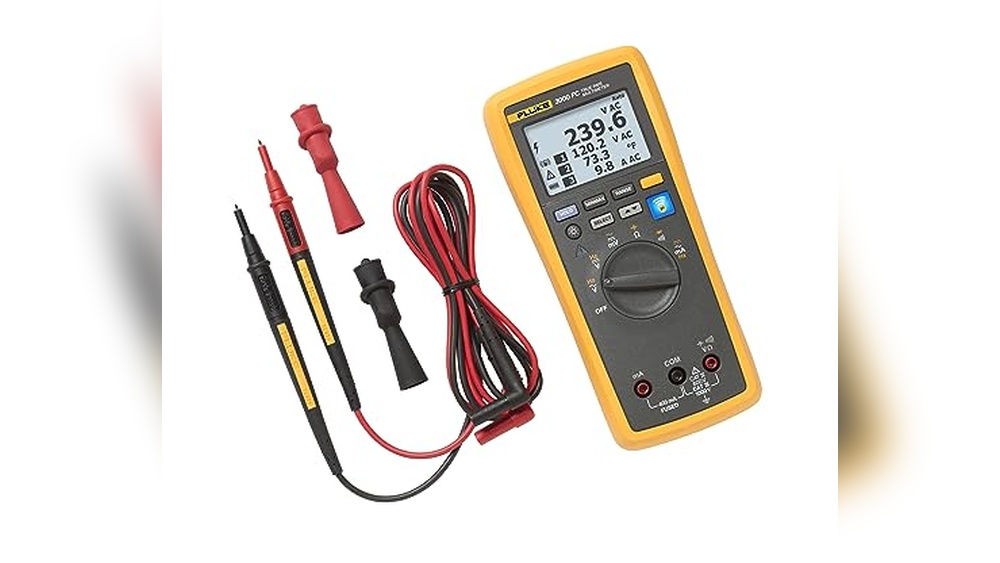
Yes, it does cover essential testing needs well. It offers wireless measurement capabilities through the Fluke Connect app, making troubleshooting more convenient. It can measure AC/DC voltage up to 1000V and has fine current resolution. Additional functions include continuity, resistance, diode, capacitance, and frequency checks. In daily use, I found it lightweight and practical for fieldwork. The wireless feature helps monitor results remotely, which is handy when working in tight spaces. The interface is straightforward, and the variety of measurements covers most common electrical tasks. It feels like a solid tool for technicians who want flexibility without complexity. .ap-btn{ transition:transform .15s ease, filter .15s ease; } .ap-btn:hover{ transform:translateY(-1px); filter:brightness(.95); }
Key strengths of the Fluke 3000 Fc Wireless Multimeter
- Wireless data display via Fluke Connect app for remote monitoring
- Measures AC/DC voltage up to 1000V and fine current resolution (0.01 mA)
- Includes continuity, resistance, diode, capacitance, and frequency tests
- Compatible with wireless modules for expanded measurement options
- Lightweight and portable design, easy to carry on site
Considerations before selecting the Fluke 3000 Fc
- Not designed for specialized industrial troubleshooting filters
- Wireless features require compatible modules and app setup
- Display resolution may be lower than advanced models
- Less suited for capturing very fast transient signals
Practical thoughts on the Fluke 3000 Fc
This multimeter suits electricians and technicians who value connectivity and basic to moderate measurement needs. It removes the stress of manual data logging by sending readings to your phone. Beginners will find it straightforward, while experienced users appreciate its wireless edge. In my experience, keeping the app updated improves reliability. A practical tip is to pair it with wireless modules for added flexibility. It offers peace of mind by covering a broad range of tests without overcomplication.
Is The Fluke 87v Better For Complex Electrical Troubleshooting?
It depends on your troubleshooting demands. The 87V excels in advanced scenarios with features like a low-pass filter and peak min/max capture. It offers higher resolution with switchable counts up to 20,000, useful for detecting small changes. Safety ratings CAT III 1000V and CAT IV 600V add confidence in industrial environments. I find it robust and reliable for daily use in more demanding settings. The included test leads and temperature probe make it ready for varied tasks. It’s heavier but feels solid in hand, suited for those who need precise and detailed diagnostics. The 87V handles intermittent signals well, which can be critical in industrial maintenance.
Strengths of the Fluke 87V Industrial Multimeter
- Low-pass filter for accurate frequency measurement on adjustable speed drives
- Captures fast intermittent signals with peak capture feature
- Switchable high display resolution up to 20,000 counts
- CAT III 1000V and CAT IV 600V safety ratings
- Includes TL75 test leads, AC175 alligator clips, and 80BK temperature probe
- Suitable for industrial and advanced troubleshooting tasks
Trade-offs to keep in mind for the Fluke 87V
- Heavier and bulkier compared to wireless models
- Does not feature wireless connectivity or app integration
- Higher price point reflecting advanced features
- May be more complex for casual users or beginners
Hands-on perspective with the Fluke 87V
This multimeter fits professionals working in industrial environments needing detailed diagnostics. It removes the worry of missing quick signal changes or noise. Experienced users will appreciate the advanced filtering and peak capture. I recommend familiarizing yourself with the filters to maximize accuracy. In my experience, this tool provides peace of mind when handling complex electrical systems. It suits those who want thorough testing rather than just basic measurements.
Key Questions For Choosing Between Fluke 3000 Fc And 87v
Which model offers the best measurement types for my typical tasks? Can I benefit from wireless connectivity during testing? Do I need advanced filters and peak capture for signal troubleshooting? How important is display resolution and measurement accuracy? Will I be working in industrial environments requiring strict safety ratings? What is my budget compared to the features I actually use?Comparing Wireless Convenience And Industrial Precision
This comparison looks at how each multimeter performs during practical electrical work. We consider connectivity, measurement accuracy, safety, and usability in daily troubleshooting scenarios. Both tools serve different user needs, and this review highlights those differences clearly.Which multimeter offers better measurement versatility for general use?
The Fluke 3000 Fc supports multiple measurement types and wireless modules, making it versatile. The 87V focuses on precise measurements with advanced filters but lacks wireless features.| Metric | Fluke 3000 Fc | Fluke 87V |
|---|---|---|
| Voltage Measurement | AC/DC to 1000V | AC/DC to 1000V |
| Current Resolution | 0.01 mA | Standard resolution |
| Additional Tests | Continuity, resistance, diode, capacitance, frequency | Frequency with low-pass filter, temp probe |
| Wireless Connectivity | Yes, via app and modules | No |
| Peak Capture | No | Yes, captures fast signals |
So what? Choose based on whether wireless versatility or advanced measurement precision matters more.
How do portability and ease of use compare?
The Fluke 3000 Fc is lighter and offers simple app-based controls. The 87V is heavier with more manual settings and probe accessories.| Decision point | Fluke 3000 Fc | Fluke 87V |
|---|---|---|
| Weight | 0.75 pounds | 1.3 pounds |
| Size | Compact and slim | Bulkier, rugged design |
| User Interface | App-integrated, simple | Manual dials and buttons |
| Portability | Easy to carry | Less portable |
So what? Pick the 3000 Fc for lightweight convenience, 87V for a sturdy feel in tough environments.
What about safety ratings for industrial environments?
The 87V has higher safety certifications, suitable for CAT IV 600V and CAT III 1000V. The 3000 Fc meets essential safety standards but lacks the highest ratings.| Use case | Fluke 3000 Fc | Fluke 87V |
|---|---|---|
| Safety Certification | Standard CAT III | CAT III 1000V, CAT IV 600V |
| Industrial Use | Light to medium tasks | Heavy industrial troubleshooting |
| Operating Altitude | Not specified | Up to 2000 m |
So what? The 87V is better suited for high-risk industrial settings requiring strict safety.
How do price and value compare?
The 3000 Fc is priced lower with wireless features, while the 87V costs more for advanced capabilities and accessories.| Metric | Fluke 3000 Fc | Fluke 87V |
|---|---|---|
| Current Price | $389.93 | $485.99 |
| Original Price | $436.99 | $561.99 |
| Price Savings | $47.06 (11%) | $76.00 (14%) |
So what? The 3000 Fc offers good value for wireless and essential features, while 87V suits advanced needs despite higher cost.
Final Thoughts On Fluke 3000 Fc Versus 87v
The Fluke 3000 Fc fits those looking for a versatile multimeter with wireless capabilities for everyday electrical work. It suits technicians who value ease of use and portability over industrial-grade features. The Fluke 87V is ideal for professionals needing detailed diagnostics, advanced filtering, and strong safety ratings in demanding environments. It is better for experienced users focused on precision and industrial compliance. When in doubt, consider whether you prioritize wireless convenience or advanced troubleshooting tools. Both models are reliable, so your choice should align with your specific daily tasks and environment.Common Questions About Fluke 3000 Fc Vs 87v
Can the Fluke 3000 Fc work without the wireless modules?
Yes, it functions as a standard multimeter without the wireless modules. However, its full potential with app connectivity requires those modules.
Is the Fluke 87V suitable for beginners?
While beginners can use it, the 87V has advanced features that may require some learning. It is designed more for experienced technicians.
How do the safety ratings affect daily use?
Higher safety ratings on the 87V mean it is safer in high-energy industrial settings. For general use, the 3000 Fc’s standard ratings are usually sufficient.
Does the wireless feature in the Fluke 3000 Fc add complexity?
It adds a learning curve initially but improves efficiency by allowing remote viewing. The app setup is straightforward with practice.
Which model handles transient signals better?
The 87V captures fast intermittent signals with its peak capture feature, making it better for detecting brief electrical events.
Are the included accessories different between these two multimeters?
The 87V includes test leads, alligator clips, and a temperature probe. The 3000 Fc focuses more on wireless modules and app integration.
What maintenance should I expect for these multimeters?
Both require standard care such as battery replacement and probe inspection. The 3000 Fc may need occasional app updates for optimal performance.

I’m Asif Ur Rahman Adib, an Electrical Engineer and lecturer. My journey began in the lab, watching students struggle with instruments they used every day without fully understanding them. Over time, I’ve combined teaching, research, and hands-on experience to help others grasp electrical concepts clearly, safely, and practically—whether it’s understanding a circuit or mastering a multimeter.