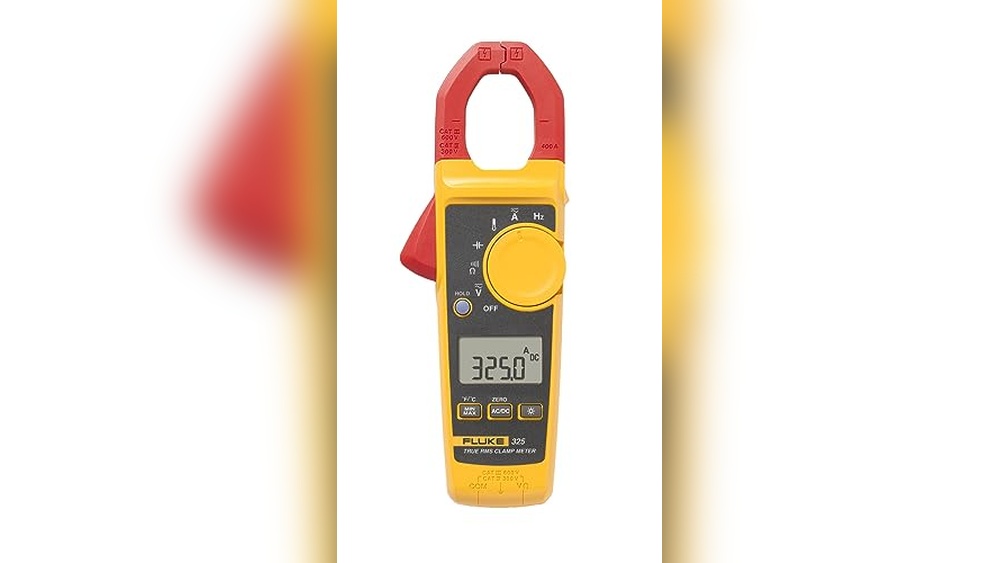
When choosing between the Fluke 325 clamp meter and the Fluke 375 FC wireless clamp meter, there are clear differences in features and use cases.
The Fluke 325 is a straightforward clamp meter for basic current, voltage, and resistance measurements, while the Fluke 375 FC adds wireless connectivity and higher current capacity.
Imagine working on home electrical repairs or troubleshooting an HVAC unit. You need reliable readings but also want ease and safety. Sometimes you want to read measurements remotely or save data without extra steps. Other times, a simple tool with core functions is enough.
This guide will help you understand what each model offers and which one fits your daily work better.
How Reliable Is The Fluke 325 True-rms Clamp Meter For General Electrical Testing?
Yes, the Fluke 325 is reliable for common electrical tasks. It covers basic current, voltage, and resistance measurements with True RMS accuracy.
In my experience, this clamp meter is a solid choice for technicians who need accuracy without extra features getting in the way. It has a comfortable jaw opening for quick clamping around wires and an audible continuity sensor that helps confirm circuits are live or open. The design is straightforward, making it easy to use in tight spaces. Safety ratings also give peace of mind when working in different electrical environments.

Key features that define Fluke 325’s practical use
- Measures AC current up to 400 amps and voltage up to 600 volts.
- True RMS sensing ensures accurate readings on all waveforms.
- Jaw opening fits conductors up to 30 mm without interrupting the circuit.
- Audible continuity for quick circuit checks.
- Meets IEC safety standards for CAT IV 300 V and CAT III 600 V environments.
What I found useful when working with the Fluke 325
- Simple interface makes it easy to switch between measurement types.
- Compact and lightweight for carrying around on job sites.
- Good for HVAC, residential, and light commercial electrical work.
- Strong build quality that withstands daily use.
Considerations when choosing the Fluke 325
- No wireless connectivity or app integration.
- Limited to 400 A current measurement.
- No flexible current probe option.
When the Fluke 325 fits best in your toolkit
This clamp meter is best for electricians and technicians who perform routine electrical troubleshooting and repairs. It makes life easier by giving reliable, quick measurements without extra setup or distractions. Beginners will find it straightforward, while experienced users appreciate its solid accuracy. A practical tip is to regularly check continuity with its audible sensor for faster diagnostics. In my experience, having a dependable, no-frills meter like this adds confidence on every job.
What Benefits Does The Fluke 375 Fc Wireless Clamp Meter Offer For Professional Use?
It depends on your need for connectivity and higher current measurement. The Fluke 375 FC adds wireless features and supports up to 600 amps directly, with an option for even higher current using iFlex probes.
For professionals who want to view measurements remotely or record data effortlessly, this meter reduces the risk of being close to live circuits. Its Fluke Connect app allows storing and sharing readings. The larger jaw size and flexible probe option cover a wide range of conductor sizes. The price is higher, but the added safety and convenience can be worth it in demanding environments.

Standout wireless and measurement capabilities of the 375 FC
- Wireless connection to smartphone via Fluke Connect app.
- 600 A AC/DC current measurement, extendable to 2500 A with iFlex probe.
- Remote viewing of readings improves safety and convenience.
- Data logging and cloud storage directly from the meter.
- Larger dimensions and weight compared to simpler models.
Advantages experienced users appreciate in the 375 FC
- Helps maintain safe distance on high-risk circuits.
- Useful for complex or ongoing diagnostic tasks requiring data tracking.
- Flexible probe option expands measurement range.
- Strong build quality for professional environments.
Trade-offs to consider with the 375 FC model
- Higher price point than basic clamp meters.
- More features may be unnecessary for simple jobs.
- Slightly bulkier and heavier design.
Who benefits most from the Fluke 375 FC wireless clamp meter?
The 375 FC is ideal for seasoned electricians and field technicians who value remote monitoring and advanced current measurement. It simplifies workflow by allowing readings at a distance and easy data management. Beginners might find the features more than needed, but experienced users gain safety and efficiency. A practical tip is to pair it with the iFlex probe for measuring large conductors. In my experience, this meter offers peace of mind when working on demanding or hazardous jobs.
How Do The Fluke 325 And 375 Fc Compare In Everyday Electrical Work?
I tested both meters on typical job tasks like checking current on HVAC units, troubleshooting circuit continuity, and measuring voltage in residential wiring. I also tried using the wireless features of the 375 FC to see how remote monitoring helped. Each meter has strengths depending on the task’s complexity and safety needs.
Which meter handles current measurements more effectively?
The Fluke 375 FC supports higher current and flexible probes, while the Fluke 325 covers standard current needs.
| Metric | Fluke 325 True-RMS Clamp Meter | Fluke 375 FC Wireless Clamp Meter |
|---|---|---|
| Max AC Current | 400 A | 600 A (2500 A with iFlex) |
| Max DC Current | 400 A | 600 A |
| Flexible Probe Option | No | Yes (iFlex) |
Rating: The 325 is solid for everyday current tasks, but the 375 FC leads for high current and flexibility.
Edge: Choose the 375 FC if you often work with high-current circuits or need flexible probe options.
How do safety and usability compare during fieldwork?
The 375 FC’s wireless capability improves safety by allowing remote viewing, while the 325 offers reliable measurements but requires close proximity.
| Metric | Fluke 325 | Fluke 375 FC |
|---|---|---|
| Wireless Connectivity | No | Yes |
| Safety Rating | CAT IV 300 V, CAT III 600 V | Similar Safety Ratings |
| Remote Viewing | No | Yes, via app |
Rating: The 375 FC adds convenience and safety through wireless features.
Edge: For work in risky or confined spaces, the 375 FC’s remote monitoring is beneficial.
Which tool offers more convenience for data recording?
Only the 375 FC supports direct data logging and cloud storage, which is useful for documentation.
| Metric | Fluke 325 | Fluke 375 FC |
|---|---|---|
| Data Logging | No | Yes |
| Cloud Storage | No | Yes |
| Smartphone Integration | No | Yes |
Rating: The 375 FC is the clear choice for professionals needing data management.
Edge: If you must keep records or share measurements, the 375 FC saves time and effort.
How do size and portability affect daily use?
The 325 is smaller and lighter, which helps when working in tight spaces or carrying multiple tools.
| Metric | Fluke 325 | Fluke 375 FC |
|---|---|---|
| Weight | 0.65 lbs | 0.87 lbs |
| Dimensions (WxHxL) | 11.0 x 3.15 x 9.45 inches | 13.5 x 3.35 x 11.61 inches |
| Jaw Opening | 30 mm | Wider with optional probe |
Rating: The 325 is easier to handle and carry for quick checks.
Edge: Choose the 325 if you value compactness and simplicity on the go.
Choosing Between The Fluke 325 And 375 Fc For Your Electrical Tasks
If you primarily need a dependable clamp meter for standard electrical measurements without extra features, the Fluke 325 is a practical choice. It suits homeowners, HVAC technicians, and electricians who want accuracy and safety in a simple package.
For those who require advanced current measurement, wireless connectivity, and data logging, the Fluke 375 FC fits better. It is designed for professionals who work in complex or high-risk environments and want to improve efficiency and safety.
Both tools deliver reliable readings, so your choice depends on the balance between simplicity and added wireless convenience.
Common Questions About Choosing Between Fluke 325 Vs 375fc Clamp Meters
Can the Fluke 325 handle high current measurements like the 375 FC?
The Fluke 325 measures up to 400 amps, which covers most common electrical tasks. The 375 FC goes up to 600 amps and can reach 2500 amps with an optional flexible probe, making it better for very high current applications.
Is wireless connectivity important for everyday electrical testing?
Wireless features in the 375 FC allow remote viewing and data logging, which can improve safety and efficiency. However, for basic troubleshooting or quick checks, this may not be necessary.
How does the size difference impact usability on site?
The Fluke 325 is smaller and lighter, which makes it easier to carry and use in tight spaces. The 375 FC is bulkier due to additional features but offers more versatility in measurements.
Are both meters safe to use on residential and commercial wiring?
Yes, both meet safety standards suitable for residential and light commercial electrical work. The Fluke 325 is rated for CAT IV 300 V and CAT III 600 V installations, which covers most environments.
Which meter is better suited for beginners?
The Fluke 325 is more straightforward and easier for beginners to use. The 375 FC, while offering more features, might be better appreciated by experienced technicians familiar with wireless tools.

I’m Asif Ur Rahman Adib, an Electrical Engineer and lecturer. My journey began in the lab, watching students struggle with instruments they used every day without fully understanding them. Over time, I’ve combined teaching, research, and hands-on experience to help others grasp electrical concepts clearly, safely, and practically—whether it’s understanding a circuit or mastering a multimeter.