What Matters Most When Choosing Between Fluke 87v Vs 88v
Choosing between these two multimeters often comes down to your specific troubleshooting needs. Both are reliable, but their strengths suit different tasks. Consider what kind of equipment you’ll work on. Think about how often you need advanced features or automotive focus. Also, size and portability might influence your comfort. Understanding these points helps avoid buyer’s remorse.
Who Might Prefer One Multimeter Over The Other?
- Industrial electricians needing detailed frequency and voltage analysis.
- Automotive technicians working on conventional and hybrid vehicles.
- Users who value portability and smaller size for tight spaces.
- Professionals requiring high display resolution for subtle readings.
- Buyers prioritizing safety ratings for high-voltage environments.
- People needing features like pulse width and duty cycle measurement.
Where The Fluke 87v Industrial Multimeter Fits Best
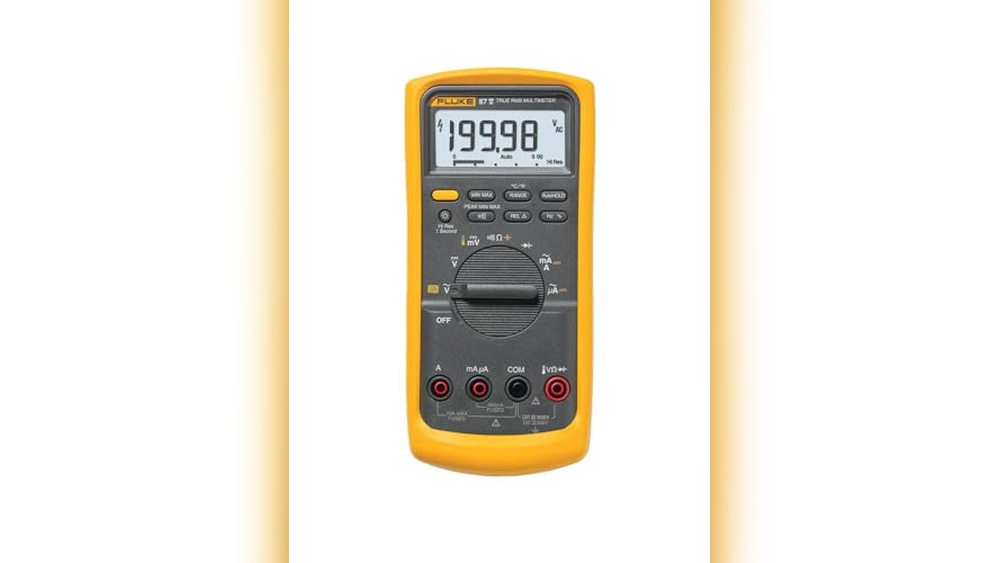
This multimeter is well-suited for industrial and advanced troubleshooting tasks. I find it particularly useful when working with adjustable speed drives and high voltage systems. It handles detailed frequency measurements with its low-pass filter and captures quick signal changes.
The device’s rugged build and safety ratings make it a reliable choice for tougher environments. It’s larger but designed for professional use where precision counts.

Features that ease long-term use
- Accurate frequency measurement with a built-in low-pass filter.
- Captures fast intermittent signals to catch brief events.
- High resolution display to notice small reading changes.
- Safety rated for CAT III 1000V and CAT IV 600V environments.
- Includes temperature probe and sturdy test leads.
Potential drawbacks to consider
- Larger size and weight may reduce portability.
- Primarily focused on industrial uses, less suited for automotive diagnostics.
When The Fluke 88v Automotive Multimeter Is A Better Pick
The 88V is tailored for automotive professionals, especially those handling hybrid and conventional vehicles. I appreciate its pulse width and duty cycle measurements that automotive work demands. It’s smaller and easier to carry around garages or workshops.
This model offers a bright backlight and a large display, which helps when working in dim conditions. Its input impedance protects sensitive vehicle computers.

Advantages that simplify automotive tasks
- Designed to measure pulse width and duty cycle accurately.
- High input impedance to protect sensitive vehicle electronics.
- Large, backlit display for easy reading in low light.
- Compact size for comfortable handheld use.
- Min/Max/Avg recording to track signal variations.
Considerations that may affect your choice
- Less suited for industrial or high-voltage applications.
- Lacks advanced frequency filtering found in industrial meters.
Key Questions To Clarify Before Deciding
Do you primarily work with industrial equipment or vehicles? This helps narrow the choice to the right tool’s focus. Consider if you need detailed frequency analysis or automotive-specific functions. Think about how important portability and size are in your daily routine. Safety ratings matter if you work with high voltages often. Lastly, consider which features you will actually use, not just those that sound impressive.
How These Multimeters Stack Up On Practical Needs
Who needs advanced frequency and voltage measurements?
Industrial electricians or technicians working on variable speed drives benefit from precise frequency tools.
| Decision factor | Fluke 87V Industrial Multimeter | Fluke 88V Automotive Multimeter |
|---|---|---|
| Frequency measurement accuracy | Includes low-pass filter for accurate readings on ASDs | Basic frequency measurement, no advanced filtering |
| Voltage range | Measures up to 1000 V AC/DC | Designed for automotive voltage ranges, less industrial focus |
| Safety rating | CAT III 1000V, CAT IV 600V rated | Standard automotive safety levels |
| Weight and size | Larger and heavier at 1.3 pounds | Compact and lighter at 3.0 pounds but smaller form factor |
This comparison matters most to those working in industrial settings with high voltage equipment.
Who benefits most from automotive-specific functions?
Technicians focused on vehicle diagnostics and hybrid systems will value these features.
| Decision factor | Fluke 87V Industrial Multimeter | Fluke 88V Automotive Multimeter |
|---|---|---|
| Pulse width and duty cycle measurement | Not specialized for automotive pulse measurements | Includes pulse width, duty cycle, and Min/Max/Avg recording |
| Input impedance for vehicle circuits | Standard impedance suitable for industrial use | 10 meg ohm input impedance protects vehicle computers |
| Display visibility | High resolution but no special automotive backlight | Large display with bright backlight for dim environments |
| Portability | Heavier and larger, less pocket-friendly | Small size designed for ease of handling in workshops |
This difference is key for those focused on automotive repair and diagnostics.
What Might Cause Buyer’s Regret With Either Choice?
Choosing the industrial meter without needing its advanced frequency features may feel like overkill. It’s bulkier and less convenient for quick automotive checks. On the other hand, picking the automotive meter for heavy industrial use might limit your troubleshooting capabilities. It lacks some safety ratings and detailed measurement tools. Consider your primary use carefully to avoid frustration down the road.
Making A Calm And Confident Choice Between These Fluke Meters
Both multimeters serve their purposes well when matched to the right environment. The industrial model fits those needing detailed frequency and voltage analysis in demanding settings. The automotive version suits vehicle technicians who want compact, focused diagnostic features. Neither is a bad choice; it’s about aligning the tool with your daily needs.
Take your time to reflect on what you will actually use, and your choice will likely serve you well for years. Confidence comes from knowing your tool matches your tasks.
Common Questions About Fluke 87v Vs 88v
Which multimeter is better for industrial troubleshooting?
The Fluke 87V is designed for industrial use with advanced frequency features and higher safety ratings. It handles high voltage measurements and intermittent signals well.
Is the Fluke 88V suitable for hybrid vehicle diagnostics?
Yes, the 88V includes pulse width and duty cycle measurements essential for hybrid and conventional vehicle troubleshooting.
How portable are these multimeters?
The 88V is smaller and easier to carry around, while the 87V is larger and heavier due to its industrial-grade build.
Do both meters come with temperature measurement?
The Fluke 87V includes an 80BK temperature probe, while the 88V focuses more on automotive electrical functions and may not include it.
Are both multimeters safe for high-voltage use?
The 87V has higher safety ratings suitable for CAT III 1000V and CAT IV 600V environments. The 88V is designed with automotive safety in mind.
Can I use the Fluke 88V for industrial equipment?
While possible, the 88V lacks some industrial measurement features and safety ratings, making the 87V a better fit for industrial tasks.
Which meter has a better display for low light?
The 88V offers a large, bright backlit display, helpful in dim workspaces. The 87V has high resolution but no special backlight features.

I’m Asif Ur Rahman Adib, an Electrical Engineer and lecturer. My journey began in the lab, watching students struggle with instruments they used every day without fully understanding them. Over time, I’ve combined teaching, research, and hands-on experience to help others grasp electrical concepts clearly, safely, and practically—whether it’s understanding a circuit or mastering a multimeter.