Choosing The Right Mini Clamp Meter For Everyday Electrical Tasks
- Choose UT210D if you need to measure very low DC currents starting at 0.1mA and want peak hold capabilities for transient current analysis.
- Pick UT210E when you want a compact clamp meter that also functions as a versatile multimeter with VFC to reduce interference.
- Go with UT210D if you often work in tight spaces like PCBs or control panels due to its smaller 18mm jaw size.
- Select UT210E if portability and pocket-sized convenience are priorities for your routine electrical measurements.
- Use UT210D when you require non-contact voltage detection with visual and audible alerts for added safety.
How These Mini Clamp Meters Handle Daily Electrical Measurements
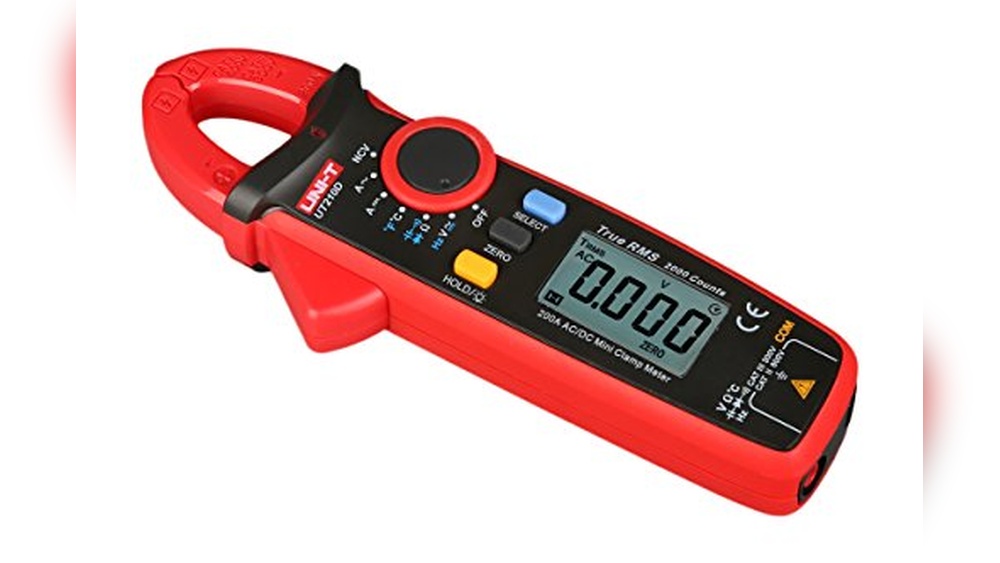
The UT210D fits well in my toolkit for diagnosing low-power electronic circuits and motor startup currents. Its peak hold and data hold functions make it easier to capture transient events, and the small jaw size helps reach wires in cramped areas.
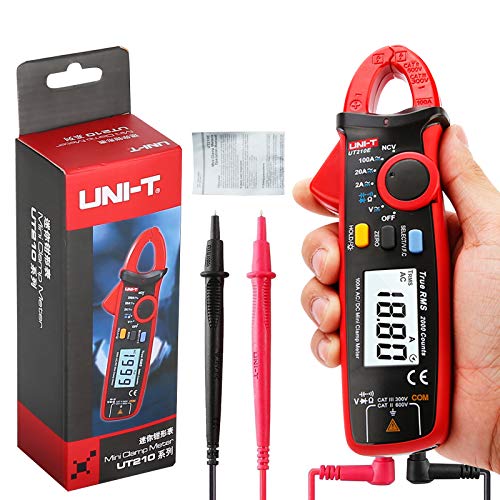
The UT210E serves as a practical all-rounder for quick checks of AC/DC current, voltage, resistance, and diode testing. Its multimeter features combined with non-contact voltage detection make it handy for general electrical troubleshooting and field use.
Ut210d Mini Clamp Meter At A Glance

Where UT210D Excels
- Accurate measurement of very low DC currents from 0.1mA.
- Small 18mm jaw designed for tight spaces and PCB work.
- Peak hold and data hold features for transient current capture.
- Non-contact voltage detection with audible and visual alerts.
- True RMS for accurate readings on non-linear signals.
Where UT210D Faces Limitations
- Slightly more complex due to additional functions may require time to learn.
- Does not emphasize multimeter functions like capacitance or diode tests as much as UT210E.
Ut210e Digital Clamp Meter Overview
Where UT210E Works Well
- Multi-function meter including resistance, capacitance, and diode testing.
- Good AC/DC current and voltage measurement with 1mA resolution.
- VFC function reduces interference from high-frequency signals.
- Compact and pocket-sized for easy portability.
- Non-contact electric field detection for quick voltage checks.
Where UT210E Has Drawbacks
- Less suited for very low DC current measurement below 1mA.
- No peak hold feature to capture transient currents.
- Jaw size is larger, which may limit access in tight spaces.
Practical Differences Between Ut210d And Ut210e In Electrical Work
In daily use, I compared their ease of access to wires, ability to measure low currents, and feature sets related to transient current capture and multimeter functions. The UT210D proved helpful for detailed diagnostics on small currents and transient events. The UT210E performed well as a general-purpose clamp meter with added multimeter capabilities.
How do they compare in low current measurement?
Measuring very small DC currents can be critical for electronic repairs and diagnostics.
| Aspect | UT210D | UT210E |
|---|---|---|
| Minimum DC current measurement | 0.1mA | 1mA |
| Accuracy at low currents | Higher due to True RMS and fine resolution | Standard resolution, less precise at low levels |
| Ideal for sensor circuit diagnostics | Yes | No |
| Peak current capture | Available via Peak Hold | Not available |
Ratings: UT210D – 8/10 | UT210E – 6/10
Edge: UT210D is better suited for tasks requiring precise low current measurements and transient capture.
Which meter is more portable and convenient for field use?
Portability impacts ease of carrying and quick access during field inspections.
| Aspect | UT210D | UT210E |
|---|---|---|
| Size and weight | Compact with small jaw, lightweight | Pocket-sized, lightweight |
| Jaw opening size | 18mm for tight spaces | Larger jaw opening |
| Ease of carrying | Good, but less pocket-friendly due to jaw shape | Better pocket fit |
| Non-contact voltage detection | Yes, with visual and audible alerts | Yes, with electric field measurement |
Ratings: UT210D – 7/10 | UT210E – 8/10
Edge: UT210E is more convenient for quick field checks due to its size and simple form.
How do their multimeter functions compare?
Multimeter capabilities extend the usefulness of clamp meters beyond current measurements.
| Aspect | UT210D | UT210E |
|---|---|---|
| Resistance measurement | Yes | Yes |
| Capacitance measurement | Yes | Yes |
| Diode testing | Yes | Yes |
| VFC function to reduce interference | No | Yes |
| Data hold feature | Yes | No |
Ratings: UT210D – 7/10 | UT210E – 7/10
Edge: Both provide solid multimeter functions; UT210E offers interference reduction while UT210D has data hold.
What about safety and voltage detection?
Detecting live wires safely is essential during electrical troubleshooting.
| Aspect | UT210D | UT210E |
|---|---|---|
| Non-contact voltage (NCV) detection | Yes, audible and visual alerts | Yes, electric field measure |
| Safety rating | CAT III 600V | Standard safety, no specific rating noted |
| Ease of voltage detection | Clear alerts | Functional but less detailed |
Ratings: UT210D – 8/10 | UT210E – 7/10
Edge: UT210D provides better safety features and clearer voltage detection alerts.
Living With Your Mini Clamp Meter: Long-term Experience
The UT210D has a moderate learning curve due to its multiple advanced features like peak hold and low current measurement. Over time, it becomes a reliable tool that offers consistent results, giving peace of mind especially when working on sensitive electronics.
The UT210E is straightforward and easy to use from the start. Its consistent performance and integrated multimeter functions make it a trusted companion for routine electrical tasks. It provides simplicity without sacrificing versatility.
Picking The Mini Clamp Meter That Matches Your Needs
Choose the UT210D if you need detailed current diagnostics in small circuits or want to capture transient currents. Its tight jaw and safety features make it ideal for technicians working on motors or PCB repairs.
The UT210E suits those who want a compact, easy-to-carry clamp meter with broad multimeter functions and interference reduction. It fits well for general electricians or hobbyists needing a versatile tool for daily checks.
Both models are practical choices, with the right one depending on your measurement focus and working conditions.
Common Questions About Uni T 210d Vs 210e Mini Clamp Meters
Can both meters measure DC current accurately?
Yes, both measure DC current up to 100A. However, the UT210D can measure much smaller DC currents starting at 0.1mA, while the UT210E starts at around 1mA.
Is the jaw size important when choosing between these models?
Yes. The UT210D has a smaller 18mm jaw, which is better for accessing tight spaces like PCBs. The UT210E has a larger jaw, which may not fit as easily in cramped areas.
Does either model have a feature to hold measurements?
The UT210D includes data hold and peak hold functions to freeze readings and capture transient currents. The UT210E lacks these features.
Which meter is better for general multimeter functions?
The UT210E offers a more complete multimeter experience with resistance, capacitance, diode testing, and VFC to reduce interference. The UT210D has multimeter functions but focuses more on current measurement.
How do the safety features compare?
The UT210D is rated CAT III 600V and provides clear audible and visual non-contact voltage alerts. The UT210E also has NCV but lacks the same safety rating and alert clarity.
Is one more portable than the other?
The UT210E is more pocket-friendly and compact, making it easier to carry for fieldwork. The UT210D is compact but has a slightly less convenient form factor due to the small jaw design.
Which model is easier to use for beginners?
The UT210E is simpler and more intuitive for basic electrical testing. The UT210D has more features that may require some time to learn but provide greater diagnostic capabilities.

I’m Asif Ur Rahman Adib, an Electrical Engineer and lecturer. My journey began in the lab, watching students struggle with instruments they used every day without fully understanding them. Over time, I’ve combined teaching, research, and hands-on experience to help others grasp electrical concepts clearly, safely, and practically—whether it’s understanding a circuit or mastering a multimeter.